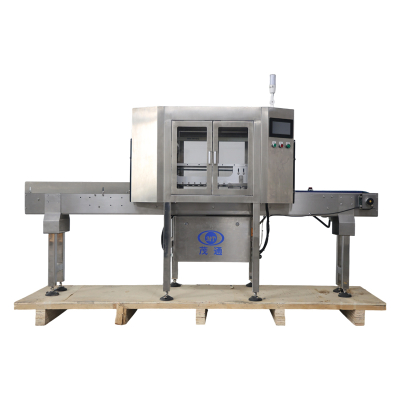
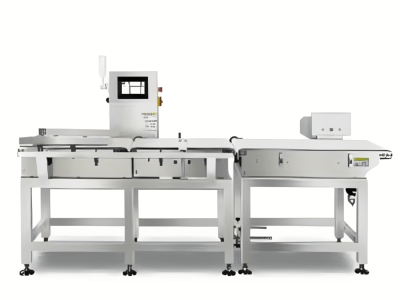
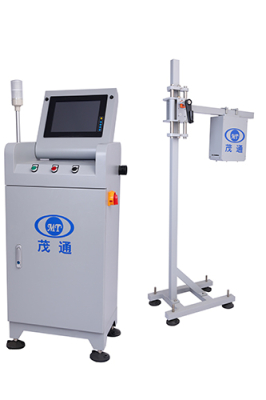
Ceramic Liquor Bottle Liquid Level Detection via X-Ray Technology
In the modern production of Baijiu (Chinese liquor), particularly within the premium segment, ceramic bottles have become the packaging of choice for many prestigious brands due to their superior breathability, light-proofing properties, and profound cultural texture. However, for engineers and quality control personnel on the production line, the opacity of these ceramic bottles presents a formidable challenge: How can one quickly and accurately determine the fill level inside the bottle?
In the past, reliance on manual sampling or traditional photoelectric sensing technologies proved inadequate for high-speed filling lines operating at hundreds of bottles per minute. These methods either suffered from low efficiency or high rates of missed detection. Today, the introduction of X-ray liquid level detection technology acts as an "all-seeing eye" in quality control, completely revolutionizing the way ceramic Baijiu is inspected.
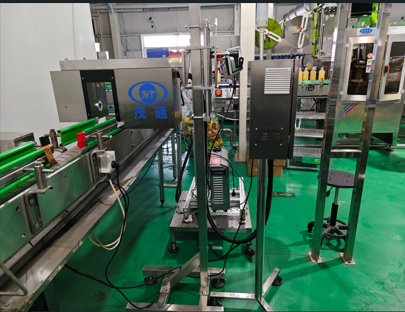
Why Traditional Methods Fail with Ceramic Bottles
To understand the superiority of X-ray detection, we must first examine why conventional methods are ineffective in ceramic Baijiu production lines.
First is the failure of optical and infrared sensors. Due to the thick, opaque nature of ceramic walls, sensors relying on visible light transmission or infrared absorption cannot penetrate the earthenware to perceive the internal liquid level. It is akin to trying to see the water level behind a wall—it simply does not work.
Second is the blind spot in sampling for high-speed lines. A modern Baijiu filling line can process thousands or even tens of thousands of bottles per hour. Relying on manual weighing or dipstick sampling is not only labor-intensive but also creates massive statistical blind spots. If equipment fluctuates, it can result in large quantities of substandard products in a short time, leading to customer complaints and brand damage.
Furthermore, Baijiu filling often involves low-temperature environments and steam foam. Traditional contact or non-contact probes are prone to contaminating the liquor and can be easily disturbed by foam, leading to significant reading errors.
X-Ray Detection: How It "Sees Through" the Obstruction
The core principle of X-ray liquid level detection is similar to medical X-ray imaging: it utilizes the varying absorption rates of different materials to X-rays (i.e., density differences).
When an X-ray source emits a uniform, high-intensity beam through the ceramic bottle, a fascinating phenomenon occurs:
The Ceramic Body: Composed mainly of silicates, it has a relatively low density and absorbs less X-ray radiation, allowing most rays to pass through.
The Liquor Inside: Composed primarily of water and ethanol, it has a higher density than ceramic and absorbs more X-rays.
The Air Inside (Above Liquid): With extremely low density, it absorbs almost no X-rays.
Consequently, when the X-rays pass through the bottle, they form a clear "grayscale image" on the detector (such as a linear array camera or photodiode array) on the opposite side. In this image, the air section appears brightest, the ceramic body shows medium grayscale, and the liquid section appears as a distinct dark band.
Using advanced machine vision and image processing algorithms (such as edge detection and curve fitting), the system rapidly captures the "bright-dark boundary" where the liquid meets the air, precisely calculating the height of the liquid level. The entire process is non-contact, non-polluting, and completed within milliseconds.
Three "Hardcore" Advantages of X-Ray Detection for Ceramic Baijiu
The adoption of X-ray technology for ceramic Baijiu liquid level detection is more than just a sensor swap; it represents an upgrade in production quality philosophy, demonstrating three irreplaceable advantages in practice:
1. Immunity to Bottle Variations with Millimeter-Level Precision
During firing, ceramic bottles inevitably suffer from uneven bottoms and inconsistent wall thickness. Traditional weight conversion often leads to inaccurate net content calculations due to these physical variations. X-ray detection directly "views" the internal liquid level. By utilizing multi-point sampling and algorithmic compensation, it effectively eliminates the impact of uneven bottle walls, achieving detection accuracy up to ±0.5 mm or better. This ensures compliance with strict national regulations on quantitative packaging while preventing profit loss due to "overfilling."
2. Robustness: Extreme Anti-Interference Capability
Baijiu filling workshops typically feature high humidity and significant temperature fluctuations, with fine foam easily forming on the liquid surface during cold filling. Conventional photoelectric sensors often mistake this foam for liquid, causing false positives. Possessing strong penetrating power, X-rays effortlessly ignore surface foam layers and lock directly onto the true liquid interface. Simultaneously, it remains unaffected by ambient light or electromagnetic interference, maintaining stable performance under harsh conditions.
3. Empowering High-Speed Lines for 100% Inspection
Modern Baijiu distilleries pursue extreme throughput. Equipped with high-speed linear detectors (scanning frequencies exceeding 1000Hz) and powerful AI algorithms, X-ray systems keep pace with production speeds of over a thousand bottles per minute. Every bottle undergoes millisecond-level scanning, calculation, and judgment. Non-conforming bottles (underfilled or overfilled) are accurately flagged and automatically ejected from the line by rejection devices (e.g., high-speed pneumatic pushers). This allows enterprises to transition from "sampling inspection" to "total quality assurance," significantly enhancing product consistency.
Safety and Compliance: Will Radiation Contaminate the Baijiu?
When mentioning X-rays, the immediate reaction is often: "It's radioactive. Will it ruin my liquor? Is it harmful to workers?"
In reality, X-ray detection equipment used in the food and beverage industry adheres to extremely stringent safety standards. Qualified equipment utilizes micro-focus X-ray sources with minimal emission doses (typically less than 1μSv/h)—a value even lower than natural background radiation we receive daily. Furthermore, machines are equipped with rigorous lead shielding and interlock devices that instantly cut off the ray source if human presence is detected, ensuring absolute physical safety.
Regarding the liquor itself, brief X-ray exposure does not alter the chemical composition of the liquid nor leave any radioactive residue, fully complying with FDA (U.S. Food and Drug Administration) and relevant domestic food contact safety standards.
Conclusion: Technology Safeguarding Traditional Brewing
Baijiu is a vital carrier of traditional Chinese culture, while precision detection technology is the crystallization of modern industrial wisdom. The application of X-ray liquid level detection for ceramic Baijiu perfectly illustrates how cutting-edge technology solves age-old industry pain points.
It not only helps enterprises uphold the commercial integrity of "accurate quantity" and reduce production costs but also invisibly enhances consumer trust. Looking ahead, with the further evolution of AI image recognition algorithms, we have every reason to believe that these systems will integrate more functions—such as simultaneous detection of foreign objects or cracks within ceramic bottles—contributing even greater strength to the intelligent, high-quality production of Chinese Baijiu.