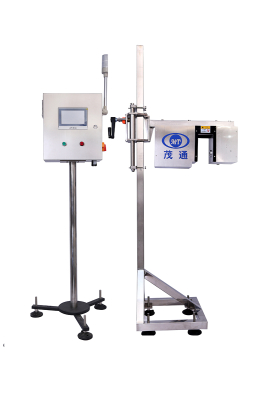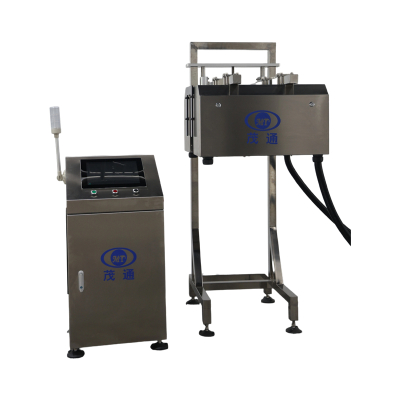
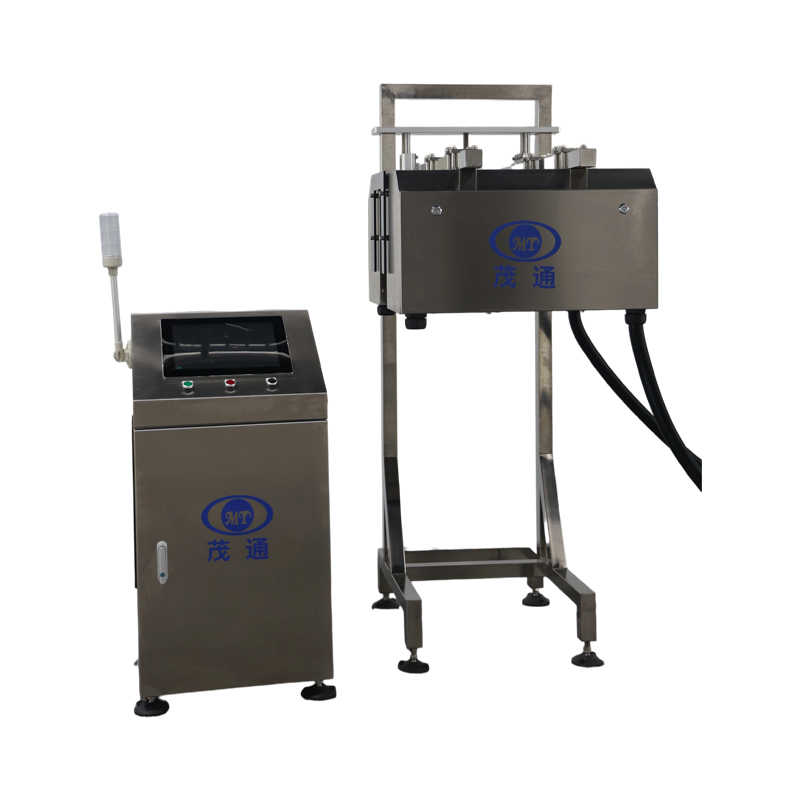
Inkjet Printing and Inspection Machine
1.The advanced algorithm is stable and has high detection accuracy
2.Detect different positions of code
3.The maximum speed is up to 72000 BPH
I. Project and Equipment Description
1. Project Name
PET Bottle Inspection System for Cap, Tamper-Evident Ring, Liquid Level, and Inkjet Code Verification
2. System Function
The system is designed for continuous in-line quality inspection of PET bottles. It monitors cap condition, tamper-evident ring integrity, product fill level, and inkjet printing quality. Bottles identified as non-compliant are automatically removed from the production flow.
3. Maximum Line Speed
Up to 60,000 bottles/hour
4. Applicable Bottle Material
PET
5. Applicable Bottle Volume
200 mL–2 L
II. Environmental and Site Conditions
1. Applicable Installation Elevation
5–3,000 m above sea level
2. Ambient Temperature
5°C–40°C
3. Relative Humidity
50%–65% RH
4. Installation Site Requirements
The customer shall provide an installation area with adequate floor flatness, structural strength, and load-bearing capability. The relevant site conditions shall meet applicable national standards to ensure stable and dependable equipment performance.
5. Storage and Preservation
Following delivery, the equipment, assemblies, and spare components shall be kept in a storage environment that meets the applicable requirements. For equipment stored prior to installation, appropriate lubrication, inspection, and preservation measures shall be implemented to protect against corrosion, deformation, and other forms of deterioration that may adversely affect subsequent installation, commissioning, or operation.
III. Utility Requirements
1. Electrical Supply
220 VAC, 50 Hz, single-phase
The electrical supply shall be arranged by the customer. Any special voltage or electrical configuration must be specified before equipment design and manufacturing. Changes to the standard power requirement may affect the technical configuration, production lead time, and final equipment cost.
2. Power Consumption
Approximately 2.4 kW
3. Control Power
24 VDC
4. Compressed Air
4–12 Pa
The customer shall be responsible for providing the compressed-air pipeline from the plant air source to the connection point of the main inspection unit.
Note: The compressed-air specification should be reconfirmed before final release. 4–12 Pa is unusually low for industrial pneumatic equipment and may have been intended as 4–12 bar or 0.4–1.2 MPa.
IV. System Configuration and Inspection Process
1. Installation Arrangement
The inspection system is designed for direct integration into the existing PET bottle conveying line. It shall be positioned at the specified inspection station according to the actual production-line layout and process sequence.
2. Defects to Be Inspected
The system can identify the following non-conformities:
Cap missing
Cap installed above the specified position
Cap tilted or incorrectly seated
Damaged or broken tamper-evident ring
Insufficient liquid level
Missing inkjet code
Excessive or abnormal inkjet printing
3. Inspection Workflow
Step 1 – Bottle Registration and Position Tracking
As a bottle enters the inspection area, the positioning sensor detects its arrival and initiates the inspection sequence. The control system assigns a unique tracking ID to the individual bottle and links this ID with the encoder's position feedback.
This allows each bottle to be tracked accurately as it moves through the inspection and rejection sections.
Step 2 – Image Acquisition and Evaluation
The positioning signal is used to coordinate image acquisition. Cameras are triggered to inspect three designated areas of the bottle:
Cap and tamper-evident ring
Internal liquid level
Inkjet-printed marking
The acquired images are transferred to the vision-processing unit for analysis. The inspection software evaluates the relevant characteristics according to the predefined quality criteria.
The resulting inspection status is displayed on the HMI (Human-Machine Interface) for operator monitoring and is simultaneously communicated to the PLC (Programmable Logic Controller) for subsequent control operations.
Note: Inkjet inspection evaluates the printed characters or marking on the bottle/cap, rather than the physical condition or operating status of the inkjet printer.
Step 3 – Automatic Rejection
If an inspection result is determined to be defective, the system records the corresponding bottle ID and continues to monitor its position using encoder feedback.
When the identified bottle reaches the rejection station, the PLC activates the reject mechanism at the appropriate timing. The rejector then removes only the corresponding defective bottle, while qualified bottles continue through the production line.
The complete process integrates bottle identification, image inspection, result processing, position tracking, and automatic rejection, allowing the system to maintain reliable quality control even at high production speeds.
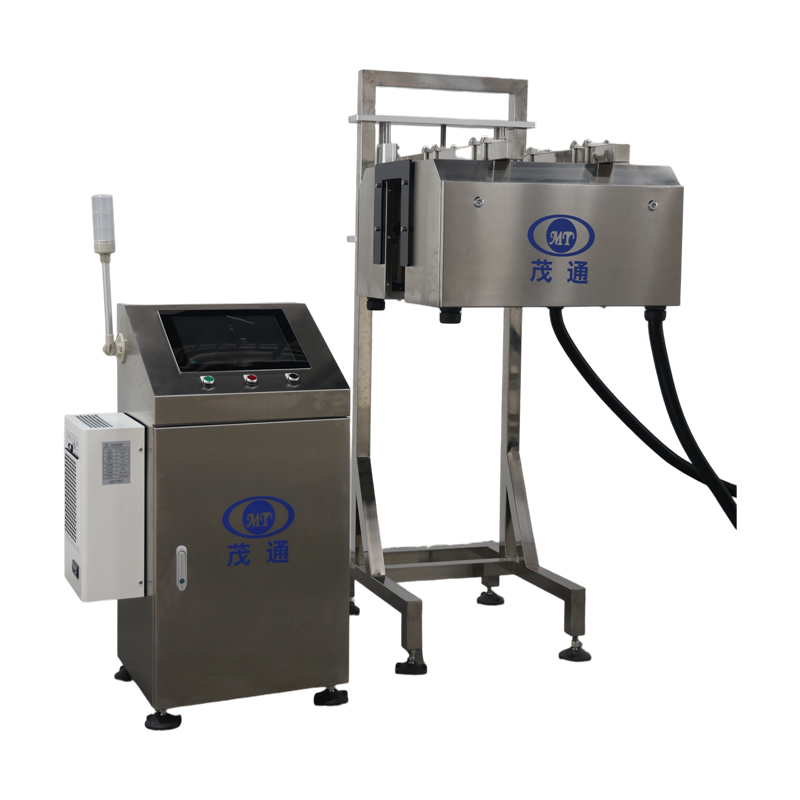
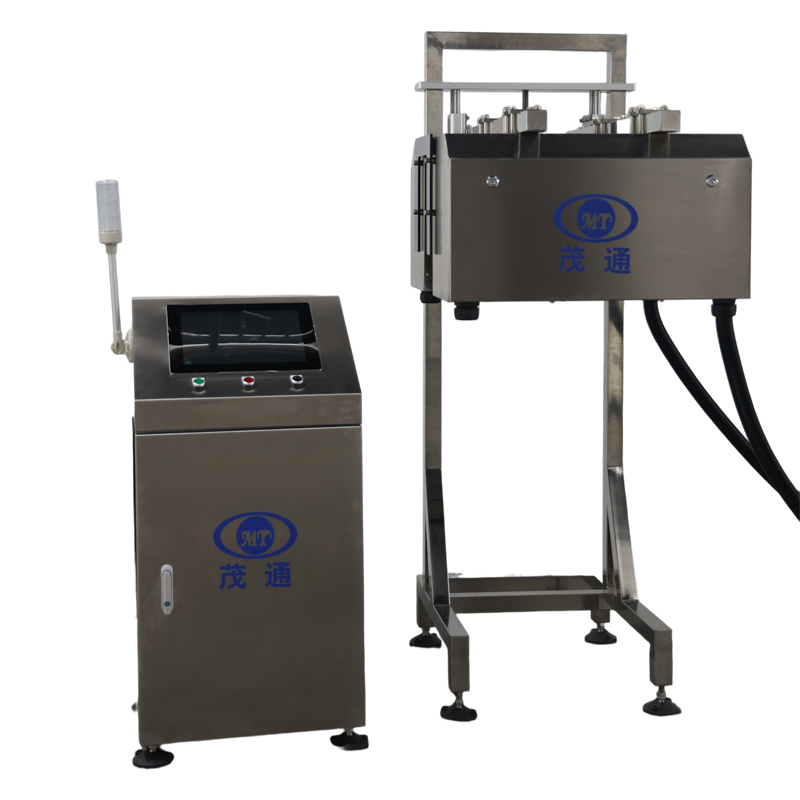
4. Equipment mechanical components
model
| Name | Components | Functional Description | Remark
|
1 | Distribution cabinet | Composed of an image processor, an interface processor, a strobe controller, and a PLC. | Provides power to the entire system, processes images, and controls the rejection of defective products. | |
2 | Detection module | LED light source, industrial CCD camera, and sensor. | Dynamically captures images of PET bottles. | |
3 | Rejection device | Main components include solenoid valves and mechanical components. | Receives signals and controls the rejection of defective products. |
5. Electrical composition of the equipment
model
| Name | Unit | Brand Notes | Quantity |
1 | Embedded imaging industrial computer (4 Ethernet ports) i5+4G+120G | Unit | Taiwan Chaoen, dust-proof, fast processing speed, and excellent stability | 1 |
2 | DAHUA high-speed gigabit digital camera | Unit | Resolution 680x480, imported from Canada, industry-leading brand | 4 |
3 | Camera I/O module | Set | Made-in-China | 4 |
4 | Lens | Piece | COMPUTAR 6MP, 12mm | 4 |
5 | Camera-50/30line cable | Piece | Made-in-China, 5m | 4 |
6 | MW.24v DC power supply 75/120W (DRP-75/120-24) | Piece | Taiwan Mean Well | 2 |
7 | PLC | Piece | Maotong independently developed | 1 |
8 | Touchscreen display | Piece | Taiwan IEI 15-inch | 1 |
9 | Light source controller | Unit | Customized in China, 4-way asynchronous triggering, screen flicker control technology, significantly extending light source life | 1 |
10 | Photo light source | Unit | Customized surface lighting, infrared, and blue | 4 |
11 | Power distribution cabinet | Piece | Made-in-China, 304 material, brushed, pickled, oxidized, and brushed finishes | 1 |
12 | Single-stage rejector Mono | Piece | Customized, air-push type, 304 material | 1 |
13 | Reject unit cylinder | Piece | Norgren high-speed cylinder, UK | 1 |
14 | Reject unit solenoid valve | Piece | MAC high-speed solenoid valve, US, 4.9ms response speed | 1 |
15 | Encoder | Piece | Made-in-China, Hode, incremental type | 1 |
16 | Low-voltage electrical components | Piece | Schneider, France | Several |
17 | Image processing system | Piece | Maotong independently developed, can develop V3.0 according to customer needs | 1 |
18 | Special equipment refrigeration unit - industrial air conditioner | Piece | Shanghai Highly Special, cooling capacity 320W | 1 |
19 | Terminal blocks | Piece | Honeywell, USA | Several |
20 | Photoelectric sensor | Piece | Leuze, Aurora PNP | 1 |
21 | Other electrical components | Piece | - | Several |
22 | Cabinet material and surface treatment | Piece | 304 material, igus® mechanical parts, brushed, pickled, oxidized, and brushed finishes. | 1 |
23 | Alarm light | - | Several | |
24 | Oil-water separator | - | Schneider tri-color tower light | Several |
25 | Relay | Piece | 1 | |
26 | Glass material | Piece | AirTac | 1 |
6. Testing cabinet structure diagram
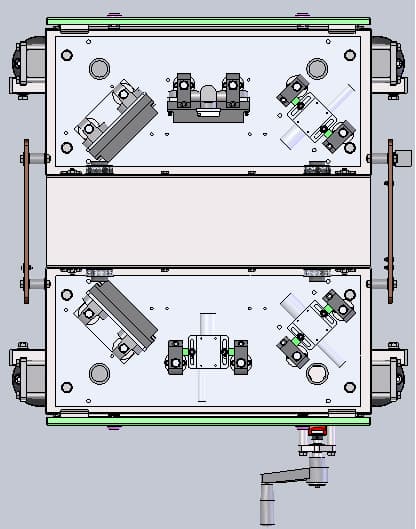
Capping liquid level detection (capping liquid level detection at stations one and three)

Inkjet printing inspection (station 2, single-camera inkjet printing inspection)
This inspection module utilizes three CCD cameras installed at different viewing angles to capture a comprehensive visual profile of each PET bottle, significantly reducing blind areas and enhancing inspection coverage. Specially designed optical lenses help minimize interference from ambient light and control light distribution, ensuring consistent and reliable image acquisition. The vision system is primarily used to identify cap-related defects, including missing caps, excessively raised caps, incorrectly positioned or tilted caps, and cracked, damaged, or otherwise defective caps.
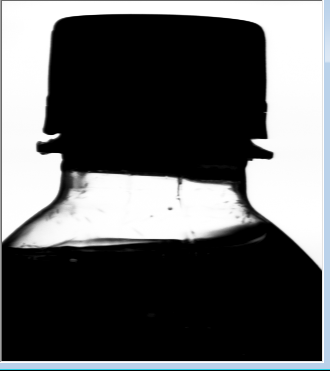

8. Liquid Level Detection
This inspection module utilizes a CCD camera to obtain front-view images of the liquid level inside each PET bottle. During image acquisition, the bottle is kept stationary to maintain a stable and nearly horizontal liquid surface. The captured image is processed using a contrast-based vision algorithm, in which the filled portion below the liquid surface is represented in black, while the unfilled area above it is rendered in white. The system then analyzes the boundary between the two regions and compares its position with the predefined reference level to determine whether the actual liquid level is within the specified range or below the required threshold.


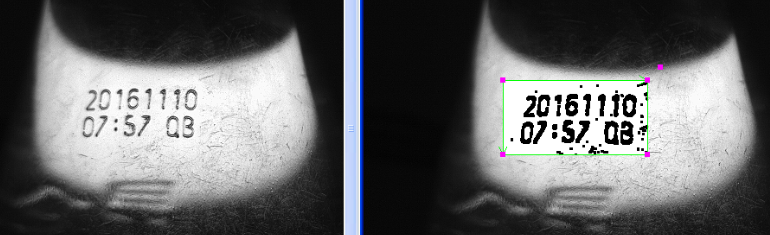
9. Inkjet Printing Inspection
This inspection module is equipped with a CCD camera for front-facing image acquisition of the inkjet markings applied to both the bottle body and cap. The captured images are processed through a dedicated vision algorithm to evaluate the printed content and identify missing, abnormal, or otherwise non-conforming markings. Once a printing defect is detected, the system automatically sends the corresponding rejection signal to remove the defective bottle from the production line. The module supports multiple color combinations, including black printing on yellow caps and white printing on black caps, providing reliable inspection under different marking conditions.
10. Detection accuracy
Inspection Items | Inspection Contents | Detection accuracy
| Rejection rate
|
| No cap | —— | ≥99.99% |
High cap | >0.8 mm | ≥99.98% | |
Crooked cap | >0.8 mm | ≥99.5% | |
Safety ring 100% disconnected | >1mm gap | ≥99.99% | |
Safety ring >70% broken | >1mm gap | ≥98.32% | |
Safety ring >50% broken | >1mm gap | ≥95.78% | |
Safety ring 100% missing | —— | ≥99.99% | |
Safety ring 70% missing | —— | ≥98.21% | |
Safety ring 50% missing | —— | ≥95.78% | |
Inspection Items | Liquid level detection (high and low) | 3mm below (or above) the standard
| ≥99.92% |
Bottle Cap Inspection | No inkjet print | ≥99.99% | |
Overall inkjet print 50% missing | ≥99.95% | ||
Overall inkjet print 30% missing | ≥99.9% | ||
Overall inkjet print 20% missing | ≥99.8% | ||
Inkjet print is blurred enough to remove the inkjet characters after processing | ≥99.99% |