Choose Liquid Level Specs That Keep Glass Bottle Lines Stable
A Glass Bottle Liquid Level Detection Machine is often selected late in a project—after the filler is already set—yet it quickly becomes one of the most influential checkpoints for packaging consistency. For buyers comparing options, the most useful approach is to focus on the few specifications that directly affect line compatibility: throughput, container range, detection accuracy, reject performance, conveyor requirements, and site utilities.

The few specifications that matter most on glass bottle lines
When procurement teams evaluate a Glass Bottle Liquid Level Detection Machine, the goal is not only “can it detect low level,” but also “can it do it online, at the required speed, without causing instability.” In practice, three questions usually decide whether integration is smooth:
Glass Bottle Liquid Level Detection Machine specifications buyers typically verify first
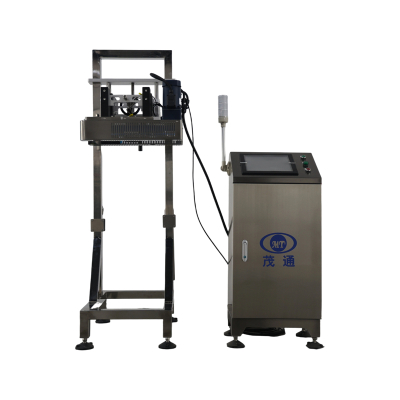
The Glass Bottle Liquid Level Detection Machine (model Glass Bottle Liquid Level Detection Machine) is described as a fully automatic, non-contact online inspection solution using advanced machine vision inspection technology to detect glass bottle liquid level defects.
Quick specification snapshot
| Item | Glass Bottle Liquid Level Detection Machine (Glass Bottle Liquid Level Detector) |
|---|---|
| Rated output (standard configuration) | 1000 bottles/minute |
| Maximum speed | Up to 72000 BPH |
| Applicable containers | Glass Bottle |
| Product capacity range | 100 mL to 1000 mL |
| Inspection approach | Non-contact online inspection (machine vision) |
| Detection focus | Low liquid level detection |
| Detection accuracy | ±2 mm |
| Rejection rate | ≥99.9% |
| False rejection rate | ≤0.05% |
| Installation location | Single-lane conveyor after the filler (with liquid level stratification) |
For readers building a shortlist, this kind of table is useful because it keeps the discussion grounded in what the line must accommodate—especially the rated output, container range, and the stated accuracy and reject metrics.
How online, non-contact inspection is positioned to work
In the Glass Bottle Liquid Level Detection Machine description, the Glass Bottle Liquid Level Detection Machine uses a workstation camera to take photos and analyze the liquid level in glass bottles, then automatically rejects defective products online. The machine is also described with key design notes: it can automatically adapt to the speed of different production lines for dynamic inspection, and it is stated to use a soft ray design with no radioisotope source.
For buyers, the practical takeaway is that stable imaging requires a clear, visible boundary at the inspection point—this is why conveyor layout and “liquid level stratification” appear as explicit installation conditions.

Installation layout requirements that protect inspection stability
A Glass Bottle Liquid Level Detection Machine can meet its accuracy targets only if the bottles arrive in a consistent and readable presentation. For the Glass Bottle Liquid Level Detection Machine, the stated installation location is on a single-lane conveyor after the filler, and the installation requirements specify:
These requirements are best treated as pre-approval checkpoints during line layout. They help reduce avoidable issues such as unclear boundary lines or unstable bottle flow, both of which can undermine a Glass Bottle Liquid Level Detection Machine even when its core specs look strong.
Power, noise, and site environment requirements to plan early
Most engineering teams will confirm utilities before purchase, because site mismatch can delay commissioning. The Glass Bottle Liquid Level Detection Machine is listed with the following power and operating conditions:
Environmental operating conditions are stated as:
Interpreting accuracy and reject metrics the right way
In procurement comparisons, it’s easy to overemphasize a single number. With a Glass Bottle Liquid Level Detection Machine, three values should be read together:
For practical selection, teams typically confirm that the above performance targets align with their product tolerance and that the conveyor conditions (spacing, straight run, and clear boundary line) can be maintained on the actual line.
To explore related inline inspection categories, buyers often compare liquid-level-only stations with combined checks such as a Cap and Liquid Level Inspection Machine, especially when downstream risks include both fill and closure defects.
Where to go next for model confirmation
For the Glass Bottle Liquid Level Detection Machine product description, images, and stated parameters, see the Glass Bottle Liquid Level Detection Machine page. If your line uses other vision checkpoints, it may also be helpful to review the Automatic Visual Inspection Machine as a reference for the same style of online, non-contact inspection approach.