Keep Your Glass Bottle Liquid Level Detection Machine Running in Spec
A Glass Bottle Liquid Level Detection Machine is only as stable as the site conditions around it. For buyers planning an inline inspection station after the filler, the practical details—altitude, temperature, humidity, floor readiness, storage discipline, and conveyor layout—directly affect whether low-fill defects are caught and rejected consistently at speed.
What the equipment is designed to do
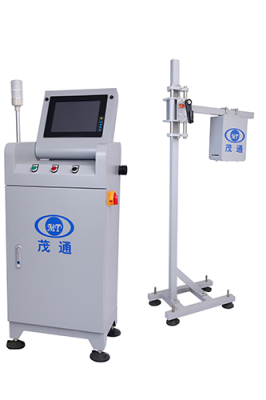
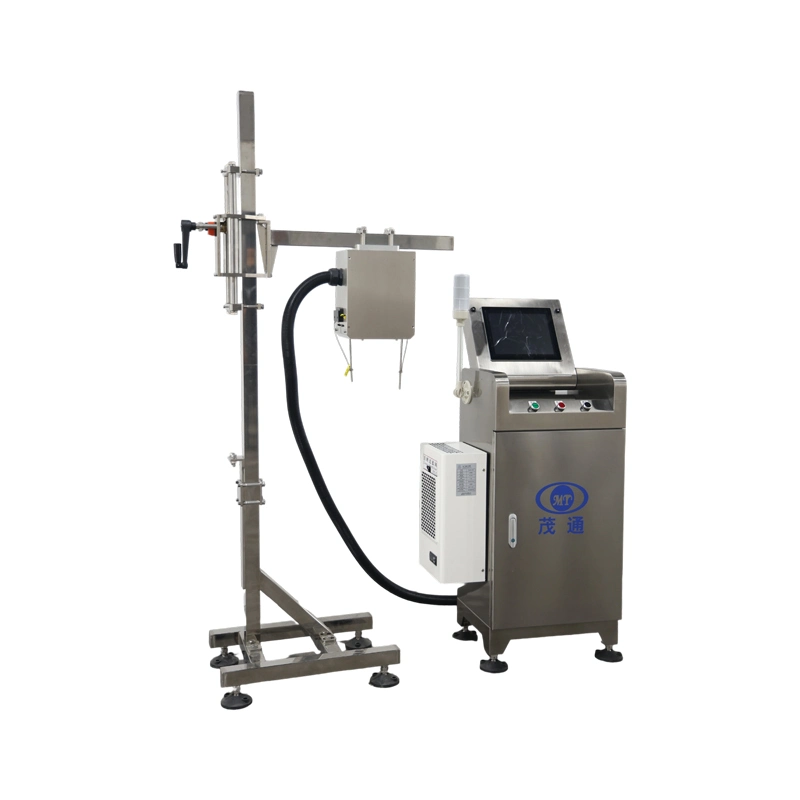
The Glass Bottle Liquid Level Detection Machine Glass Bottle Liquid Level Detection Machine is described as an online inspection machine that uses a workstation camera to take photos and analyze the liquid level in filled glass bottles, then automatically rejects defective products online. It is positioned for fully automatic, non-contact liquid level inspection on glass bottle packaging production lines.
On many high-throughput lines, this type of Glass Bottle Liquid Level Detection Machine is evaluated for two practical outcomes: (1) whether low liquid level defects can be detected with repeatable accuracy, and (2) whether the reject action remains synchronized with bottle position as line speed changes. The product description also highlights dynamic inspection that automatically adapts to different production-line speeds, plus hardware circuit design and self-developed inspection software for fast processing.
Key specifications buyers typically match to their line
For the standard configuration, the Glass Bottle Liquid Level Detection Machine Glass Bottle Liquid Level Detection Machine is specified with the following parameters.
| Item | Specification |
|---|---|
| Model | Glass Bottle Liquid Level Detection Machine |
| Rated output (standard configuration) | 1,000 bottles/minute |
| Applicable containers | Glass bottles |
| Product capacity | 100 mL to 1,000 mL |
| Noise | ≤85 dB (actual noise may vary with containers/packaging, machine power, and building acoustics) |
| Main power supply | 3 × 380 VAC ±10%, 50 Hz, 3 PH+N+PE |
| Lighting power supply | 220 V, 50 Hz, single-phase |
| Total power | Approximately 1.0 kW |
| Control voltage | 24 VDC |
| Detection content | Low liquid level detection |
| Detection accuracy | ±2 mm |
| Rejection rate | ≥99.9% |
| False rejection rate | ≤0.05% |
For procurement teams, these figures are often used as a quick feasibility check before discussing integration details for a Glass Bottle Liquid Level Detection Machine—especially the rated output, bottle size range, and the low-level accuracy specification.
Operating environment and factory readiness
Stable operation of a Glass Bottle Liquid Level Detection Machine depends on meeting defined environmental conditions and basic site readiness.
Optimum operating conditions
Factory floor and storage requirements
Site preparation for a Glass Bottle Liquid Level Detection Machine includes factory parameters such as floor levelness and load-bearing capacity, which must meet relevant national standards and satisfy normal operating requirements.
Storage discipline is also specified: after arrival, parts and machines must be stored in a location that meets relevant national standards. During storage, proper lubrication and maintenance must be performed to prevent surface damage or deformation that could affect installation, commissioning, and long-term operation.
Installation location and conveyor conditions after filling
The Glass Bottle Liquid Level Detection Machine Glass Bottle Liquid Level Detection Machine is specified for installation on a single-lane conveyor after the filler, with liquid level stratification at the inspection point.
Three conveyor requirements are highlighted for reliable inline inspection:
In practical commissioning, these conditions are treated as prerequisites for a Glass Bottle Liquid Level Detection Machine because image analysis depends on a consistent view of the liquid boundary while bottles move continuously.
How inline inspection and rejection works
The inspection workflow described for this type of Glass Bottle Liquid Level Detection Machine follows a clear sequence:
This sequence is commonly used to evaluate whether a Glass Bottle Liquid Level Detection Machine can maintain rejection timing accuracy even when the conveyor speed changes.

In broader machine-vision practice, stable detection at speed usually depends on consistent lighting, strong contrast at the liquid-air boundary, and timing coordination between encoder feedback, image capture, and reject actuation. These principles align with published work on bottle inspection and liquid-level recognition in beverage, packaging, and pharmaceutical applications.
Selecting related inspection equipment for broader coverage
Some lines pair a Glass Bottle Liquid Level Detection Machine with additional inspection stations depending on quality risks and packaging design. Examples of related equipment pages include PET Bottle Liquid Level Detection Machine, Bottle Mouth Inspection Machine, and Cap and Liquid Level Inspection Machine. Each option is typically screened by container type, inspection content, and speed compatibility.
For readers who want the official product description and configuration scope in one place, the Glass Bottle Liquid Level Detection Machine page consolidates the same operating conditions, installation constraints, and low-level inspection performance targets used during line planning.