Can Squeeze Pressure Testing Equipment: The Industrial Guardian of Beverage Safety
With a processing efficiency of 72,000 cans per hour and a rejection accuracy rate of over 99.9%, this is the quality assurance revolution that modern automated testing technology brings to the food and beverage industry.
On beverage production lines, thousands of cans flow at high speed every second. Squeeze pressure testing equipment is a key quality control tool that ensures the perfect sealing of these products.
Through double-sided belt squeezing technology, the equipment can accurately identify products with abnormal pressure, effectively preventing substandard products from entering the market. This contact-based detection technology overcomes the limitations of traditional non-contact detection methods and has become an indispensable part of modern beverage production lines.
1. Working Principle: How Squeeze Sensing Technology Detects Seal Integrity
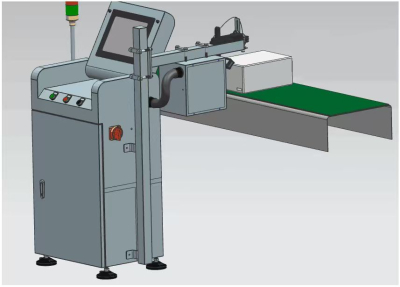
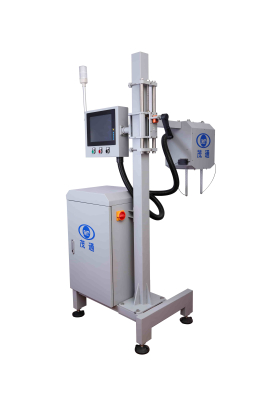
The core principle of the can squeeze pressure testing equipment is based on contact-based pressure sensing technology. When the can passes through the testing machine, the double-sided belts apply slight pressure to the can body, while high-precision sensors behind the belts monitor the can's reaction force in real time.
This process relies on the coordinated work of three key components: the pressure detection unit acts as the "sensory system" of the equipment, responsible for collecting pressure data; the control center acts as the "brain," analyzing and judging the data; and the rejector acts as the "actuator," responsible for separating substandard products.
By comparing the real-time collected pressure values with the preset standard range, the equipment can accurately identify defective products with excessively high pressure, excessively low pressure, or improper sealing. These defects are usually caused by abnormal pressure inside the can after secondary sterilization or deformation of the lid that cannot be restored.
Compared with earlier non-contact detection methods, the biggest advantage of squeeze testing is that it can directly measure the physical response of the can, greatly improving the accuracy and reliability of the detection results.
2. Technical Features: Core Advantages of High-Speed and High-Precision Detection
Modern can squeeze pressure testing equipment integrates a number of advanced technologies, enabling it to perform exceptionally well in industrial production environments.
• High-speed processing capability: High-end models can reach a detection speed of 72,000 cans/hour, and some models even support ultra-high-speed detection of up to 2,000 cans/minute, perfectly matching the pace requirements of modern production lines. • Precise Detection Performance: Utilizing a high-speed 32-bit digital signal processor and a 12-bit AD analog-to-digital conversion module from the USA, the sampling accuracy reaches up to 100,000Hz, and the detection accuracy can reach 0.01Mpa, ensuring that even minute pressure anomalies are detected promptly.
• Robust Design: The equipment has an IP65 or IP66 protection rating, enabling it to adapt to various harsh industrial environments and ensuring stable operation under high temperature and high humidity conditions.
The intelligent human-machine interface is another major highlight, featuring a color touch screen and bilingual menus, greatly simplifying the operation process. The system also supports remote monitoring and network control functions, allowing technical personnel to monitor the equipment's operating status in real time.
The rejection accuracy is a key indicator of equipment performance. Modern extrusion-type detection equipment boasts a rejection accuracy of over 99.9%, minimizing the possibility of missed detections and false rejections.
3. Equipment Composition and Parameters: Understanding the Technical Details of the Detection System
A complete can extrusion pressure detection system mainly consists of three core modules.
The pressure detection unit is the technical core of the equipment, responsible for signal acquisition and processing. It includes a high-sensitivity pressure sensor and a high-speed data processing chip, capable of capturing minute changes in the can body under pressure in real time.
The human-machine interface provides an intuitive operating experience, usually consisting of a touch screen, indicator lights, and an operating interface, making equipment parameter adjustment and data viewing simple and intuitive.
The rejector, as the actuator, accurately separates unqualified products according to the control system's instructions. Its pneumatic striking mechanism responds quickly, with an air consumption of approximately 0.01L/cycle.
In terms of technical parameters, a typical device has dimensions of 948x867x2200mm, a power consumption of approximately 0.5kw, uses a 220V/AC external power supply, requires an external air source pressure greater than 0.6Mpa, and a flow rate greater than 500L/min. The equipment is suitable for ambient temperatures of 0℃-45℃ and altitudes below 3000 meters.
Different models of equipment are designed for different production needs. For example, the P series offers various capacity specifications ranging from 400 bottles/minute to 2000 bottles/minute, meeting the needs of various-sized production enterprises.
4. Application Scenarios: The Guardian of Quality on Beverage Production Lines
In carbonated beverage production lines, extrusion-type pressure testing equipment plays an indispensable role. Especially for two-piece aluminum cans and plastic bottles, the equipment can effectively detect the integrity of the seal under conditions of positive pressure, nitrogen injection, or carbonated beverages.
A typical carbonated beverage can production line configuration includes: empty can inspection machine – liquid level inspection machine – extrusion-type pressure testing machine – coding inspection machine – full case inspection machine. The inspection machine is usually installed on a pressure-free single straight line after filling, capping, and warming the bottles, which is the optimal position to ensure accurate detection.
For non-carbonated canned beverages, the detection parameters need to be adjusted accordingly due to the different characteristics of the contents, but the basic working principle remains the same. The equipment's multi-group rejection data saving function makes parameter adjustment simple and quick when changing products.
After the secondary sterilization process, the pressure inside the can changes significantly. Only through extrusion testing can products with abnormal pressure due to improper sealing be accurately identified. If these defective products enter the market, they can easily lead to product quality problems.
5. Market Prospects and Innovation Trends: The Future Direction of Intelligent Detection
With the advent of the Industry 4.0 era, extrusion-type pressure testing equipment for beverage cans is rapidly developing towards intelligence and integration.
• The application of self-learning algorithms enables the equipment to automatically adapt to environmental changes, reducing operating difficulty; remote diagnosis and maintenance functions significantly improve equipment operation and maintenance efficiency.
• High-speed data processing capabilities continue to improve. The next generation of equipment will adopt more advanced signal processing chips, supporting more complex algorithm analysis and enabling predictive maintenance functions.
• System integration is continuously increasing, with single devices gradually developing into multi-functional detection systems, integrating multiple functions such as pressure detection, visual recognition, and coding inspection.
Domestic suppliers such as Jinan Maotong has established strong technical capabilities in this niche market through continuous technological innovation.
As consumers' demands for product quality increase and production companies place greater importance on brand reputation, the market demand for high-performance pressure testing equipment will continue to grow. Technological innovation will further drive the equipment towards greater precision, intelligence, and reliability.
With continuous technological advancements, future beverage can pressure testing equipment will become even more intelligent. Self-learning algorithms and remote monitoring capabilities are being applied to new-generation equipment, enabling devices to automatically adapt to changes in the production environment and facilitating predictive maintenance.
Several domestic companies are continuously innovating in this field. For example, companies like Jinan Maotong Inspection have accumulated extensive industry experience, providing reliable inspection solutions for various beverage manufacturers.
Although the inspection equipment is hidden in a corner of the production line, it safeguards the quality and safety of every single beverage container, becoming an indispensable quality guardian in the modern beverage industry.