How Cap and Liquid Level Inspection Protects PET Lines
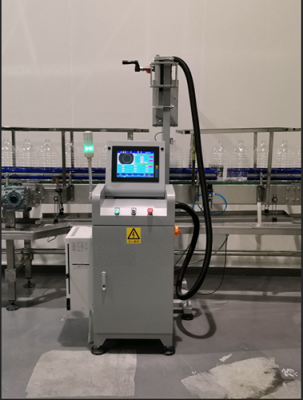
In high-speed PET bottling, a single missing cap, low fill, broken anti-theft ring, or unreadable inkjet code can move quickly from the filler to secondary packaging. A Cap and Liquid Level Inspection Machine is designed to inspect these critical points online, using sensors, CCD cameras, image processing, PLC control, and an automatic rejector to remove non-conforming bottles without interrupting continuous production.

What the system checks on PET bottles
The Cap and Liquid Level Inspection Machine focuses on post-filling quality control for PET bottles from 200 ml to 2 L. Its inspection scope includes missing caps, high caps, crooked caps, damaged or broken anti-theft rings, low liquid level, inkjet code presence, and excessive or abnormal inkjet printing. In a complete PET quality layout, it can work after upstream container checks such as the Plastic Bottle Mouth Inspection Machine, which is used before filling to help control bottle mouth defects.
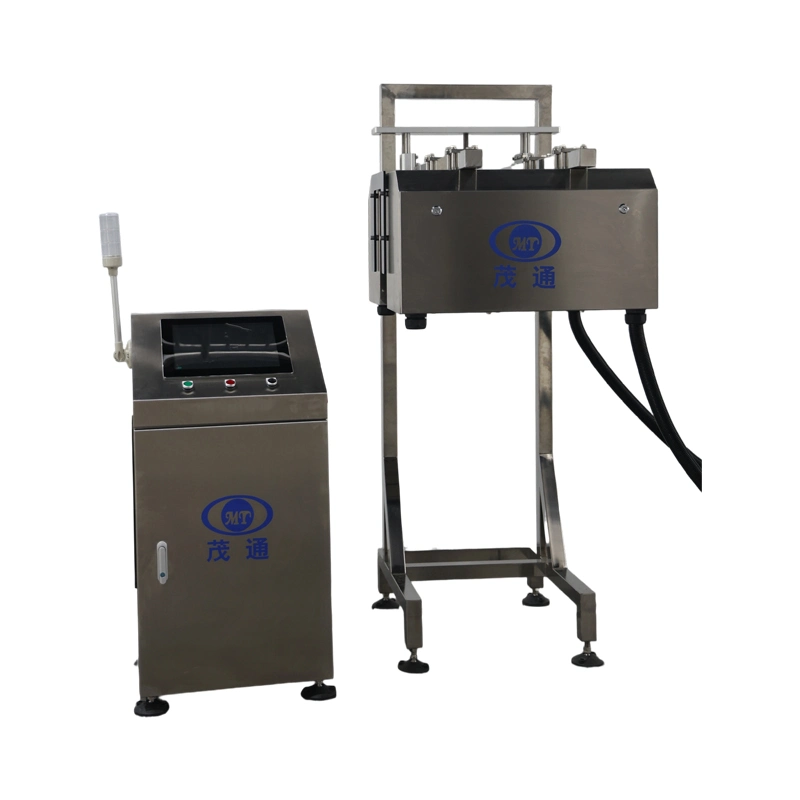
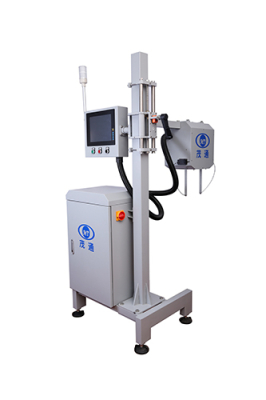
The equipment uses a graphical HMI for operation and real-time display. Its multi-angle inspection design reduces blind zones, while high-brightness LED lighting supports stable image acquisition. The product page specifies inspection capability up to 50,000 BPH in key features, and the project overview lists maximum throughput up to 60,000 bottles per hour, depending on configuration and line conditions.
Detection principle from bottle ID to rejection
The working sequence of a Cap and Liquid Level Inspection Machine is built around precise tracking. As each PET bottle passes the positioning sensor, the control unit records the bottle ID and the current encoder signal. This allows the system to know where that bottle is as it travels toward the rejection point.
Next, the positioning sensor triggers the camera system to capture images of the bottle cap, liquid level, and inkjet code. The image processor analyzes the captured data and sends results to two places at the same time: the HMI for operator viewing and the PLC control unit for rejection preparation. When the control unit receives a rejection signal, it instructs the rejector to remove the bottle corresponding to the recorded ID.
Workflow: Sensor → Encoder → CCD cameras → Image processor → HMI and PLC → Rejector
Core inspection modules
The machine typically divides inspection into dedicated modules so each critical quality point can be evaluated with the correct camera angle, lighting condition, and software logic. This modular structure makes it easier to match the system to bottle shape, cap design, code location, and target output speed, while also helping operators isolate a specific fault source during setup and routine operation.

Cap and anti-theft ring inspection
For cap inspection, the Cap and Liquid Level Inspection Machine uses three CCD cameras to capture bottle images from different angles. This arrangement helps identify missing caps, overhanging or high caps, crooked caps, and broken caps. The anti-theft ring inspection covers fully disconnected rings, partially broken rings, and missing rings, which are important for tamper-evident packaging.
Liquid level inspection
The liquid level module captures frontal images of the bottle. In the processed image, the region below the liquid level appears black, while the empty space above appears white. The system then uses a specialized algorithm to determine whether the level is above or below the required threshold. This function supports high and low liquid level detection for filled PET bottles.
Inkjet printing inspection
The inkjet module captures front-facing images of codes printed on bottles and caps. The Cap and Liquid Level Inspection Machine checks whether the code is present and whether printing is missing, excessive, abnormal, or blurred. The system is described as compatible with multiple color combinations, including black ink on yellow caps and white ink on black caps.
Accuracy data buyers should review
| Inspection item | Detection condition | Rejection rate |
|---|---|---|
| No cap | — | ≥99.99% |
| High cap | >0.8 mm | ≥99.98% |
| Crooked cap | >0.8 mm | ≥99.5% |
| Safety ring 100% disconnected | >1 mm gap | ≥99.99% |
| Safety ring 100% missing | — | ≥99.99% |
| High or low liquid level | 3 mm above or below standard | ≥99.92% |
| No inkjet print | — | ≥99.99% |
| Overall inkjet print 50% missing | — | ≥99.95% |
| Blurred inkjet print | Characters removable after processing | ≥99.99% |
These figures show why the Cap and Liquid Level Inspection Machine is often evaluated as a practical station for reducing manual checks on PET beverage lines. For stable results, buyers should also consider bottle condition, conveyor vibration, lighting consistency, and rejector timing during commissioning.
Installation and operating conditions
The Cap and Liquid Level Inspection Machine is installed according to the customer’s production line layout. The equipment operating requirements include 220V, 50Hz single-phase power, approximately 2.4 kW total power consumption, 24 VDC control voltage, and compressed air from minimum 4 Pa to maximum 12 Pa as stated in the product documentation. Environmental requirements include 5°C–40°C ambient temperature, 50%–65% RH relative humidity, and an altitude range of 5–3,000 meters.
For a broader inspection layout, PET bottle producers may combine this station with a PET Full Bottle Inspection Machine or other line-specific inspection equipment. The goal is not only to reject defective products, but also to help operators identify recurring process issues before they create larger batches of non-conforming bottles.
Conclusion
A Cap and Liquid Level Inspection Machine brings cap inspection, anti-theft ring inspection, liquid level control, inkjet code inspection, and automatic rejection into one coordinated PET bottle inspection process. By combining positioning sensors, encoder tracking, CCD imaging, image processing, HMI display, PLC control, and a rejector, the system helps bottling lines maintain consistent product quality at high speed.
For more detailed specifications or to discuss a specific PET bottling project, please contact us through our official website.
FAQs
What bottle types does the Cap and Liquid Level Inspection Machine support?
It is designed for PET bottles with a filling capacity range of 200 ml to 2 L.
Which defects can it inspect?
It can inspect missing caps, high caps, crooked caps, damaged or broken anti-theft rings, low liquid level, inkjet code presence, and abnormal inkjet printing.
How does the machine reject the correct bottle?
The system records each bottle ID with encoder data, then uses that tracking information to reject the matching defective bottle at the correct position.
Does it inspect inkjet codes as well as caps and liquid level?
Yes. The system includes inkjet printing inspection for missing, partially missing, abnormal, excessive, or blurred code printing.
Where is this machine used in a PET line?
It is used after filling, with the exact installation location determined according to the customer’s production line layout.