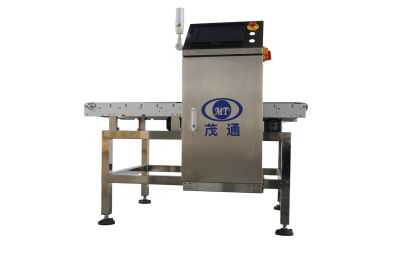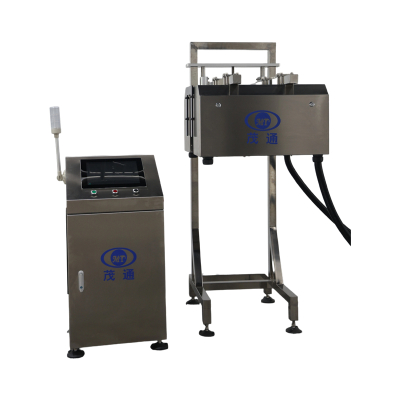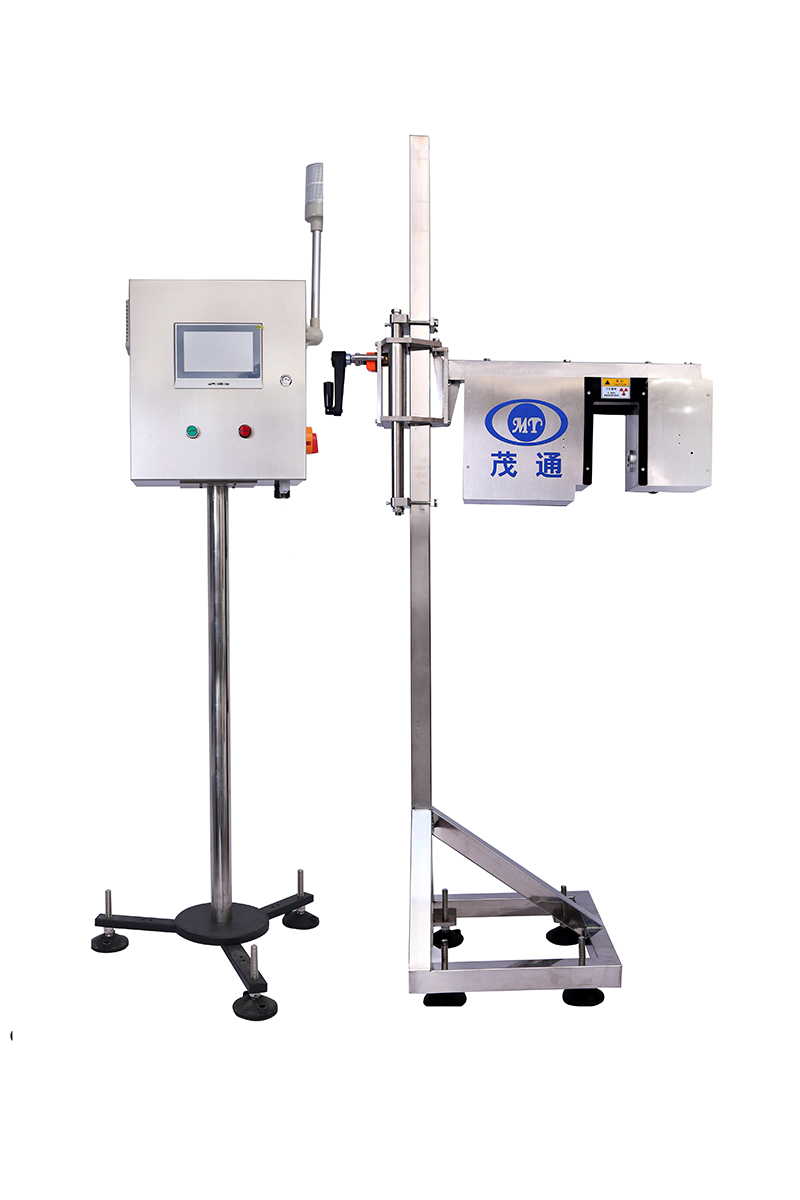
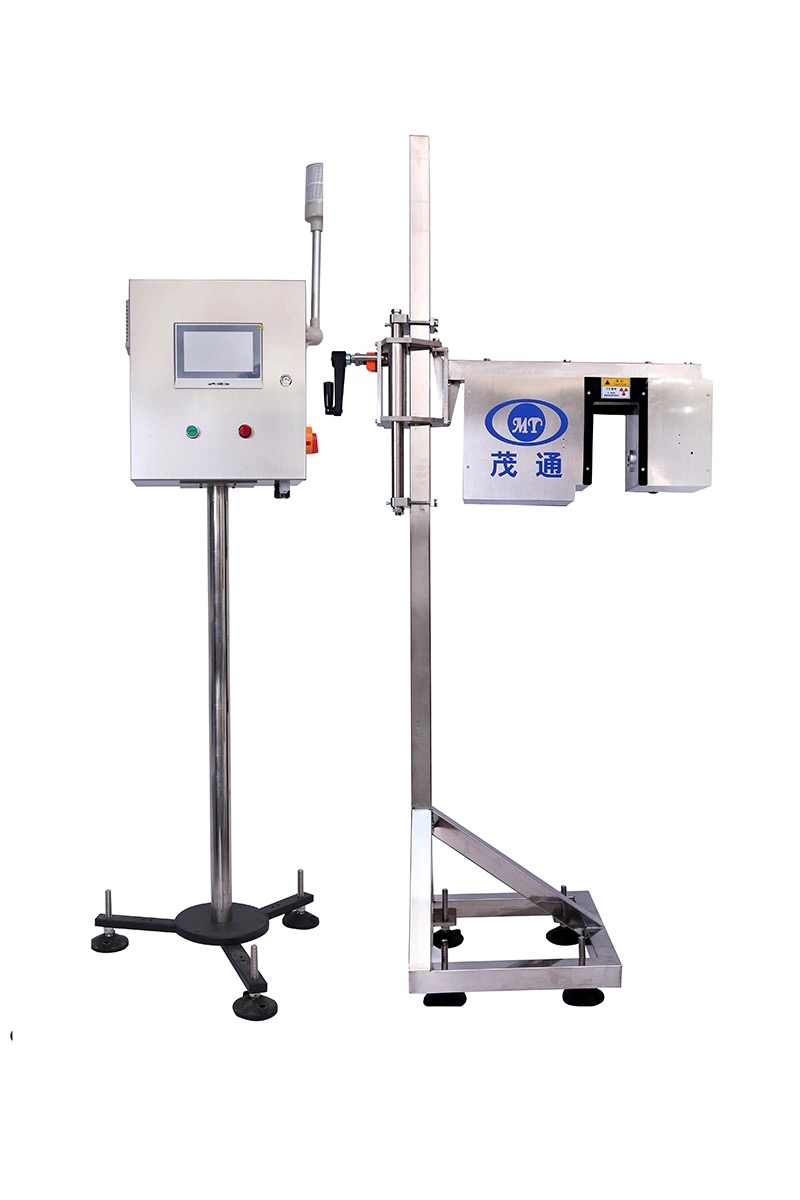
X-Ray Level Inspection Machine
1.Automatically adapt to the speed of different production lines, dynamic inspection
2.No radioisotope source, and uses soft ray design.Ray protection is safe and reliable
3.Using hardware circuit design, self-developed inspection software, high degree of optimization,fast processing speed, the maximum speed of up to 72000 BPH
I. Project Overview
Project Title
X-Ray Liquid Level Inspection and Automatic Rejection System
Project Scope
The system is designed to provide continuous, non-contact monitoring of liquid levels in bottles and cans during production. Containers that fall outside the specified filling range are automatically identified and accurately removed from the production line.
Maximum Throughput
Up to 72,000 containers per hour, depending on the selected high-speed equipment configuration.
Compatible Container Materials
The system can be applied to containers manufactured from a variety of materials, including:
Aluminum
Tinplate
PE
PET
PP
Glass
Ceramics
Other commonly used packaging materials
Applicable Product Range
Container Volume: 200–2,000 mL
Container Diameter: 30–90 mm
Container Height: 50–200 mm
Equipment Type
X-Ray Liquid Level Inspection Machine
II. Environmental and Site Conditions
1. Installation Elevation
5–3,000 m above sea level
2. Operating Temperature
5°C–40°C
3. Relative Humidity
50%–65% RH
4. Factory and Installation Requirements
The installation site shall provide a stable, level, and sufficiently load-bearing foundation. Floor flatness and other relevant infrastructure conditions shall comply with applicable national standards to ensure reliable operation and long-term equipment stability.
5. Storage Requirements
After delivery, the equipment and all associated components shall be stored in an environment that meets applicable national requirements. Where equipment remains in storage prior to installation, appropriate lubrication, inspection, and preservation procedures shall be carried out to prevent corrosion, surface deterioration, deformation, or other damage that could affect installation, commissioning, or normal operation.
III. Utility and Production Requirements
1. Power Supply
220 VAC, 50 Hz, single-phase
The electrical supply shall be provided by the customer. Any special voltage or electrical requirements shall be confirmed before equipment design and manufacturing, as modifications may affect the technical configuration, delivery schedule, and equipment pricing.
2. Power Consumption
Approximately 1.0 kW
3. Control Voltage
24 VDC
4. Compressed Air
4–12 Pa
The customer shall provide the compressed-air pipeline and connection between the plant air source and the main equipment unit.
Note: The compressed-air specification should be verified before the final technical document is issued. 4–12 Pa is not a typical pneumatic working pressure; if the intended value is 4–12 bar or 0.4–1.2 MPa, the unit should be corrected.
IV. Equipment Configuration and Operation
1. Installation Arrangement
Recommended Position
The inspection machine shall be installed downstream of the filling machine, either before or after the inkjet coding station, depending on the actual production-line arrangement.
Conveyor Requirements
The unit shall be integrated into a single-row conveyor chain. A straight conveyor section of at least 2 meters shall be reserved at the installation position to provide sufficient space for stable inspection and rejection.
Installation Period
Standard on-site installation is expected to be completed within 24 hours, provided that the installation area and utilities are prepared in advance.
Conveyor Modification
A guide-rail opening of ≤150 mm shall be provided on the straight conveyor section to create sufficient clearance for the reject mechanism to discharge defective containers.
Major System Components
The complete system mainly comprises:
X-ray liquid level inspection unit
Automatic rejection mechanism
Electrical distribution cabinet
HMI operating panel
Electronic control modules
Mechanical structure and assemblies
Defective Product Collection
It is recommended that the purchaser install a rigid collection container at the reject outlet to receive and collect rejected products.
2. Inspection Functions
The equipment provides two liquid-level inspection modes:
Low Liquid Level Detection — Standard
High Liquid Level Detection — Auxiliary/Optional
Inspection thresholds can be configured according to the customer's product specifications and quality requirements.
3. Inspection Principle
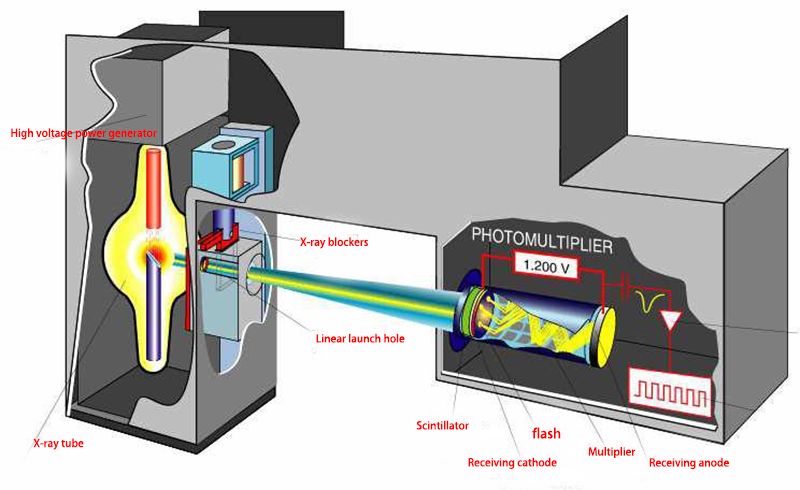
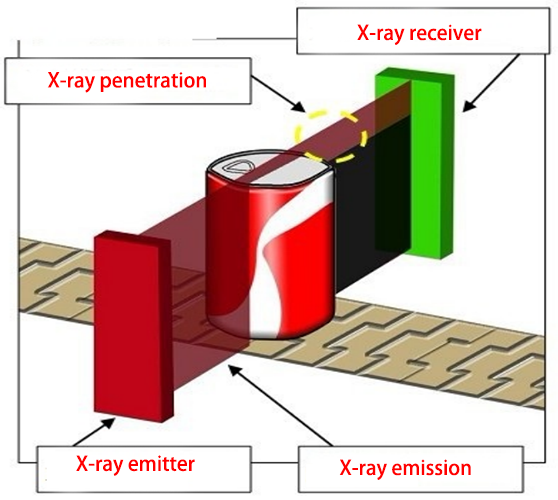
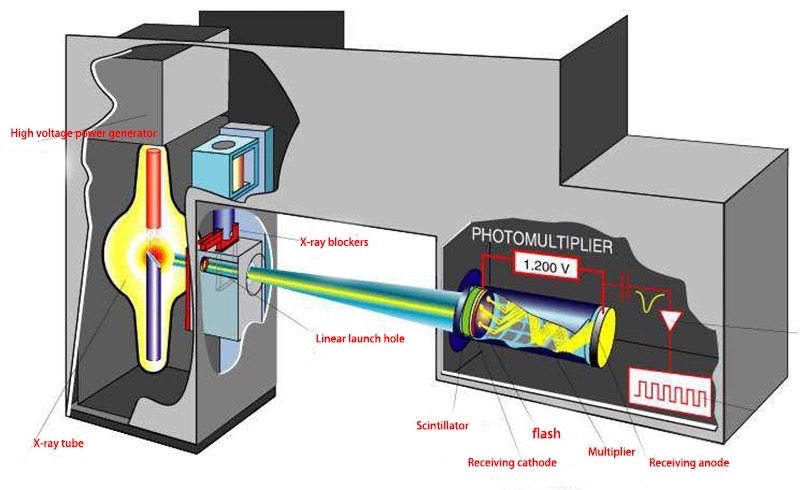
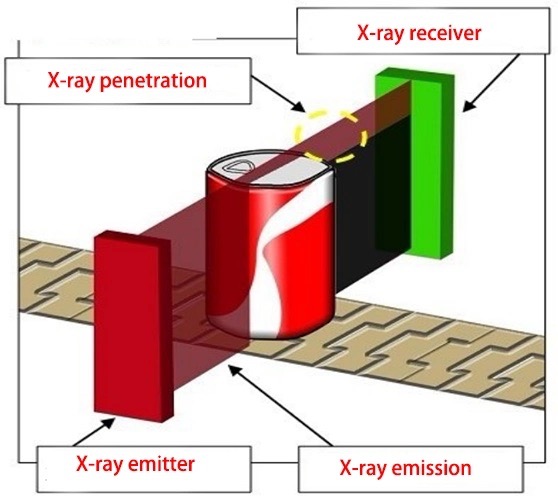
The system determines the liquid level using X-ray transmission and attenuation characteristics.
When X-rays pass through a container, the amount of radiation reaching the detector varies according to the quantity and distribution of material inside the container. Different liquid levels therefore produce corresponding changes in the detected signal.
The acquired signals are converted into measurable values and evaluated against predefined reference parameters. If the detected liquid level falls outside the permitted range, the container is classified as non-conforming and the rejection system is activated to remove it from the production flow.
This non-contact measurement method allows liquid-level inspection without physically contacting or damaging the container.
4. Principal Features
Non-Contact Online Measurement
The system performs liquid-level inspection without physical contact with the product, eliminating the risk of mechanical damage during measurement.
Encoder-Based Container Tracking
An encoder connected to the synchronous drive system provides continuous container-position feedback. This enables accurate product tracking and rejection even when the production line experiences temporary stops or changes in conveying speed.
Dynamic Speed Adaptation
The inspection system is capable of operating at different conveyor speeds and automatically synchronizes its inspection and rejection timing with the actual production rate.
Electromagnetic Interference Protection
Inspection and control functions are arranged in separate electrical enclosures, helping reduce electromagnetic interference and improving overall system reliability.
Sealed Stainless-Steel Construction
The machine adopts a stainless-steel enclosure with a sealed structure, providing improved resistance to moisture, condensation, mist, and water droplets. This makes the equipment suitable for demanding production environments.
Automatic X-Ray Standby Function
During production-line idle periods, X-ray emission is automatically disabled, reducing unnecessary radiation generation and power consumption.
Embedded Control Architecture
The control system combines dedicated hardware circuitry with an embedded operating environment, providing stable long-term operation and reducing dependence on general-purpose computer systems.
Safety Alarm and Automatic Rejection
The system is equipped with an integrated audible and visual alarm system. When an abnormality is detected, the system provides an alarm and automatically activates the rejection mechanism for non-conforming containers.
V. Technical Specifications
| Parameter | Specification |
|---|---|
| Maximum Conveyor Speed | ≤ 1.6 m/s |
| Applicable Container Diameter | 20–120 mm* |
| Dynamic Detection Resolution | ±1.5 mm* |
| Static Detection Resolution | ±1.0 mm |
| Rejection Accuracy | ≥99.99% at up to 400 containers/min |
| Operating Temperature | 0°C–40°C |
| Maximum Relative Humidity | ≤95% RH at 40°C |
| Power Supply | 220 VAC ±20 V, 50 Hz |
* The final equipment configuration shall be selected according to the container diameter, material density, container geometry, and actual production requirements.
* Dynamic detection accuracy may be affected by foam, product agitation, liquid turbulence, or instability of the liquid surface.
Performance Summary
The X-ray inspection system combines non-contact liquid-level measurement, real-time container tracking, automatic defect classification, and high-precision rejection. With a maximum inspection rate of up to 400 containers per minute and a stated rejection accuracy of ≥99.99%, it is suitable for high-speed bottle and can production lines requiring continuous and automated fill-level quality control.