Cap and Liquid Level Inspection Machine Secures Inkjet Codes
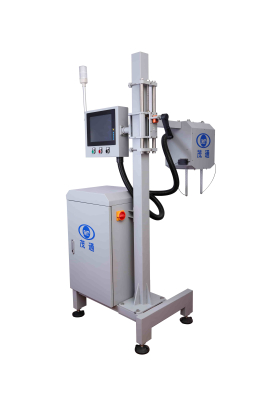
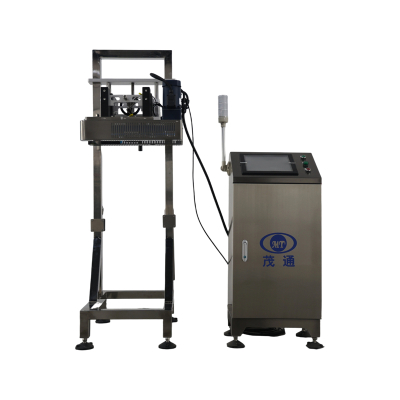
In PET bottle production, an unreadable inkjet code can create the same downstream risk as a poor seal or incorrect fill level. A Cap and Liquid Level Inspection Machine brings these critical checks into one inline inspection point, covering cap condition, anti-theft ring status, liquid level accuracy, and inkjet printing quality before defective bottles continue to packaging.

Why inline inkjet inspection deserves attention
Batch numbers, production dates, and other printed marks support traceability across filling, warehousing, and distribution. When inkjet printing is missing, blurred, incomplete, or excessive, operators need a fast way to identify the affected bottle and remove it from the flow. The Cap and Liquid Level Inspection Machine addresses this by using CCD imaging and digital image analysis as part of a broader PET Bottle Inspection System.
The system is designed for PET bottles with a filling capacity range of 200 mL to 2 L and a maximum throughput of up to 60,000 bottles per hour. For buyers comparing inline inspection options, this makes the Cap and Liquid Level Inspection Machine especially relevant where code quality, sealing control, and fill-level control must be checked without separating them into unrelated manual steps.
How the inkjet printing inspection module works
The inkjet printing inspection module uses a CCD camera to capture frontal images of inkjet codes printed on bottles and caps. After image capture, the system applies digital image analysis to judge whether the printed mark meets the required condition. Bottles with defective or missing inkjet printing are then identified for automatic rejection.

The inspection scope includes:
A useful detail for production teams is color adaptability. The Cap and Liquid Level Inspection Machine supports multiple ink and cap combinations, including black ink on yellow caps and white ink on black caps. This matters because PET beverage lines often run several product formats, and code contrast can vary by cap color, ink color, and packaging design.
Cap and anti-theft ring checks reduce sealing risk
The Cap and Liquid Level Inspection Machine does more than inspect printing. Its cap inspection module uses three CCD cameras to capture bottles from different angles, reducing blind spots around the closure area. This module is used to identify typical cap-related defects, including missing caps, high caps, crooked caps, and damaged or broken anti-theft rings.
For line managers, these checks are closely connected to product integrity. A tilted or high cap may indicate poor closure condition, while anti-theft ring defects can affect consumer perception and package completeness. By combining multi-angle cap imaging with code inspection, the Cap and Liquid Level Inspection Machine helps operators manage several visible quality risks at the same inspection station.
Liquid level detection supports consistent filling
The liquid level module uses a CCD camera to capture frontal images of the bottle’s liquid level. During image processing, the area below the liquid level is represented as dark, while the empty space above appears bright. The system then distinguishes whether the liquid level is above or below the required threshold.
This liquid level detection function is important for identifying low liquid level conditions and supporting consistent product appearance. In the same inspection sequence, the Cap and Liquid Level Inspection Machine can assess the cap, anti-theft ring, liquid level, and inkjet printing condition before issuing a rejection decision.
Detection flow from bottle sensing to rejection
The operating principle follows a clear inline sequence. As each PET bottle passes the positioning sensor, the control unit records the bottle ID and current encoder signal. The sensor then triggers the camera system to capture images of the cap, liquid level, and inkjet code. The image processor analyzes the captured data and sends results to the HMI for display and to the PLC control unit for rejection control.
If the bottle does not meet the inspection criteria, the control unit instructs the rejector to remove the bottle corresponding to the recorded ID. This encoder-based tracking is central to the Cap and Liquid Level Inspection Machine because inspection and rejection occur at different positions along the conveyor.
Key operating conditions buyers should confirm
Before installation, buyers should confirm that the production environment and utilities match the stated operating requirements. The system is designed for an altitude range of 5 to 3,000 meters, ambient temperature of 5°C to 40°C, and relative humidity of 50% to 65% RH. The listed power supply is 220V, 50Hz, single-phase, with total power consumption of approximately 2.4 kW and 24 VDC control voltage.
A practical evaluation should also include conveyor stability, installation position, compressed air connection, product format range, cap colors, and inkjet code placement. When these conditions are aligned, the Cap and Liquid Level Inspection Machine can serve as a compact quality checkpoint for high-speed PET bottle lines.
Selected inspection performance data
| Inspection area | Example inspection content | Listed rejection performance |
|---|---|---|
| Cap inspection | No cap | ≥99.99% |
| Cap inspection | High cap above 0.8 mm | ≥99.98% |
| Cap inspection | Crooked cap above 0.8 mm | ≥99.5% |
| Anti-theft ring | Safety ring 100% disconnected | ≥99.99% |
| Liquid level | 3 mm below or above standard | ≥99.92% |
| Inkjet printing | No inkjet print | ≥99.99% |
| Inkjet printing | Overall inkjet print 50% missing | ≥99.95% |
| Inkjet printing | Blurred print affecting processed characters | ≥99.99% |
Buyer takeaway
For PET bottle producers, the strongest value of a Cap and Liquid Level Inspection Machine is not only that it checks several defects, but that it links each inspection result to automatic rejection. Cap defects, liquid level deviation, and inkjet printing issues can be handled in one coordinated inline process, helping plants reduce manual inspection pressure while keeping traceability marks readable and packaging quality consistent.
FAQs
What does a Cap and Liquid Level Inspection Machine inspect?
It inspects PET bottle cap condition, anti-theft ring status, liquid level accuracy, and inkjet printing quality, then rejects non-conforming bottles automatically.
How does the inkjet printing inspection function operate?
A CCD camera captures frontal images of inkjet codes on bottles and caps. The system analyzes the images and identifies missing, excessive, incomplete, or blurred printing.
Can the system inspect different ink and cap color combinations?
Yes. The inkjet printing inspection module supports combinations such as black ink on yellow caps and white ink on black caps.
What bottle range is listed for this system?
The listed PET bottle filling capacity range is 200 mL to 2 L, with throughput up to 60,000 bottles per hour.
Where is the machine installed on the line?
It is installed on the conveyor line at a suitable inspection point, with the final position determined according to the production line layout.