Applications of Machine Vision Inspection in the Food and Beverage Industry
The application of machine vision inspection in the food and beverage industry primarily focuses on improving inspection efficiency, ensuring product quality, and reducing production costs. By replacing traditional manual inspection with automated technology, it solves the challenges of high appearance quality requirements, high labor costs, and the difficulty of achieving "zero defects" in large-scale production. The following are specific application scenarios and advantages:
I. Core Application Scenarios
Boxed Food Packaging Inspection
Inspection content: Packaging damage, missing labels, incorrect or missing production date/expiration date printing.
Technical implementation: High-definition cameras capture images of the packaging surface, and algorithms analyze edge integrity, text clarity, and positional accuracy.
Advantages: Prevents food spoilage due to damaged packaging and avoids compliance risks caused by missing labels.
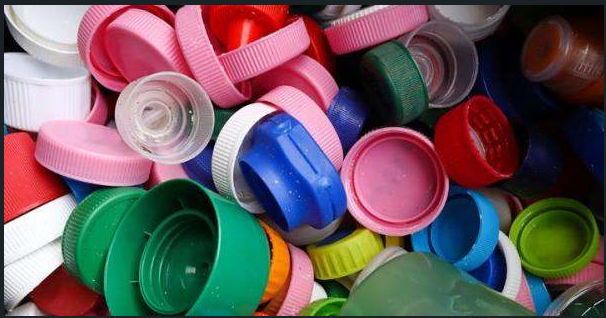
Transparent Bottled Beverage Liquid Level and Bottle Cap Inspection
Liquid level detection: Laser or image comparison technology measures the liquid height in the bottle to ensure the filling volume meets standards (e.g., ±1mm error).
Bottle cap detection: Identifies missing, crooked, damaged, or improperly sealed bottle caps, and removes defective products.
Case study: After adopting machine vision, a brewery reduced its unqualified liquid level rate from 3% to 0.2%, and bottle cap sealing problems decreased by 90%.
Canned Food and Beverage Appearance Inspection
Inspection content: Pull-tab integrity, production date/serial number printing quality, can body dents or deformation.
Technical challenges: Requires handling reflective metal surfaces; contrast is enhanced through polarized light filters or infrared imaging.
Results: A canning factory achieved a 99.9% accuracy rate in detecting missing pull-tabs, preventing difficulties for consumers in opening the cans.
Auxiliary Component Inspection of Paperboard Beverage Cartons
Inspection items: Whether the straw is attached, whether the opening is damaged, and the position of the sealing tape.
Innovative application: Combined with 3D vision technology to detect straw curvature, ensuring proper functionality.
Overall Packaging Counting and Box Verification
Function: Counts the number of bottled/boxed products and verifies the completeness of the packaging (e.g., whether a 12-bottle pack is missing any bottles).
Advantages: Replaces manual counting, increasing speed by more than 5 times, with an error rate of less than 0.01%.
II. Technological Advantages Compared to Traditional Manual Inspection
Efficiency and Cost:
The work that requires hundreds of people for manual inspection can be replaced by a single machine vision system, saving over one million yuan in labor costs per year on a single production line.
Detection speed reaches hundreds of items per minute, 3-5 times faster than manual inspection.
Quality Assurance:
Manual inspection is prone to missed detections due to fatigue and individual differences (e.g., error rate of up to 5% in small character date recognition). Machine vision can achieve stable 24-hour detection with an error rate below 0.1%.
Supports data traceability, recording detection images and results for each batch, meeting food safety regulations.
Flexibility:
Detection parameters (such as different packaging sizes and character positions) can be quickly adjusted to adapt to multi-product production line switching.
III. Industry Driving Factors
1. Upgraded Consumer Demand: Consumers' increased demands for food safety and packaging aesthetics are forcing companies to improve quality inspection standards.
2. Automation Trend: The automation rate in the food and beverage industry exceeds 70%, and machine vision has become a key component of "unmanned factories."
3. Policy Compliance Pressure: For example, the "Food Safety Law" requires complete and traceable packaging information, and machine vision provides digital quality inspection evidence.
IV. Typical Enterprise Cases
Jinan Maotong Inspection Equipment Co., Ltd.'s applications in the food and beverage industry include:
• Customizing a packaging inspection line for a dairy company, achieving simultaneous detection of 12 defects such as label misalignment and sealing defects in boxed milk packaging.
• Developing a liquid level detection system for transparent bottled juice, using AI algorithms to adapt to the transmittance differences of different colored liquids (such as orange juice and apple juice).
• Deploying a high-speed vision system on a beverage can production line, detecting 1200 cans per minute with a pull-tab defect recognition rate of 99.99%.
V. Future Development Directions
1. Deep Learning Integration: Improving the recognition capabilities of complex defects (such as packaging wrinkles and ink contamination) through convolutional neural networks (CNN).
2. Multi-modal Detection: Integrating visible light, infrared, and X-ray technologies to achieve internal foreign object detection in packaging.
3. Integration with Industrial Internet: Uploading detection data to the cloud in real time to optimize production parameters (such as adjusting filling machine pressure).
Machine vision inspection has become a core tool for the high-quality development of the food and beverage industry, helping companies meet stringent market demands and regulatory standards through precise, efficient, and reliable quality inspection capabilities.