How can visual inspection improve the acceptance rate of bottles and cans?
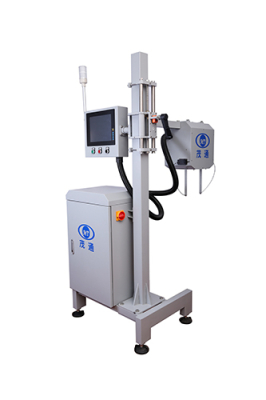
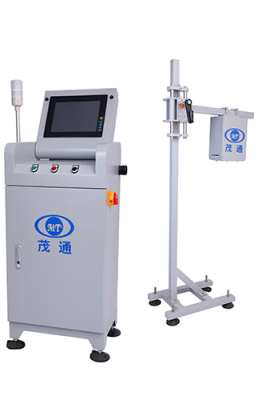
Visual inspection technology, by simulating and surpassing human vision, equips bottle and can production lines with tireless "all-seeing eyes," fundamentally changing the mode and standards of quality control. Through high-precision automated inspection, it not only significantly improves the pass rate of bottles and cans but also enables the traceability of production data, providing a basis for continuous process optimization. The table below summarizes the core mechanisms by which visual inspection improves the pass rate.
| Action Dimension | Core Objective | Key Technologies and Methods |
| Defect Detection Capability | Accurately identify various defects and prevent defective products from flowing out | High-resolution imaging, deep learning models (such as YOLOv8, Faster-RCNN), multi-angle lighting |
| Process and Deployment Optimization | Improve the stability and efficiency of the detection system and intercept defects early in production | Optimize the accuracy of visual positioning camera triggering, conduct substrate defect detection before key processes such as spraying |
| Production Process Optimization | Achieve 100% online inspection, replace manual labor, and optimize production through data analysis | Real-time online detection and automatic rejection, data recording and statistical analysis |
Advantages of Visual Inspection Compared to Manual Inspection
Traditional manual visual inspection has inherent disadvantages such as low efficiency, strong subjectivity, fatigue, and inconsistent standards. Visual inspection systems completely change this situation:
• Objectivity and Consistency: Detection standards are precisely defined as algorithm parameters, unaffected by emotions or fatigue, ensuring that each bottle and can is judged according to the same "ruler."
• High Efficiency and Speed: Modern vision systems can inspect tens or even hundreds of products per second, easily matching high-speed production lines of tens of thousands of bottles per hour, which is unattainable by manual labor.
• High Precision and Reusability: The system can detect micron-level defects invisible to the human eye, such as fine scratches and tiny stains. Once the algorithm is mature, it can be quickly replicated to multiple production lines, ensuring highly consistent quality standards across different production bases.
Key Dimensions of Bottle and Can Inspection
A complete visual inspection system performs comprehensive checks on multiple key parts of the bottle and can:
1. Bottle Mouth Inspection: The bottle mouth directly relates to sealing performance and is a top priority for inspection. The system focuses on checking whether the sealing surface is flat and the threads are intact, ensuring no gaps or cracks to prevent leakage or contamination. 2. Bottle Body Inspection: Bottle body inspection covers both the inner and outer surfaces, primarily detecting defects such as scratches, cracks, dents, bubbles, and foreign matter adhesion. Multi-angle light sources and high-speed cameras are used to clearly present the surface condition of various areas of the bottle body.
3. Bottle Bottom Inspection: The bottle bottom needs to withstand significant pressure, making its flatness and integrity crucial. Inspection focuses on unevenness, inconsistent thickness, bottom spikes (sharp protrusions), and cracks.
4. Label and Packaging Information Inspection: For labeled bottles and cans, the system also checks whether the label is properly applied, free from wrinkles or damage, and reads information such as production date, expiration date, and barcode to ensure accurate packaging information.
Production Line Deployment and Accuracy Improvement Strategies
Successfully applying a visual inspection system to a production line requires considering the following key aspects:
• Imaging System is Fundamental: Setting up the imaging system is the first step to successful inspection. The appropriate light source (such as backlighting, diffuse light, coaxial light) and high-speed industrial camera must be selected based on the bottle/can material (e.g., glass, metal) and surface characteristics (high reflectivity, matte finish) to ensure the capture of high-contrast, clearly defined images.
• Intelligent Positioning and Triggering: On a high-speed production line, ensuring the camera triggers at the precise moment the bottle/can reaches the correct position is crucial. Advanced positioning data processing methods analyze the bottle/can contour and position deviation in real time to calculate a comprehensive trigger index, achieving high-precision triggering and avoiding missed shots or ghosting.
• Deep Learning Algorithms are Core: Traditional algorithms may be insufficient in handling complex and variable defects. Deep learning-based models (such as YOLOv8, Faster-RCNN), trained on a large number of defect images, possess powerful feature learning and recognition capabilities. They can not only detect known defects but also have a certain ability to identify previously unseen abnormal forms, significantly improving the accuracy and robustness of detection.
• Closed-Loop Feedback and Data-Driven Approach: The most advanced applications go beyond simply "rejecting" defects; they aim to "prevent" defects. The system statistically analyzes the large amount of defect data detected, identifies processes or time periods where defects are concentrated (for example, finding an increase in bottle scratches during a certain period), and feeds this information back to upstream processes (such as molding machines and conveyor systems) to adjust process parameters and reduce defect generation at the source, forming a closed-loop management system for quality control.
Technological Development Trends
Visual inspection technology is constantly evolving, and future advancements will further improve bottle and can pass rates in the following areas:
• Lighter models: Research into lightweight networks like FasterNet aims to significantly reduce computation and model size while maintaining high accuracy, making them easier to deploy on lower-cost edge computing devices and reducing the overall system ownership cost.
• Application of 3D vision technology: Traditional 2D vision primarily detects planar defects. 3D vision technology can acquire 3D point cloud data of bottles and cans, allowing for precise measurement of 3D morphological defects such as dents, protrusions, and flatness, taking detection capabilities to a new level.
• Low-code platforms and intelligence: The emergence of machine vision low-code platforms allows engineers to develop and adjust detection tasks through graphical interfaces and minimal configuration, greatly reducing the technical threshold and deployment cycle, enabling visual inspection to respond more quickly to production line changes.
Summary and Recommendations
Visual inspection technology, with its objective, efficient, and accurate characteristics, has become an indispensable core method for improving bottle and can pass rates. It has evolved from simply "replacing manual labor" to "driving quality optimization," achieving a fundamental transformation in quality control models.
If you are planning or optimizing your production line, it is recommended to start by clearly defining your inspection needs (defect types, speed, and accuracy requirements), and communicate in detail with a professional visual solution provider to jointly design a reasonable imaging solution and accumulate high-quality defect image data. A successful visual inspection system is an organic combination of optics, mechanics, electronics, computing, and software. Its successful deployment will build a solid defense line for your product quality and brand reputation.
We hope this information is helpful to you. If you have specific types of bottles or cans (such as glass bottles, metal cans) or specific defect detection problems (such as sealing, printing), please provide more details, and I can try to provide a more specific analysis.