How Tetra Pak Straw Pipette Detection Cuts Code Escapes
On high-speed beverage carton lines, small coding or straw-application issues can quickly turn into large batches of nonconforming packs. Tetra Pak Straw Pipette Detection is positioned as an inline inspection solution that combines inkjet code inspection and straw presence verification in one automated step, helping teams catch missing or unreadable codes, content errors, and missing straws before cartons move further downstream.

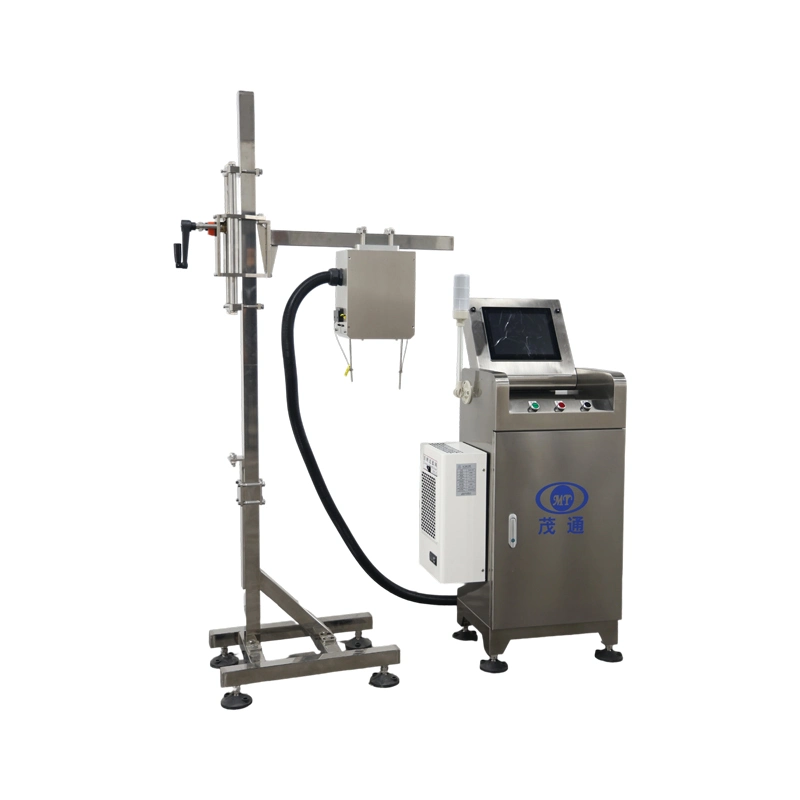
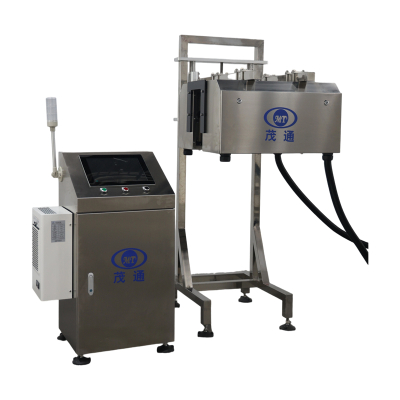
Equipment overview for dual inspection on carton lines
The Tetra Pak Straw Pipette Detection system is described as an inline, non-contact inspection unit for paper packaging products, designed to inspect inkjet printing quality and straw integrity and automatically identify and reject products that fail quality requirements. It is associated with model MT-LL-PM-C1-01X and a stated inspection throughput of up to 24,000 packages per hour.
Key operational characteristics described for the system include a flexible HMI with multi-level access permissions, encoder-based counting mounted on the conveyor’s synchronous motor to keep rejection accuracy stable during speed changes or stops, daily defect image storage with adjustable retention time, continuous rejection capability with an emergency line-stop function, IP65 protection, and 24/7 remote access for monitoring and operation. The product page also notes self-developed inspection software with a fastest processing speed up to 60,000 BPH.
Eight inspection capabilities buyers typically evaluate
In practice, Tetra Pak Straw Pipette Detection is used to look for code-related nonconformities and straw-related nonconformities on the same pass. The following eight capabilities are listed for the system.
Code presence detection
This capability targets cartons with no inkjet printing, including cases where a package is reversed/inverted. The listed theoretical experimental rejection rate for missing code scenarios is ≥99.99%.
Blurred code detection
Blurred or distorted codes may be present but not usable. The system lists performance targets under “missing/blurred inkjet printing” conditions: overall code missing >50%: ≥99.99%, and overall code missing >30%: ≥99.96% (theoretical experimental data). In a procurement context, this capability is often treated as the baseline for keeping coding legibility stable without relying on manual spot checks.
Code errors
A carton can carry printing that looks complete while containing incorrect information. The system includes “code errors” among its detection functions and also lists an “incorrect inkjet printing” condition described as code characters unreadable to the human eye, with a theoretical experimental rejection rate of >99.93%.
Missing characters
Missing or incomplete characters can undermine readability and traceability. The system includes missing characters as a dedicated function alongside blurred-code checks, enabling evaluation of character completeness rather than only the presence of a printed region.
Character recognition and decoding
Character recognition and decoding are listed as supported functions. In an operational sense, this allows a line to evaluate printed content at the character level rather than treating the code as only a visual pattern.
Position deviation detection
Beyond content, the code must appear within an acceptable area on the pack. The system lists position deviation (beyond a preset range) and provides a “position offset” item with a theoretical experimental rejection rate of >99.99%.
Duplicate code detection
Duplicate codes (multi-code detection) are listed as a capability. The system also provides a “duplicate code” item described as exceeding the expansion zone, with a theoretical experimental rejection rate of >99.99%.
Straw presence verification
Straw application issues are handled through integrated straw inspection. The “no straw” item lists a theoretical experimental rejection rate of >99.99%, with a listed straw inspection false kick rate of ≤0.01%.
Installation location and what it enables
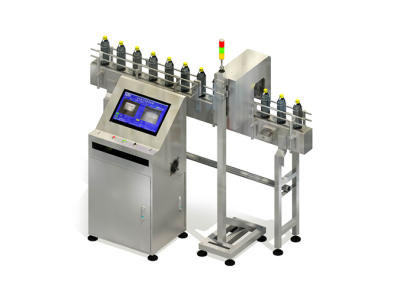
The inspection unit is specified to be installed on the conveyor line approximately 0.5–1.0 m downstream of the tube applicator. This placement is intended to ensure that both the inkjet coding result and the straw application result can be checked in the same station—an approach that can simplify line integration when the goal is to verify two critical pack attributes without interrupting flow.
Detection principle and rejection flow on an operating line
The detection principle is described as using a Gigabit Ethernet digital camera to capture top-down images of each package for digital analysis. The workflow is presented as an inline sequence that links sensing, imaging, processing, operator display, and physical rejection:

The system’s algorithm principle is described as a deep learning approach that reduces manual configuration. For a model change on-site, about 300 product images are collected for data modeling by Jinan Maotong Inspection.
Key specifications and listed inspection performance
The following data points are provided for Tetra Pak Straw Pipette Detection (model Tetra Pak Straw Pipette Detection). Rejection rates are described as theoretical experimental data, and the inkjet inspection false kick rate is listed as ≤0.03%.
| Item | Value |
|---|---|
| Model | Tetra Pak Straw Pipette Detection |
| Max production speed | 24,000 packages/hour |
| Inspection scope | Inkjet printing quality and straw presence |
| Protection rating | IP65 |
| Inkjet inspection false kick rate | ≤0.03% |
| Straw inspection false kick rate | ≤0.01% |
| Missing code (missing code/reversed package) rejection rate | ≥99.99% |
| Missing/blurred inkjet printing (overall code missing >50%) rejection rate | ≥99.99% |
| Missing/blurred inkjet printing (overall code missing >30%) rejection rate | ≥99.96% |
| Incorrect inkjet printing (unreadable to the human eye) rejection rate | >99.93% |
| Position offset rejection rate | >99.99% |
| Duplicate code rejection rate | >99.99% |
| No straw rejection rate | >99.99% |
Selecting a related inspection option for code-focused needs
For plants that want a code-centered configuration, Jinan Maotong Inspection also presents a related product page for the Tetra Pak Code Inspection Machine, which describes the same model designation and outlines similar inline inspection and rejection principles for paper-packaged products.
Contact
For configuration details tied to a specific carton line, Jinan Maotong Inspection Equipment Co., Ltd. lists the following contact information: