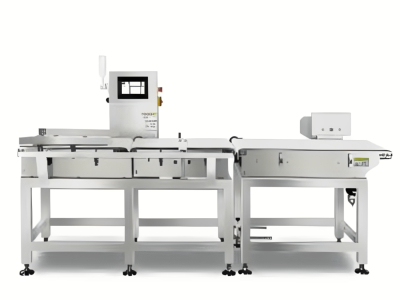
Make Every Carton Traceable With Straw Pipette Detection
High-speed paper beverage packaging lines don’t fail dramatically—they fail quietly. A straw that doesn’t apply, an inkjet code that’s incomplete, or a print position that drifts out of tolerance can slip past busy operators and create avoidable rework, customer complaints, and audit friction.

Tetra Pak Straw Pipette Detection is designed for inline control of two essentials on paper-packaged beverage products: inkjet printing quality and straw presence. By combining inspection, traceability, and automatic rejection in one station, Tetra Pak Straw Pipette Detection helps packaging teams keep decisions consistent at production speed—and keep every defect reviewable after the fact.
What Tetra Pak Straw Pipette Detection checks on every package
On a typical line, the risks are predictable: the code is missing or blurred, characters are wrong or incomplete, the code is duplicated, the print position shifts, or the carton is reversed; separately, the straw may be missing. Tetra Pak Straw Pipette Detection targets these practical failure modes in a single pass.
Detection items supported by Tetra Pak Straw Pipette Detection include:
Because Tetra Pak Straw Pipette Detection is non-contact and inline, it is positioned for continuous operation without physically touching or damaging products during inspection.
Where the system is installed and why placement matters
Tetra Pak Straw Pipette Detection is installed on the conveyor line approximately 0.5–1.0 meters downstream from the tube applicator. This placement is intentional: it gives the line enough distance for stable presentation while keeping the inspection close enough to the upstream process that root-cause checks remain practical.
In procurement discussions, it’s worth confirming that the planned installation location provides a clear, repeatable view of both the inkjet code and the straw area. Stable presentation makes any Tetra Pak Straw Pipette Detection project easier to tune and easier to maintain.
Inspection workflow from sensing to reject
The detection principle used by Tetra Pak Straw Pipette Detection follows a clear, production-friendly sequence. First, a positioning sensor detects package arrival and records a unique package ID together with the real-time encoder signal. Next, a Gigabit Ethernet digital camera captures a top-view image covering both the inkjet code area and the straw zone. The image is then transmitted to the processor for analysis, and the result is sent both to the HMI for status display and to the control unit for reject handling. If a defect signal is confirmed, the rejector removes the affected package or packages without interrupting normal product flow.

This encoder-based counting approach is a practical differentiator: Tetra Pak Straw Pipette Detection is designed so rejection accuracy is not affected by production line stoppages or changes in conveyor speed.
Features that support stable decisions at speed
Packaging plants rarely offer lab conditions. Tetra Pak Straw Pipette Detection is described with multiple features that aim to keep inspection stable through normal variation in temperature, ambient light, operating rhythm, and line handling. This matters because false alarms and missed defects are often driven less by the logic of inspection itself and more by unstable viewing conditions around the product.
For buyers comparing solutions, these details matter because they connect inspection accuracy to operating reality—especially when the line temperature and lighting conditions change over long runs.
Customization and model changeovers
No two packaging lines share exactly the same constraints. Tetra Pak Straw Pipette Detection supports customizable functions based on customer production requirements and installation conditions.
On the algorithm side, Tetra Pak Straw Pipette Detection uses a deep learning approach intended to reduce manual intervention during product model changes. When switching product models on-site, approximately 300 product images are collected for data collection, and the system supplier constructs the data model.
Defect traceability through daily image storage
A common gap in manual inspection is the lack of consistent evidence when an issue is escalated. Tetra Pak Straw Pipette Detection addresses this with automatic daily defect image storage, with an adjustable retention period.
In practice, this means quality and production teams can review what the system classified as defective, compare defect types across shifts, and re-check recurring patterns such as position deviation, blurred characters, or missing-straw events. This traceability function makes Tetra Pak Straw Pipette Detection useful not only for rejection, but also for structured investigation.
Technical specifications and stated detection performance
Tetra Pak Straw Pipette Detection is described with the following manufacturer-stated specifications for the Tetra Pak Straw Pipette Detection system.
| Technical Specification | Value |
|---|---|
| Equipment model | Tetra Pak Straw Pipette Detection |
| Maximum production speed | 24,000 packages/hour |
| Software processing speed | Up to 60,000 BPH |
| Protection rating | IP65 |
| Inspection method | Non-contact, inline |
| Missing-straw rejection rate | ≥99.99% |
| Missing-code rejection rate | ≥99.99% |
| Inkjet inspection false kick rate | ≤0.03% |
| Straw inspection false kick rate | ≤0.01% |
The stated rejection-rate data are presented as theoretical experimental results, and the listed test items are evaluated in real time for each paper package.