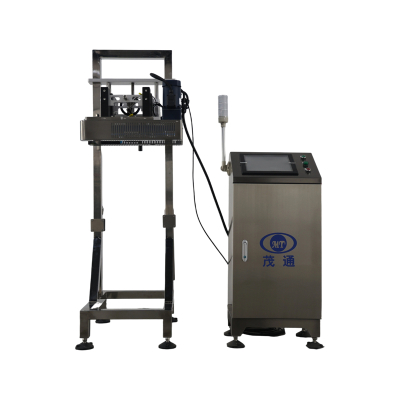
Keep the PE Bottle Squeeze Leak Detection Machine Stable on Fast Lines
In high-speed packaging, leak checks only create value when results stay consistent—minute after minute, shift after shift. The PE Bottle Squeeze Leak Detection Machine is built for inline inspection of gas-containing containers, combining belt squeeze pressure detection, dual-sensor measurement, and automatic rejection. Stable operation, however, depends heavily on how the system is installed and how the line conditions are controlled.

What the inspection system actually measures
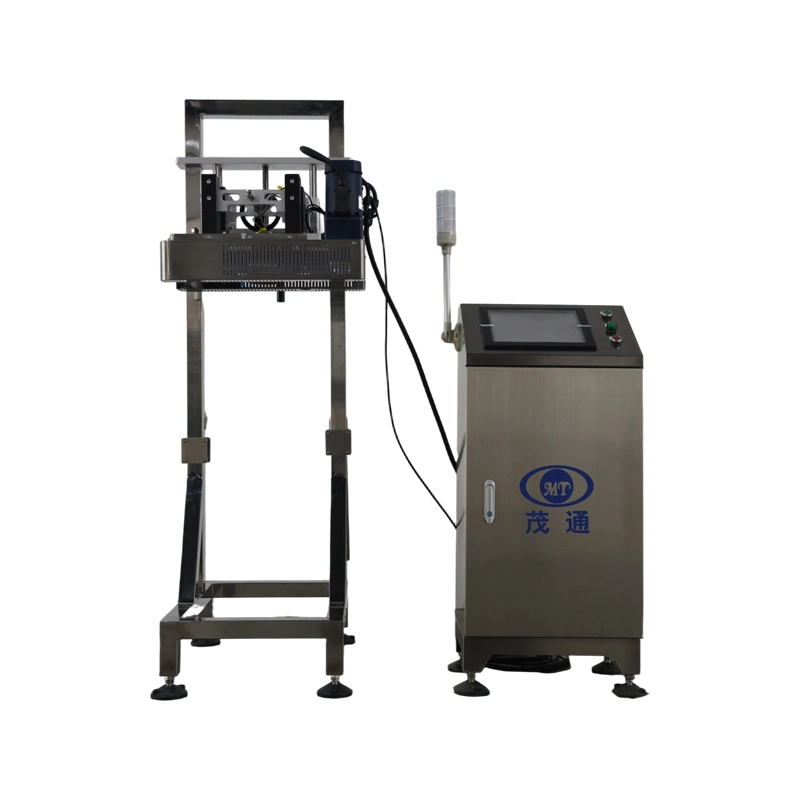
The PE Bottle Squeeze Leak Detection Machine uses a guide mechanism at the front to pre-squeeze a container and form a specific internal pressure. During conveying, Sensor S1 captures the initial internal pressure (Pressure 1), while Sensor S2 captures the final internal pressure (Pressure 2). The controller compares these values using a DSP digital signal processing algorithm to determine whether pressure release indicates leakage.

In operation, a positioning sensor detects the incoming product, records its ID and encoder signal, triggers measurement, and sends pressure data to the signal processing board. Results are transmitted to the human-machine interface and control unit; once a rejection signal is generated, the rejector removes the faulty product.
Where it fits best on a production line
The applicable inspection objects listed for this system include:
The inspection functions highlighted include pressure detection, leak detection, and automatic rejection based on user-defined criteria. For lines that speed up, slow down, or pause during normal production, adaptive speed tracking allows the unit to follow production-line speed changes and stop when the line stops to help prevent bottle jamming or damage.
Key parameters buyers typically confirm during commissioning
Below are the performance and operating conditions described for the equipment.
| Item | Specification |
|---|---|
| Maximum inspection speed | Exceeds 600 bottles/minute |
| Detection range | 0.08 to 0.5 MPa |
| Accuracy | Better than 0.02 MPa |
| Rejection rate | ≥99.99% |
| False reject rate | ≤0.03% |
| Power | Single-phase AC 220V, 50Hz (250W total power) |
| Compressed air | 4–8 bar (quality meets industry standards) |
| Operating temperature | 0°C to 50°C |
| Relative humidity | 10% to 80% |
A practical note included with the accuracy statement is that excessive vertical vibration of the conveyor chain may affect results—so mechanical stability is not optional if you want repeatable pressure sampling.
Installation checklist that prevents unstable readings
To keep the PE Bottle Squeeze Leak Detection Machine stable from day one, the installation steps below matter in the same order they appear.
Mechanical positioning and conveyor alignment
This alignment is foundational: if bottle attitude and squeeze geometry change as containers enter and exit the squeeze section, pressure waveforms become harder to interpret and false rejects become more likely.
Pre-power inspection
Before connecting power:
Then connect the specified supply: single-phase AC 220V, 50Hz, with 250W total power.
Compressed air connection
Connect a compressed air source at 4–8 bar, and ensure air quality meets industry standards. This air supply requirement is separate from the inspection detection range (0.08–0.5 MPa) and should be treated as a utility condition for normal machine operation.
Best placement on the conveyor
For reliable results, the installation guidance recommends:
These measures reduce variation in bottle response during squeezing and help the pressure comparison remain consistent.
Operating tips that reduce false rejects
The operating notes call out several conditions that can influence results:
If your target is stable high-speed inspection, focus on temperature uniformity, a straight and mechanically steady conveyor segment, and consistent bottle handling through the squeeze zone.
Monitoring and line integration expectations
For operators and maintenance teams, the human-machine interface provides a real-time dynamic display of multiple rejection data sets, supporting ongoing process monitoring. Additional listed functions include continuous rejection shutdown, an impact light alarm function, and a Chinese language menu, as well as a 24-hour remote assistance function.
For readers comparing equipment options, one practical next step is reviewing the product page and matching its utility and conveyor requirements to the actual line layout and temperature profile.
To see the official product overview and specifications, refer to the PE Bottle Squeeze Leak Detection Machine page.