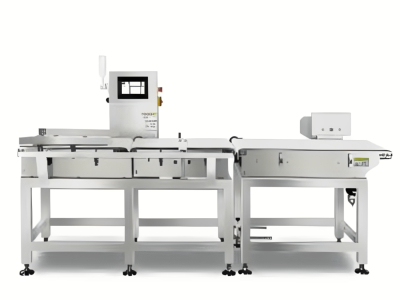
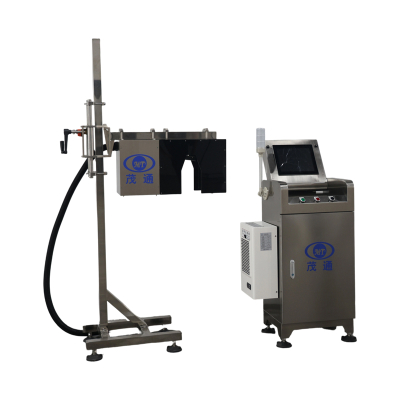
Ship and Install a PE Bottle Squeeze Leak Tester Safely
Moving an inline inspection unit is often where avoidable issues start—frames get scratched, sensors get stressed, and performance becomes unstable on day one. This guide consolidates the handling, storage, and installation requirements for the PE Bottle Squeeze Leak Detection Machine, with a clear focus on securing the equipment, preventing sensor load during shipping, and setting up the line correctly for consistent leak inspection.

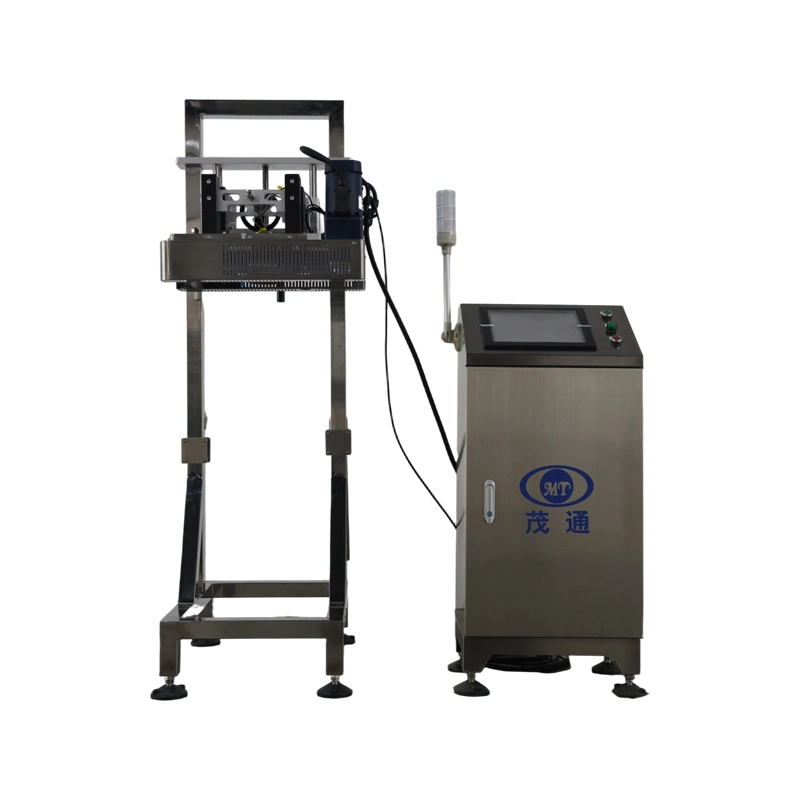
Understand what must be protected in transit
The PE Bottle Squeeze Leak Detection Machine is a contact-based, online pressure-sensing system designed to detect leaks in PE/PET bottles. Its inspection logic depends on stable, repeatable pressure sampling.
A guide mechanism at the front pre-squeezes the container to generate internal pressure. Sensor S1 captures the initial internal pressure (Pressure 1) and Sensor S2 captures the final pressure (Pressure 2). The controller compares these values to determine leakage. Because the sensing elements are central to this method, the PE Bottle Squeeze Leak Detection Machine must be handled so that sensors are not subjected to external pressure or tension during packaging, transportation, and unloading.

Transportation checklist for the PE Bottle Squeeze Leak Detection Machine
For shipping, the first objective is to stop any shift, slide, or shock load while keeping sensitive parts free from compression.
Use the following minimum checks before the truck moves:
In practice, stable fastening is as important as the crate or wrap itself. The PE Bottle Squeeze Leak Detection Machine should not be able to sway, tip, or shift when the vehicle accelerates, brakes, or turns.
Protective packaging that prevents moisture and impacts
For the PE Bottle Squeeze Leak Detection Machine, external protection must be both moisture-proof and impact-resistant. This combination helps reduce moisture exposure and limits damage from bumps during loading, transit, and staging.
The packaging requirements below keep priorities clear—especially around sensor safety.
| Area to protect | Requirement for the PE Bottle Squeeze Leak Detection Machine | What it prevents |
|---|---|---|
| Exterior surfaces | Protective covering | Scratches and dents |
| Machine exterior | Moisture-proof wrapping | Moisture exposure |
| Overall structure | Impact-resistant materials | External impact damage |
| Pressure sensors | Packaging with no excessive pressure or tension | Sensor stress and measurement risk |
| Entire unit | Secure packaging plus vehicle fastening | Transit movement damage |
When buyers evaluate shipping readiness for a PE Bottle Squeeze Leak Detection Machine, the packaging should be judged by one simple rule: it protects the exterior without using the sensors as contact points.
Safe loading, unloading, and storage after arrival
Handling does not end at delivery. The same discipline used in transit should be applied during unloading and staging.
Unloading requirements
Unloading the PE Bottle Squeeze Leak Detection Machine should be performed with specialized loading equipment, and the unit must remain securely positioned to prevent slippage. Keeping the equipment stably mounted through the full lift-and-place process reduces the chance of sudden shocks that can affect mechanical condition.
Storage environment requirements
If the PE Bottle Squeeze Leak Detection Machine is not installed immediately, storage conditions should remain within the specified environmental range:
| Parameter | Required condition |
|---|---|
| Storage temperature | 0–50°C |
| Relative humidity | 10–80% |
| External protection | Moisture-proof and impact-resistant materials |
Moisture-proof protection remains important while the PE Bottle Squeeze Leak Detection Machine is staged, especially if it remains packaged before installation.
Installation steps that reduce start-up problems
Correct installation is essential for stable performance of an inline bottle leak detection system. The PE Bottle Squeeze Leak Detection Machine has clear installation requirements that should be followed in order.
Mechanical positioning and conveyor alignment
Electrical and compressed-air connections
Before power-up, inspect all cables for looseness and verify the grounding wire of the control box.
For detailed product and configuration information, refer to the official page for the PE Bottle Squeeze Leak Detection Machine.
What influences inspection stability and accuracy
The PE Bottle Squeeze Leak Detection Machine specifies a pressure detection range of 0.08–0.5 MPa and accuracy better than 0.02 MPa. Operating conditions can influence results.
Known factors that may affect inspection include:
To support more consistent outcomes, it is recommended to inspect products after cooling or on a single-row conveyor belt where product temperature is uniform.
Key performance parameters to confirm before commissioning
The following parameters summarize documented capabilities for the PE Bottle Squeeze Leak Detection Machine:
| Technical parameter | Specification |
|---|---|
| Maximum inspection speed | Exceeds 600 bottles/minute |
| Pressure detection range | 0.08–0.5 MPa |
| Detection accuracy | Better than 0.02 MPa |
| Rejection rate | ≥99.99% |
| False reject rate | ≤0.03% |
Keeping the PE Bottle Squeeze Leak Detection Machine protected during shipping and aligned correctly during installation helps the system deliver stable sampling and reliable rejection control when integrated into production.