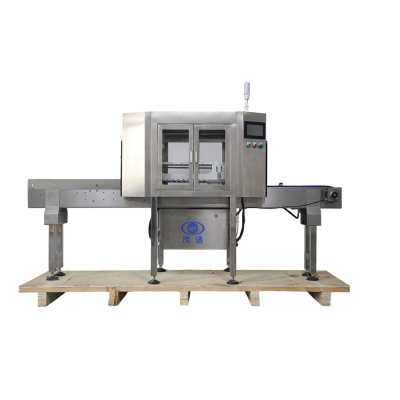
Make Cap Inspection For Tetra Pak Bags Reliable at 24000 Packs Per Hour
Defective caps and poor inkjet codes can quietly turn into waste, rework, and customer complaints on diamond pack beverage lines. Cap Inspection For Tetra Pak Bags is designed for online, non-contact inspection of cap quality and inkjet printing quality, automatically identifying and rejecting unqualified packages at production speed.

What Cap Inspection For Tetra Pak Bags Is Designed to Do
Cap Inspection For Tetra Pak Bags is designed for the diamond packaging production line to inspect cap quality and inkjet printing quality online. When the system detects an unqualified bottle cap or an unqualified inkjet code, it automatically removes the affected package from the line.
In practical terms, Cap Inspection For Tetra Pak Bags focuses on two risk areas that are easy to miss with sampling checks:
For buyers evaluating Cap Inspection For Tetra Pak Bags, the value is straightforward: one station checks both cap and code, and the reject decision happens inline.
How Cap Inspection For Tetra Pak Bags Works Inline
Cap Inspection For Tetra Pak Bags uses two Gigabit digital cameras to capture images from top to bottom, covering paper bags, bottle caps, and inkjet codes. The images are transmitted over the network to an image processor for digital analysis.
A typical inline sequence looks like this:
Because Cap Inspection For Tetra Pak Bags is a non-contact, inline inspection system, it avoids physical impact or damage to products during testing.
Defects Cap Inspection For Tetra Pak Bags Can Identify
Cap Inspection For Tetra Pak Bags covers both bottle cap inspection and inkjet printing inspection.
The defect set is intended to address common packaging quality failures that can affect usability, traceability, and downstream customer confidence. In production environments, even small cap deviations or unreadable printed codes can lead to sorting issues, complaint handling, and rework. For that reason, the system is positioned as a combined inspection point rather than a single-purpose visual check, allowing packaging teams to screen multiple defect categories within one online process while the line remains in motion.

Bottle cap inspection items
Inkjet printing inspection items
To reduce nuisance rejects caused by handling conditions, Cap Inspection For Tetra Pak Bags includes 360° cap inspection and 360° inkjet code inspection, helping minimize false rejects associated with packaging friction, scraping, or grabbing of the package surface.
The system also highlights zero-delay cap inspection, designed to be unaffected by cap material, color variation, or packaging material interference.
Where to Install Cap Inspection For Tetra Pak Bags on the Line
For integration planning, Cap Inspection For Tetra Pak Bags specifies an on-site installation position of 1.5–2 meters straight behind the capping machine. This placement is intended to inspect diamond packs immediately after capping, while packages are still in a stable, repeatable condition for imaging and rejection timing.
Beyond placement, Cap Inspection For Tetra Pak Bags includes operational features often requested for continuous production:
Core Technical Parameters for Procurement Review
Cap Inspection For Tetra Pak Bags is specified with the following technical parameters.
| Inspection items | Specification |
|---|---|
| Equipment name | Diamond Pack Cap Inkjet Printer |
| Model | Cap Inspection For Tetra Pak Bags |
| Applicable production speed | 24,000 packs/hour |
| Inspection area | Cap inspection, inkjet printing inspection |
| Camera configuration | Two Gigabit digital cameras |
| Rejection method | Automatically rejects diamond packs with defective caps or inkjet printing |
| Safety protection rating | IP65 |
For procurement teams comparing options, these parameters help confirm whether Cap Inspection For Tetra Pak Bags matches current line speed, environmental needs (IP65), and required inspection scope.
Inspection Accuracy Values Provided for Cap Inspection For Tetra Pak Bags
For Cap Inspection For Tetra Pak Bags, the following rejection rate and false detection rate values are provided as standard values.
| Inspection items | Inspection contents | Rejection rate | False detection rate |
|---|---|---|---|
| Bottle cap inspection | Absent cap | ≥99.99% | ≤ 0.01% |
| Bottle cap inspection | Cap misalignment (offset from center: 5mm max) | ≥99.99% | ≤ 0.01% |
| Bottle cap inspection | Cap rotation (vertical distance difference between top/bottom ≥ 5mm) | ≥99.99% | ≤ 0.03% |
| Inkjet printing inspection | No inkjet print | ≥99.99% | ≤ 0.01% |
| Inkjet printing inspection | Overall inkjet print missing > 50% | ≥99.99% | ≤ 0.01% |
| Inkjet printing inspection | Overall inkjet print missing > 30% | ≥99.96% | ≤ 0.01% |
| Inkjet printing inspection | Deformed/duplicated/reversed packaging print | ≥99.98% | ≤ 0.01% |
The detection accuracy and rejection rate data above are standard values; specific accuracy requires adjustment based on the product and packaging situation, and final accuracy is subject to the contract agreement.
How Cap Inspection For Tetra Pak Bags Supports Production Goals
When evaluated as part of an end-to-end quality control plan, Cap Inspection For Tetra Pak Bags is positioned around three production outcomes:
For teams building a broader inspection strategy on paper-packaged beverage lines, Maotong also provides systems such as Tetra Pak Straw Position Detection and Tetra Pak Straw Pipette Detection, which are designed for online inspection of inkjet printing and straw quality on Tetra Pak packaging.
To review the full Cap Inspection For Tetra Pak Bags configuration and scope on the diamond packaging line, refer to Cap Inspection For Tetra Pak Bags.