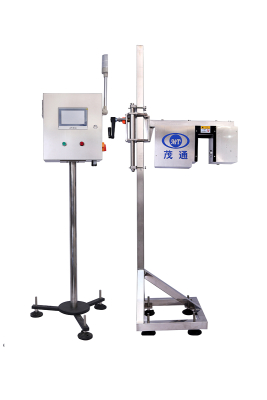
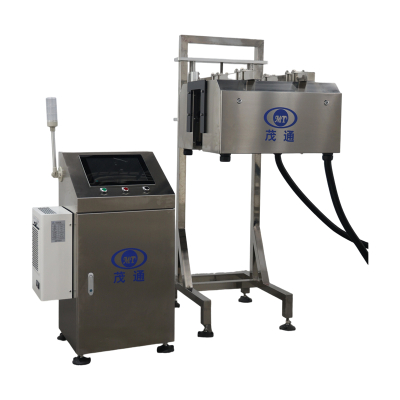
Cap Inspection For Tetra Pak Bags at 24000 Packs Per Hour
High-speed diamond pack beverage lines can produce tens of thousands of packages per hour, and even small variations in cap placement or inkjet code quality can quickly turn into costly waste. Cap Inspection For Tetra Pak Bags is designed for inline, non-contact inspection of cap quality and inkjet printing quality, automatically identifying and rejecting unqualified packs while production continues.

What Cap Inspection For Tetra Pak Bags Checks Inline
On a diamond pack production line, Cap Inspection For Tetra Pak Bags focuses on two quality-critical areas in a single inspection station:
Because the inspection is non-contact and inline, it is positioned as a practical alternative to reliance on constant manual checks at high line speeds.
Equipment Overview and Core Specifications
The system is described as a solution for the online inspection of cap quality and inkjet printing quality on the Diamond Packaging production line. In product configuration terms, it is listed with the following key identifiers and operating scope:
In addition, Cap Inspection For Tetra Pak Bags lists several operating features commonly evaluated during procurement:
For buyers comparing inline solutions, the combination of Cap Inspection For Tetra Pak Bags with IP65 protection and image-based traceability tends to be a key shortlist criterion.
Inspection Accuracy Benchmarks Used for Cap and Code Decisions
The following table summarizes standard benchmark values listed for Cap Inspection For Tetra Pak Bags. In these terms, the rejection rate indicates how reliably unqualified packages are removed, while the false detection rate indicates how often qualified packages may be incorrectly rejected.
| Inspection Category | Inspection Content | Rejection Rate | False Detection Rate |
|---|---|---|---|
| Bottle Cap Inspection | Absent cap | ≥99.99% | ≤0.01% |
| Bottle Cap Inspection | Cap misalignment (offset from center: 5mm max) | ≥99.99% | ≤0.01% |
| Bottle Cap Inspection | Cap rotation (vertical distance difference between top/bottom ≥ 5mm) | ≥99.99% | ≤0.03% |
| Inkjet Printing Inspection | No inkjet print | ≥99.99% | ≤0.01% |
| Inkjet Printing Inspection | Overall inkjet print missing > 50% | ≥99.99% | ≤0.01% |
| Inkjet Printing Inspection | Overall inkjet print missing > 30% | ≥99.96% | ≤0.01% |
| Inkjet Printing Inspection | Deformed (stretched, squeezed), duplicated, or reversed packaging print | ≥99.98% | ≤0.01% |
A practical way to interpret the specification language used for Cap Inspection For Tetra Pak Bags is the example given for “no bottle cap”: out of 10,000 unqualified packages without caps, theoretically only 1 might not be rejected. The same logic is applied to the other test items.
How Cap Inspection For Tetra Pak Bags Detects and Rejects Defects
The detection principle for Cap Inspection For Tetra Pak Bags is based on synchronized sensing and imaging:

This sequence explains why Cap Inspection For Tetra Pak Bags is positioned for continuous inspection without interrupting normal line flow.
Installation Placement and Production-Line Fit
For integration planning, Cap Inspection For Tetra Pak Bags specifies a simple placement rule: install it 1.5–2 meters straight behind the capping machine. This location supports inspection after the cap has been applied and enables the rejection mechanism to remove unqualified packs as they move downstream.
For related carton inspection topics, buyers may also review the Tetra Pak Code Inspection Machine as part of a broader line quality strategy.