What to check before buying a PE Bottle Squeeze Leak Detection Machine
Inline pressure stability and reliable leak screening are common pain points on fast packaging lines—especially when defects must be removed immediately, not discovered downstream. The PE Bottle Squeeze Leak Detection Machine is positioned as an online inspection solution for gas-containing PE/PET bottles, combining pressure detection, leak detection, and automatic rejection in one continuous process.

Where the PE Bottle Squeeze Leak Detection Machine fits
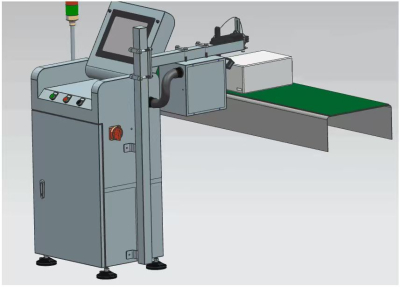
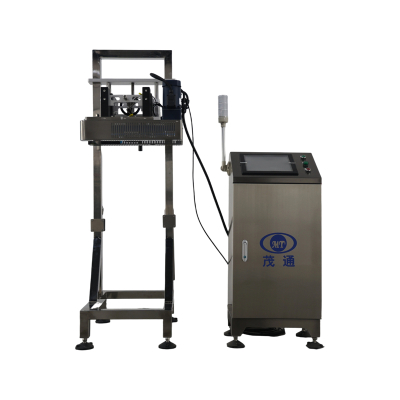
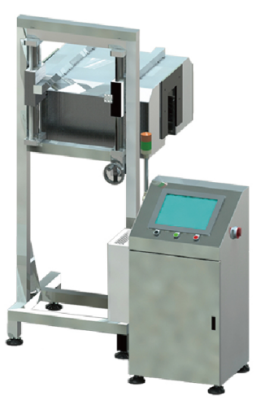
The PE Bottle Squeeze Leak Detection Machine is described for inspecting gas-containing containers such as PE/PP/PE plastic bottles containing gas or steam, as well as PE/PET bottles under inline inspection conditions. Its inspection approach is presented as contact-based online pressure sensing using belt squeeze detection technology, with inspection results processed by a controller.
The published product information also lists acoustic technology featuring non-contact, inline “knock” detection, with a stated maximum speed of up to 72,000 BPH. Buyers typically treat these feature lists as part of the evaluation checklist when confirming the exact sensing configuration for a given line.
Inspection function 1: Pressure detection on the conveyor
In this workflow, pressure detection is the first gate. The equipment description outlines a sequence that starts with product arrival recognition and ends with an actionable decision:
For pressure-related performance, the stated detection range is 0.08 to 0.5 MPa, with accuracy specified as better than 0.02 MPa, together with a note that excessive vertical vibration of the conveyor chain can affect accuracy. In procurement discussions, this is often translated into a practical question: whether the existing conveyor section is mechanically stable enough for repeatable readings.
Inspection function 2: Leak detection using dual-sensor comparison
Leak detection is described as a comparative measurement across two points in the squeeze path. The bottle is preloaded mechanically so the system can compare pressure states before and after the controlled squeeze sequence. This makes the method especially relevant for inline screening where the machine must evaluate sealed containers quickly and consistently without interrupting line flow.

Within the stated accuracy details, the product information includes leak-related metrics under specified conditions. For air leakage, the rejection rate is listed as greater than 99.99%, with referenced conditions including visibility on aluminum film, low filling capacity, or pore size greater than 0.8 mm. For no cover detection, the stated rejection rate is greater than 99.999%.
Operationally, the same notes highlight that rapid temperature changes and uneven bottle wall thickness can influence inspection results and may lead to false rejections. As a result, the published guidance recommends inspecting products after cooling, or using a single-row conveyor belt where product temperature is more uniform.
Inspection function 3: Automatic rejection driven by user-defined criteria
The third inspection function is the closed loop between detection and line control: the system automatically rejects non-conforming products when results exceed the user-defined rejection criteria and the specified rejection threshold.
For production teams, the operator-facing features listed in the product information are often just as important as the sensor specifications:
Performance snapshot buyers typically document
| Item | Stated specification |
|---|---|
| Pressure detection range | 0.08–0.5 MPa |
| Accuracy | Better than 0.02 MPa (conveyor vibration can affect accuracy) |
| Rejection rate | ≥99.99% |
| False reject rate | ≤0.03% |
| Maximum inspection speed | Exceeds 600 bottles/minute |
| Power | Single-phase AC 220V, 50Hz; total power 250W |
| Compressed air | 4–8 bar |
| Operating environment | 0–50°C; 10%–80% RH |
| Straight conveyor section | 1.5–2 meters |
Installation conditions that affect results
The installation guidance emphasizes alignment and line layout. The machine is specified to be positioned horizontally, with the clamping conveyor belt parallel to the product conveyor belt. It also calls for a straight conveyor section of 1.5–2 meters and a pre-power check including cable inspection and verifying the control-box grounding wire.
In many evaluations, teams will also validate the conveyor’s vertical stability, because the accuracy note explicitly links excessive vertical vibration to measurement impact.
Related inspection equipment on the same site
Depending on where leakage risk is managed on the line, buyers may also review adjacent inspection stations such as a Can Pressure Tester or a Cap and Liquid Level Inspection Machine to complete a broader packaging QC plan.