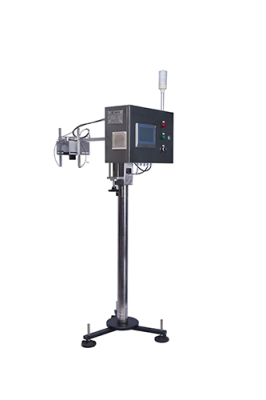
Place Your Glass Bottle Liquid Level Detection Machine for Stable Rejects
A Glass Bottle Liquid Level Detection Machine is only as reliable as the conveyor conditions around it. For buyers planning an inline upgrade, the Glass Bottle Liquid Level Detection Machine is designed for glass bottle packaging lines (up to 1000 bottles/minute) and checks low liquid level online using camera imaging and analysis, then rejects unqualified bottles automatically. The key to stable results is simple: place the Glass Bottle Liquid Level Detection Machine on a single-lane conveyor after the filler, and prepare the conveyor so every bottle presents a clean, repeatable liquid level boundary.

Install after the filler on a single lane
The specified installation location for the Glass Bottle Liquid Level Detection Machine Glass Bottle Liquid Level Detection Machine is on a single-lane conveyor after the filler, where the liquid level is stratified and a clear boundary line can be seen. This placement supports consistent imaging and ensures the system can link each bottle to an inspection result and a rejection decision.
In procurement discussions, this is the first question to settle: can the line provide a dedicated single-lane section after filling, and can that section keep bottle movement stable enough for camera capture and timing control?
Three conveyor conditions to confirm before installation
The Glass Bottle Liquid Level Detection Machine Glass Bottle Liquid Level Detection Machine specifies three installation location requirements. Each one directly affects whether the camera can “see” the level clearly and whether the reject timing stays accurate.
Bottle spacing must be greater than 2 cm
The spacing between bottles on the conveyor line must be greater than 2 cm. This spacing supports clean bottle identification and avoids one bottle visually interfering with the next in the captured image. When a Glass Bottle Liquid Level Detection Machine is evaluated at high throughput, verifying this spacing at normal operating speed is a practical way to reduce commissioning risk.
Provide a 2-meter straight track without bottle blockage
The conveyor line needs a 2-meter-long straight track without bottle blockage. A straight section helps the system maintain stable bottle presentation at the inspection point and provides room for the inspection components and reject coordination.
Ensure liquid level stratification and a clear boundary line
At the detection position, the liquid level is required to be stratified, and a clear liquid level boundary line must be visible. Because the Glass Bottle Liquid Level Detection Machine uses camera imaging and image analysis, this visible boundary is the feature the system evaluates when determining whether a bottle is underfilled.
How the camera-based inspection and rejection workflow runs
On a packaging line, the MT-RB-CYW-02 Glass Bottle Liquid Level Detection Machine follows a defined sequence that links a specific bottle to a specific reject action.
Positioning sensor → Bottle arrival → Control unit records bottle ID and encoder value → Station 1 camera capture → Image processor analysis → HMI display → Control unit decision → PLC signal → Rejector rejects the corresponding bottle ID
In practical terms, the positioning sensor detects the bottle’s arrival. The control unit records the bottle ID and the current encoder value, and the sensor triggers the Station 1 camera to capture the liquid level image. The image processor evaluates the image and sends results to the HMI for dynamic display, then sends the final result to the control unit. If the bottle is judged unqualified for liquid level, the PLC notifies the rejector to remove the bottle with the corresponding recorded ID.
For readers comparing solutions, this end-to-end linkage—sensor timing, ID/encoder association, camera capture, processing, PLC output, and rejection—defines what “online inspection” means for a Glass Bottle Liquid Level Detection Machine.
Specifications buyers typically verify for line fit
The Glass Bottle Liquid Level Detection Machine is positioned as a Glass Bottle Liquid Level Detector for glass bottles, with the following stated parameters.
Glass Bottle Liquid Level Detection Machine equipment parameters
| Item | Specification |
|---|---|
| Equipment name | Glass Bottle Liquid Level Detector |
| Model | Glass Bottle Liquid Level Detection Machine |
| Applicable containers | Glass bottles |
| Product capacity | 100 mL to 1000 mL |
| Production speed | 1000 bottles/minute |
| Applicable production lines | Glass bottle packaging lines not exceeding 1000 bottles/minute |
| Installation location | Single-lane conveyor after the filler (with liquid level stratification) |
| Detection content | Low liquid level detection |
| Detection accuracy | ±2 mm |
| Rejection rate | ≥99.9% |
| False rejection rate | ≤0.05% |
Site and utility conditions
| Item | Specification |
|---|---|
| Optimum ambient temperature | 5°C to 40°C |
| Optimum ambient humidity | 50–65% RH |
| Optimum altitude | 5–3000 m |
| Main power supply | 3 × 380 AC ±10%, 50 Hz, 3 PH+N+PE |
| Lighting power supply | 220 V, 50 Hz, single-phase |
| Total power | Approximately 1.0 kW |
| Control voltage | 24 VDC |
| Noise level | ≤85 dB |
These values are often used during line design review to confirm whether the Glass Bottle Liquid Level Detection Machine can be integrated without rework.
Installation checklist for procurement and commissioning teams
Before installing a Glass Bottle Liquid Level Detection Machine after the filler, teams commonly confirm the following items on the actual conveyor:
For further product details, see the dedicated page for the Glass Bottle Liquid Level Detection Machine. Related process context is also described in Bottle Fill Level Inspection and the broader note on Visual Inspection Technology.