Make Can Pressure Inspection Stable Before Rejection Fails
A Can Pressure Inspection Machine is a vital tool for assessing pressure behavior and identifying leakage risks without removing containers from the production line. For high-speed packaging operations, the true value of such a system lies not just in the sensor, but in its seamless integration of stable conveying, controlled belt contact, precise force measurement, advanced signal processing, accurate product tracking, and reliable rejection mechanisms. The Can Pressure Inspection Machine, a leading Can Pressure Inspection Machine, is specifically designed for liquid-nitrogen-filled aluminum cans, PE/PP plastic bottles containing gas or steam, and other gas-filled containers (excluding CO₂ products).
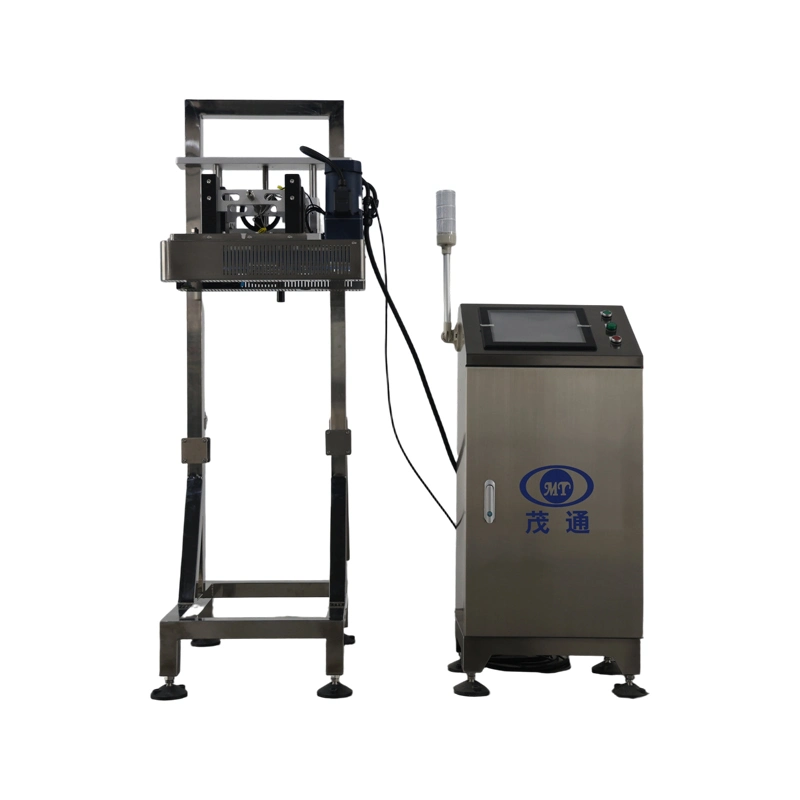
What Our Machine Checks Inline
The Can Pressure Inspection Machine Can Pressure Tester is a fully automated online pressure inspection system that employs a contact-based belt-squeeze method. This means that instead of relying on offline sampling, the Can Pressure Inspection Machine meticulously evaluates containers as they continue moving on the conveyor belt.
Our inspection functions encompass pressure measurement, leak detection, missing-lid detection, inverted-container detection, blocked-container detection, and automatic rejection according to user-defined standards. Additionally, the system dynamically tracks production line speed and automatically halts when the line stops. This is a crucial feature that prevents product damage or line jams caused by continuous belt operation against static containers.
How Belt Squeeze Detection Works
The operational principle of this Can Pressure Inspection Machine begins at the inlet, where a guide mechanism applies a preliminary squeeze to the container. This action creates a controlled pressure condition before the actual measurement takes place. If a container is properly sealed, its internal pressure variation remains minimal during transport. However, if leakage or poor sealing is present, internal pressure is released, resulting in a distinctly different pressure response compared to a normal container.
Essentially, a Can Pressure Inspection Machine functions as a sophisticated integration of mechanical and electronic processes. The specialized belt creates the necessary controlled contact, while sensitive sensors accurately capture the pressure response. The system then precisely compares the measured signal with the pre-configured pressure requirements to determine whether the product meets quality standards or should be rejected.
Sensor Tracking and Rejection Sequence
Accurate inline pressure inspection, particularly with a Can Pressure Inspection Machine, demands that every measurement is precisely matched to the correct container. In the Can Pressure Inspection Machine's sequence, a positioning sensor first detects the arriving product, recording both its unique identification number and the current encoder signal through the control unit.
Subsequently, this positioning sensor triggers the force sensor, which then measures the instantaneous pressure exerted by the product against the belt. This crucial pressure data is transmitted via the network to the Maotong signal processing board. The board meticulously processes and analyzes the signal, then sends the results to the Human-Machine Interface (HMI) for dynamic display and to the control unit for immediate decision-making.
If the product fails to meet the specified pressure requirements, the control unit issues a rejection command. The rejector then efficiently removes the corresponding product based on its recorded identification number. This precise tracking step is absolutely essential because pressure measurement and physical rejection often occur at distinct points along the production line within the Can Pressure Inspection Machine.
Key Performance Parameters
| Parameter | Can Pressure Inspection Machine Specification |
|---|---|
| Inspection Speed | >1,200 cans/min |
| Detection Range | 0.08–0.5 MPa |
| Static Accuracy | ±0.01 MPa |
| Dynamic Accuracy | ±0.02 MPa |
| Detection Precision | Better than 0.01 MPa |
| Rejection Rate | ≥99.99% |
| False Rejection Rate | ≤0.01% |
These specifications highlight the Can Pressure Inspection Machine's suitability for high-speed canning lines. However, optimal performance is also contingent on stable line conditions. Significant vertical conveyor vibration, for instance, can compromise detection accuracy. Therefore, mechanical stability must be considered an integral component of the entire inspection system, not merely an isolated installation concern for any Can Pressure Inspection Machine.
Installation Conditions That Protect Accuracy
For stable and reliable operation, the Can Pressure Inspection Machine should be installed horizontally, ensuring the clamping conveyor belt is perfectly parallel to the product’s bottom conveyor belt. A straight conveyor section of 1.5–2 meters is specifically required for optimal installation. Before powering on the system, all cable connections should be meticulously checked, and the control box must be properly grounded.
Installation is streamlined by straightforward utility and environmental requirements: single-phase AC 220 V, 50 Hz power, with a total power consumption of 250 W; compressed air pressure ranging from 4–8 bar; an ambient temperature of 0–50°C; and relative humidity between 10%–80%. For optimal measurement stability, products should undergo inspection only after they have cooled, as variations in product condition and temperature can directly affect pressure readings and the overall accuracy of the Can Pressure Inspection Machine.
Choosing the Right Can Pressure Inspection Machine
When selecting a Can Pressure Inspection Machine, it's crucial for buyers to look beyond just the maximum operating speed. A comprehensive evaluation should include factors like container type, desired pressure range, potential line vibration, product temperature consistency, precise conveyor alignment, available installation space, air supply quality, proper grounding, HMI monitoring capabilities, and the timing of rejection mechanisms. Ultimately, a truly effective system integrates belt squeeze detection, force sensing, advanced DSP-based signal processing, encoder tracking, and rejection control into one cohesive, inline inspection process, ensuring consistent product quality from your Can Pressure Inspection Machine.
FAQs
What products can the Can Pressure Inspection Machine inspect?
It is specified for liquid-nitrogen-filled aluminum cans, PE/PP plastic bottles containing gas or steam, and other gas-filled containers excluding CO₂ products.
What pressure range does this Can Pressure Inspection Machine support?
The documented detection range is 0.08–0.5 MPa, with static accuracy of ±0.01 MPa and dynamic accuracy of ±0.02 MPa.
How fast can it inspect cans?
The specified inspection speed is more than 1,200 cans per minute.
How does the system identify a leaking container?
A guide mechanism pre-squeezes the container. Properly sealed containers show limited pressure change, while leaking or poorly sealed containers show a different pressure profile that can trigger rejection.
What installation factor is especially important for the Can Pressure Inspection Machine?
Excessive vertical conveyor vibration may affect accuracy. Horizontal mounting, parallel belt alignment, a straight 1.5–2 meter conveyor section, proper grounding, and inspection after cooling all support stable results.