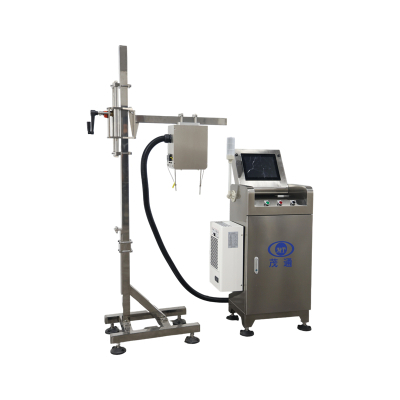
What‘s Gamma Ray Level Meter?
A gamma ray level meter is a specialized instrument that uses the attenuation characteristics of gamma rays to measure the level of a medium in a container. It is primarily used in industries such as petroleum, chemical, pharmaceutical, power, and metallurgy. It calculates the liquid level by detecting the change in intensity of gamma rays after they penetrate the container. Using a non-contact detection method, it is suitable for harsh environments such as high temperature, high pressure, and strong corrosion.
This device is based on the exponential attenuation law of gamma rays in matter. By fixing the absorption amount of the container wall, the change in ray intensity is only related to the thickness of the medium. For density measurement, the density value is calculated by maintaining a constant medium thickness. The system consists of three parts: a radiation source, a detector, and a transmitter. The radiation source uses Cs-137 or Co-60 isotopes; the detector is divided into two types: gas and solid; some new devices include a lifting mechanism to improve detection accuracy and radiation safety.
Since 1970, cobalt-60 radioactive isotope level meters have been used in the chlor-alkali industry, replacing traditional oil pressure weighing methods. Subsequent developments have introduced intelligent control systems, low-radiation technology, and Internet of Things (IoT) functionality, and comply with the GB/T 25845-2010 national standard.
| Chinese Name | Gamma Ray Level Meter | Radiation Source | Gamma Ray |
| English Name | gamma ray level meter | Advantages | Suitable for extreme environments |
| Application Fields | Petroleum, Chemical | Components | Radiation source, detector, transmitter |
Principle
When gamma rays pass through an object, they are attenuated, strictly following an exponential decay, i.e.:
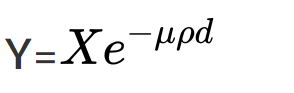
X: Intensity of the radiation emitted by the source;
μ: Absorption coefficient (a constant related to the nuclide);
ρ: Density of the medium;
d: Thickness of the medium;
Y: Intensity of the radiation after passing through an object with density ρ and thickness d.
Based on the above principle, the gamma ray level meter is designed so that the absorption of the container itself is a constant value after the gamma rays pass through it, and the change is only related to the level (i.e., thickness) of the medium in the container. The measurement principle of a densitometer is similar to that of a level gauge, but the difference is that the measurement point is mostly on the pipeline, and the medium in the pipeline is always full. In this case, the thickness of the medium penetrated by the radiation remains constant, and the absorption amount is only related to the density.
Composition
A radiation level gauge generally consists of three parts: a radiation source, a detector, and a transmitter. The radiation source generally uses one of two radioactive isotopes: Cs-137 or Co-60. It comes in two forms: point source and line source, and can be further divided into built-in and external sources depending on the installation location. Its function is to emit gamma rays.
The function of the detector is to detect gamma rays. There are many types of detectors, classified by shape into point-shaped and line/rod-shaped; and by sensitive material into gas and solid detectors. Gas detectors include two main categories: GM (Geiger-Muller) counter tubes and ionization chambers. They have low efficiency and are greatly affected by temperature, but are inexpensive. Solid detectors are classified by crystal material into sodium iodide, cesium iodide, BGO (bismuth germanate), plastic, fiber optic bundles, or artificial crystals. Because high-efficiency sodium iodide, cesium iodide, and BGO crystals are difficult to make large or long, they can only be made into point-shaped detectors.
Rod-shaped detectors are divided into rigid and flexible types: rigid artificial crystals have a diameter of about 50mm and a length of up to 2m, with high detection efficiency; flexible fiber optic bundles are about 25mm in diameter and up to 6-7m in length, but have low detection efficiency and are greatly affected by temperature. The detector is a key component of the radiation level gauge, and its sensitivity and stability are crucial to the radiation measurement technology.
The function of the transmitter is to convert the detected gamma ray intensity into a common standard signal through electronic circuits and transmit it to the monitoring system. Many functions of the radiation instrument are completed within the transmitter, such as automatic attenuation compensation, automatic adjustment of detector HV (High Voltage), adaptive time constant for sudden changes in material level, detector self-temperature measurement and alarm, detector performance self-check, and interference self-identification functions. Transmitters are generally divided into field and control room types, and the output signals have various options such as ordinary 0/4-20mA, FSK, HART, FF, RS232, and RS484. Advantages
Due to its unique measurement principle, the radiation level gauge does not require direct contact with the medium and is unaffected by the medium's temperature, viscosity, crystallization, corrosion, toxicity, or state. It is also not constrained by the container's pressure, material, wall thickness, or shape, making it virtually a universal solution for level measurement. Therefore, it has solved many measurement problems in industries such as petroleum, chemical, and synthetic fiber manufacturing.
Installation and Maintenance
The installation and removal of the radioactive source should be carried out by professional personnel who have received specialized training and hold a radioactive source operation license. The installation of the radioactive source is generally performed before the plant starts operation. A detailed implementation plan should be developed before installation and removal, and warning signs should be placed in the hazardous area to prevent unnecessary personnel from entering. During plant shutdown for maintenance, the radiation source needs to be in a closed state or removed and safely stored.
After the radiation level gauge is fully installed, the manufacturer should provide a calibration curve. If the manufacturer lacks experience and confidence, it is necessary to perform "water calibration" to verify the accuracy of the manufacturer's theoretical calculations using actual calibration data. A hot zero-point adjustment should be performed before feeding materials, when the operating temperature and pressure have reached normal operating conditions. The time constant setting needs to be adjusted according to the rate of liquid level change; typically, the time constant is 60 seconds, but it can be appropriately reduced when the liquid level changes rapidly.