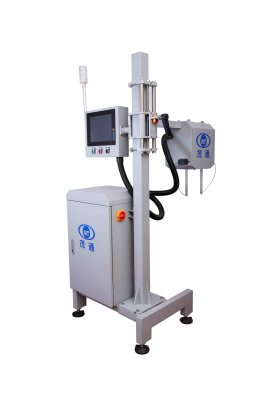
Air Leakage Detection Of Bagged Products That Keeps High Speed Lines Stable
Air Leakage Detection Of Bagged Products is often treated as a “final gate” on high-speed food packaging lines—because a small seal defect or abnormal internal pressure can quickly turn into downstream waste, customer complaints, or rework. For manufacturers running inflatable packs (including nitrogen-filled formats), the goal is simple: confirm seal integrity and pressure stability inline, then remove nonconforming packs without slowing production.

Where Air Leakage Detection Of Bagged Products Fits Best
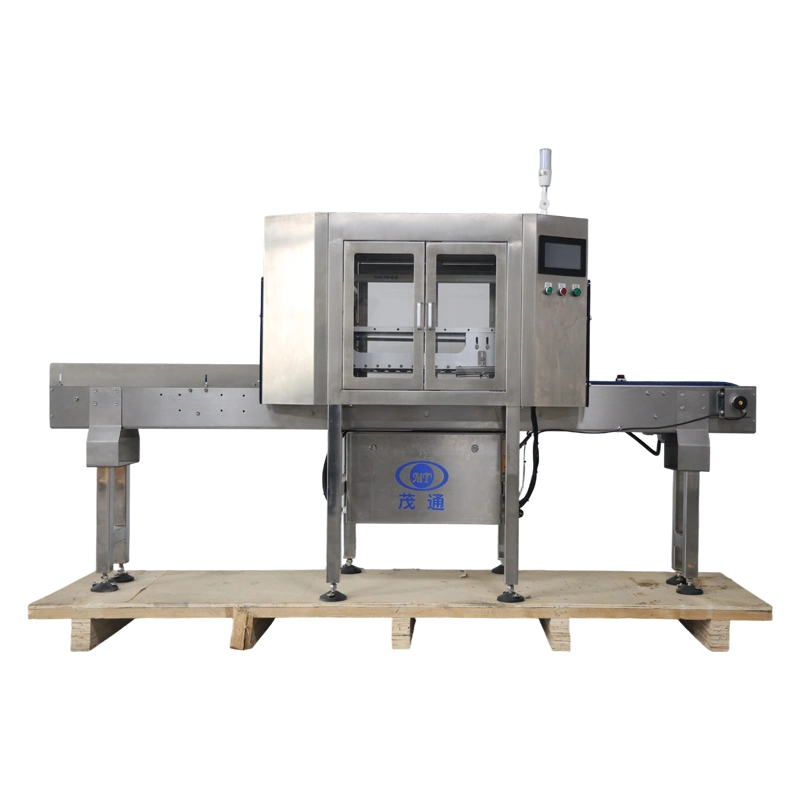
In practice, Air Leakage Detection Of Bagged Products is most valuable where internal pressure is part of the pack’s functional design. The MT-DZ-XL-S2-01 is described as a fully automated functional testing system for high-speed production lines, using a contact-based online method to measure internal pressure characteristics during conveying.
Applicable package types
According to the equipment’s stated scope, Air Leakage Detection Of Bagged Products on this system is suitable for inspecting:
These formats share a common challenge: quality cannot be confirmed reliably by appearance alone, so Air Leakage Detection Of Bagged Products relies on how a package responds under controlled compression.
What defects the system is designed to remove
For buyers comparing inline options, Air Leakage Detection Of Bagged Products typically needs to address both sealing faults and pressure faults.
The system’s published inspection capabilities focus on two outcomes:
This framing matters operationally: Air Leakage Detection Of Bagged Products is not just about “leak or no leak,” but also about catching pressure deviation that indicates an unstable pack condition.
How belt-squeeze extrusion supports Air Leakage Detection Of Bagged Products
Unlike camera-based checks, Air Leakage Detection Of Bagged Products here is built around belt-squeeze detection refined through more than ten years of research and field application. As packs travel on the conveyor, a flexible clamping belt applies pressure while side-mounted sensors capture the pressure response. The controller converts the signal into digital data and processes it to judge internal pressure integrity and sealing quality.
A typical detection sequence is described as:

Why pressure change is a practical leakage signal
The extrusion mechanism is explained in a simple comparison: a front-end guide mechanism applies pre-extrusion to maintain a certain pressure. If a product has a leak, pressure can be released more fully, and the residual pressure measured later differs more strongly. For intact products, the pressure change remains minimal. This is the core reason Air Leakage Detection Of Bagged Products can separate normal packs from leaking or poorly sealed packs during conveying.
Performance metrics that matter on fast lines
For Air Leakage Detection Of Bagged Products, throughput and stability are usually the first screening criteria. The Air Leakage Detection Of Bagged Products is stated as having a maximum inspection capacity of 300 packs per minute. The product introduction also notes that, using the extrusion method and force analysis algorithm, the fastest output can reach 400 bags/min.
Key published parameters include:
| Installation item | Specification |
|---|---|
| Model | Air Leakage Detection Of Bagged Products |
| Maximum inspection capacity | 300 packs/min |
| Pressure measurement accuracy | ±0.02 MPa |
| Bag leakage rejection rate | ≥99.98% |
| Bag leakage false rejection rate | ≤0.05% |
| Abnormal pressure rejection rate | ≥99.93% |
| Signal processing | Proprietary DSP digital signal processing algorithm |
Air Leakage Detection Of Bagged Products is also described as supporting real-time display of multiple rejection data sets, visual light alarms for abnormal impacts, and automatic continuous rejection plus line shutdown for safety.
Installation and safety points to verify before commissioning
Air Leakage Detection Of Bagged Products depends on repeatable mechanics, so the installation environment is not optional detail. The equipment is recommended to be installed on a straight conveyor section of 1.5–2 m, and testing after product cooling is recommended for reliability.
Published installation requirements include:
| Installation item | Requirement |
|---|---|
| Electrical connection | Single-phase AC 220V, 50Hz |
| Total power | 250W |
| Air supply | Compressed air 4–8 bar |
| Placement | Horizontal |
| Conveyor alignment | Clamping belt parallel to the lower conveyor |
| Operating environment | 0°C–50°C; 10%–80% RH |
| Frame / weight | 304 stainless steel; approx. 100 kg |
For safe operation, Air Leakage Detection Of Bagged Products must be run by trained personnel; protective covers should remain closed during operation; and both power and compressed air should be switched off before opening the cover. Grounding of the frame and control cabinet is also highlighted.
Next steps for buyers evaluating Air Leakage Detection Of Bagged Products
If your line runs nitrogen-filled pouches, gas-filled plastic bags, or liquid-filled aluminum foil stand-up pouches, the procurement conversation usually comes down to three checks: whether Air Leakage Detection Of Bagged Products can synchronize with line speed, whether rejection logic is stable at your target throughput, and whether the conveyor section and utilities meet the stated requirements.
For product details, see the Air Leakage Detection Of Bagged Products page and the related Bag Product Leakage Detection Machine overview.