Air Leakage Detection Of Bagged Products That Keeps 300 PPM Lines Stable
Fast bagging lines leave little room for “maybe” quality checks. When seals are inconsistent, bags can lose internal pressure, swell beyond spec, or leak—issues that often show up downstream as wasted product and unstable line performance. Air Leakage Detection Of Bagged Products is designed for continuous, contact-based inspection on high-speed conveying, so every pack is checked without stopping the line.

What the Air Leakage Detection Of Bagged Products is built to do
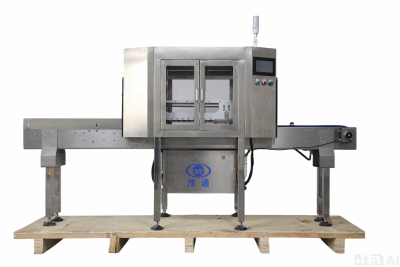
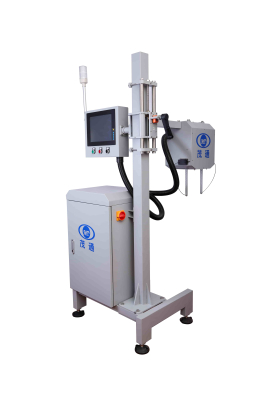
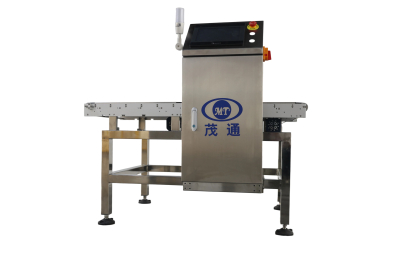
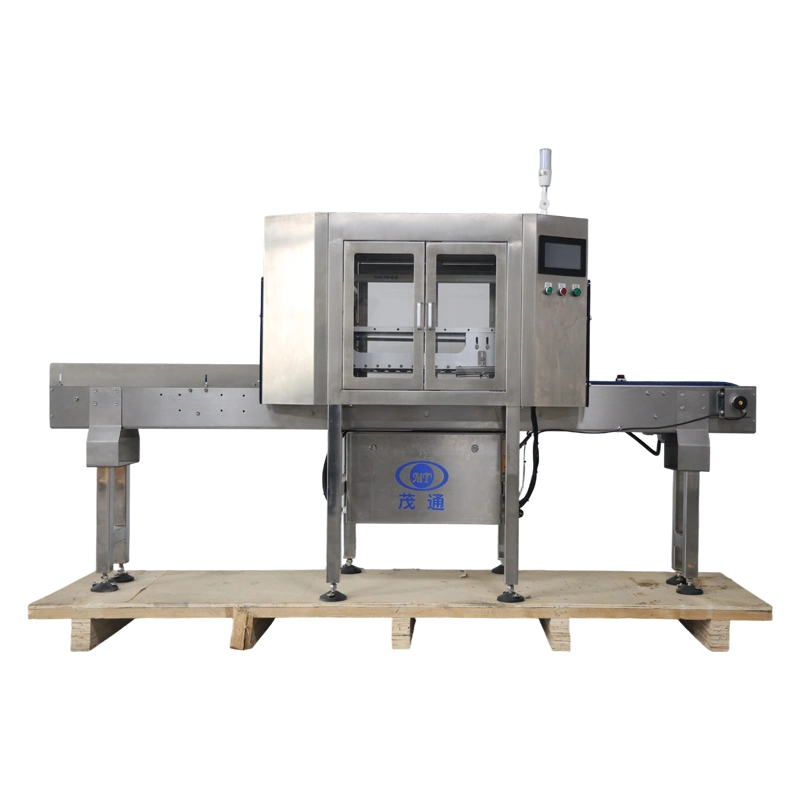
The Air Leakage Detection Of Bagged Products model Air Leakage Detection Of Bagged Products is a fully automated functional testing system for high-speed production lines. It is specified to inspect up to 300 packs per minute using a contact-based online detection method that measures and reflects internal pressure characteristics. The system is positioned to deliver stable, reliable sampling results, with detection precision described as exceeding domestic and international standards.
For buyers comparing options, the core value of Air Leakage Detection Of Bagged Products is that it combines continuous online inspection with real-time display and automatic rejection, helping keep packaging quality consistent as throughput increases.
How belt-squeeze inspection detects leaks and pressure issues
At the center of Air Leakage Detection Of Bagged Products is a belt squeeze (extrusion) mechanism developed through more than ten years of research and practical application. In simple terms, a flexible clamping belt applies controlled pressure as a bag passes through; sensors capture the bag’s internal pressure response; the controller digitizes the signal and processes it using Maotong DSP digital signal processing technology.
A key detail is the pre-extrusion design: a guiding mechanism applies a pre-compression force at the front end so the product maintains a certain pressure level. If a bag has a leak, pressure can be released as much as possible before the rear measurement. For intact bags, pressure change remains small; for defective bags, the variation is significantly larger—supporting reliable leak and poor-seal identification.

The online detection sequence
Performance specifications buyers typically confirm first
For production planning, the Air Leakage Detection Of Bagged Products Air Leakage Detection Of Bagged Products is specified at up to 300 packs/min. Product information also describes an extrusion method and force analysis algorithm with a maximum detection speed up to 400 bags/min, which is commonly evaluated during line matching.
| Item | Specification (Air Leakage Detection Of Bagged Products) |
|---|---|
| Inspection method | Contact-based online detection (belt squeeze/extrusion) |
| Inspection throughput | Up to 300 packs/min (maximum described up to 400 bags/min) |
| Pressure detection accuracy | ±0.02 MPa |
| Bag leakage rejection rate | ≥99.98% |
| Leakage false rejection rate | ≤0.05% |
| Bag pressure rejection rate | ≥99.93% (pressure deviation referenced at ±0.02 MPa) |
| Power | Single-phase AC 220V, 50Hz; 250W total power |
| Compressed air | 4–8 bar |
| Operating environment | 0°C–50°C; 10%–80% relative humidity |
| Frame / weight | 304 stainless steel; approx. 100 kg |
Packaging formats it is specified to inspect
The Air Leakage Detection Of Bagged Products equipment is specified as suitable for nitrogen-filled and other inflatable bagged food products, and it lists several applicable inspection objects:
Across these formats, Air Leakage Detection Of Bagged Products is described to detect leaks caused by faulty seals, and to identify insufficient pressure or excessive bulging.
Installation essentials for stable online rejection
Integration is typically done on a straight conveyor section. Installation requirements for Air Leakage Detection Of Bagged Products include placing the equipment horizontally, aligning the clamping conveyor belt parallel to the product’s lower conveyor belt, and installing along a straight conveyor section of 1.5–2 m. For improved test reliability, testing is recommended after the product has cooled.
Before powering on, cables should be checked for looseness and grounding verified; compressed air should be connected within 4–8 bar and meet relevant quality standards.
Safety precautions operators should keep in place
Operational guidance for Air Leakage Detection Of Bagged Products includes: trained personnel for operation, qualified technicians for maintenance, keeping protective devices and warnings in place, and opening covers only after switching off both power and air supply. Hands should be kept away from reject cylinder linkage during operation, and electrical connections should not be disconnected while powered on. Because electronic components are sensitive to static electricity, the frame and control cabinet should be properly grounded.
Product navigation and next steps
For readers comparing solutions within the same category, see the related page for the Bag Product Leakage Detection Machine and the dedicated page for Air Leakage Detection Of Bagged Products.
To discuss line integration for Air Leakage Detection Of Bagged Products, reach out via WhatsApp.