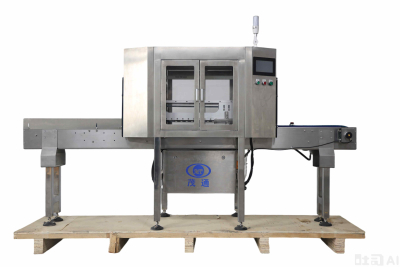
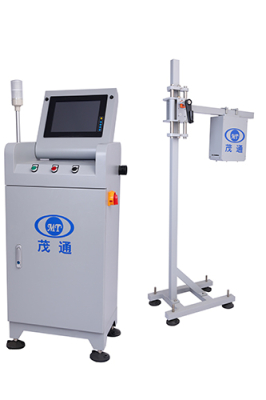
Best Can Vacuum Inspection Machine Finds Hidden Leaks
On a fast-paced filled-container line, the most costly defects are often those operators can't easily spot. A can might appear fine, yet its lid response, gasket condition, or internal pressure could reveal a hidden problem. The Best Can Vacuum Inspection Machine is specifically engineered to address this critical quality-control challenge. It offers non-contact, inline inspection of filled products at an impressive speed of up to 1,200 cans per minute, meticulously targeting leakage, missing gaskets, excessive or double gaskets, absent lids, and bulging or irregularly shaped cans. This system is designed to provide robust assurance of product integrity before items leave the production floor.

Why Non-Contact Vacuum Inspection is Essential
The Best Can Vacuum Inspection Machine leverages advanced electromagnetic pulse (EMP) technology and sophisticated acoustic analysis, rather than relying on physical pressure or squeezing the container. This approach ensures rapid, accurate detection without any risk of damaging the product or altering its packaging. It's ideally suited for cans, three-piece cans, glass bottles, metal caps, and other containers featuring flat, magnetically responsive closures. This specific package requirement is crucial: the inspection's success hinges on how the closure reacts when excited, meaning factors like lid material, consistency across lid batches, stable production temperatures, and conveyor smoothness all play a part in achieving optimal performance.
For production teams weighing different inspection methods, this machine fills a distinct niche: high-speed, reliable inspection of filled products with compatible magnetic caps. For situations demanding pressure-based assessments, Maotong also offers the Can Pressure Tester Machine, which employs a belt-squeeze technique for specific pressure inspection tasks. Similarly, for inflatable bagged products, the Bag Leak Detection Machine provides a dedicated solution using extrusion and force analysis.
How EMP Acoustic Detection Works
This innovative system operates by generating an instantaneous, precisely directed electromagnetic pulse towards the container's cap surface. When this pulse impacts a magnetic closure, the lid vibrates, producing a unique acoustic response. A highly sensitive acoustic sensor built into the probe captures this response, sending the signal to the processing unit for thorough analysis. The key here is the difference in internal-to-external pressure profiles between leaking and properly sealed products; these variations result in distinct acoustic signals that the system can reliably differentiate. This enables precise identification of sealing defects.
A typical inspection sequence unfolds as follows:

EMP acoustic detection principle for can-lid inspection.
This entirely non-contact process allows the Best Can Vacuum Inspection Machine to maintain high inspection speeds without needing to mechanically press or manipulate every container, ensuring efficiency and product safety.
Detection Capability and Key Specifications
The machine boasts a documented maximum throughput of 1,200 cans per minute, coupled with the ability to dynamically adapt to variations in production line speed. It comes equipped with both audible and visual alarms, an automatic rejection system for unqualified containers, and ample storage for up to 10 distinct product profiles. This feature greatly simplifies automated processes and enhances convenience during product changeovers, boosting operational efficiency.
Furthermore, the system is engineered with a robust 304 stainless steel frame and supports, providing an industrial-grade protection rating of up to IP65. This ensures its durability and reliability even in challenging industrial environments. Its core components are sourced from internationally recognized brands, guaranteeing stable and dependable long-term performance.
| Inspection Item | Stated Rejection Rate | False Kick Rate |
|---|---|---|
| No lid | >99.99% | |
| Missing gasket | >99.9% | |
| Double gasket | >99.93% | |
| Air leakage | >99.99% | |
| Bulging or irregular cans | >99.9% | |
| Overall leakage-test | -- | <0.03% |
It's important to note that rapid temperature fluctuations can influence detection results and potentially lead to false rejections. For this reason, the Best Can Vacuum Inspection Machine should be assessed not only by its speed and rejection rate but also by whether the production line can consistently provide stable inspection conditions.
Installation Conditions Buyers Should Confirm
For truly reliable operation, this equipment is designed to be installed on a horizontal, single-row conveyor system and must be positioned after the cooler unit. The conveyor section designated for the machine should measure at least 1.5 meters in length; a longer, smoother section is always preferred to ensure consistent product flow and accurate readings. Additionally, the lid material of your containers must be magnetic, and it's vital that lids from the same production batch are used. Mixing lids from multiple batches can unfortunately reduce detection effectiveness and accuracy.
Utility requirements are quite straightforward: the system operates on 220 V, 50 Hz AC power, with a total power consumption below 120 W. Furthermore, external compressed air is necessary for the rejection mechanism, requiring a pressure range of 4–12 bar. Before making a decision on the Best Can Vacuum Inspection Machine, prospective buyers should carefully confirm their specific container types, closure materials, line speed, environmental temperature stability, conveyor condition, and the availability of a suitable air supply for the rejector.
When This Machine is the Right Fit
The Best Can Vacuum Inspection Machine offers an ideal solution when your production line handles filled cans, three-piece cans, glass bottles, metal caps, or similar containers equipped with flat magnetic closures. While it isn't a universal leak tester suitable for every single package structure, for compatible containers, it delivers a highly focused and efficient inline approach to maintaining seal integrity and controlling leakage-related defects. Its precision and speed make it an invaluable asset for ensuring consistent product quality and reducing costly recalls.
For comprehensive product specifications and to explore how this advanced system can benefit your operations, please visit the Best Can Vacuum Inspection Machine product page.
FAQs
Does this machine make contact with the container during inspection?
Absolutely not. The core inspection principle is entirely non-contact. The system excites the magnetic lid and meticulously analyzes its acoustic response without ever physically squeezing or touching the container, thereby preserving product integrity.
What types of containers are compatible with this system?
This machine is suitable for a wide range of containers, including standard cans, three-piece cans, glass bottles, and various metal caps, as long as they feature flat, magnetically responsive closures.
Why is installation after the cooler unit a requirement?
Installing the machine after the cooler helps maintain optimal temperature stability during the inspection process. Rapid temperature changes can significantly impact detection results and potentially lead to an increase in false rejections, so a stable environment is crucial.
What happens to containers that are deemed defective?
Upon detecting a nonconforming container, the system activates both audible and visual alarms. Simultaneously, the defective container is automatically rejected from the production line. This rejection mechanism requires an external compressed air supply operating at 4–12 bar.