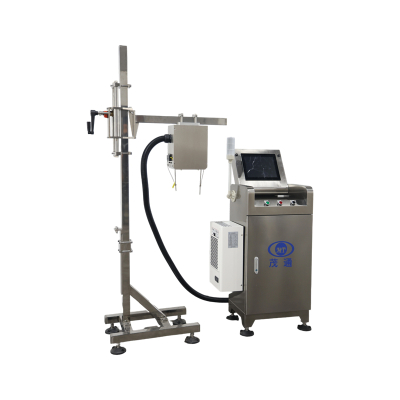
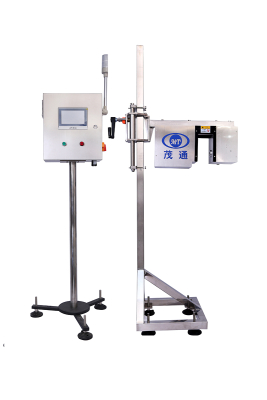
Inspect Filled Cans Faster With Best Can Vacuum Inspection Machine
High-speed packaging lines demand seal inspection solutions that match production pace without disrupting the container flow. Our Best Can Vacuum Inspection Machine is specifically designed as a Filled Product Leakage Detection System for real-time online inspection of filled items. It identifies various leakage-related issues, including missing or excessive gaskets, product seepage, and bulging cans. This versatile system works with cans, three-piece cans, glass bottles, metal caps, and other flat, magnetically responsive closures, boasting a verified maximum throughput of up to 1,200 cans per minute.

Uncompromising Quality: Why Our Can Vacuum Inspection Machine is Essential
The Best Can Vacuum Inspection Machine focuses on critical seal integrity risks that often emerge after filling and closing. Rather than addressing leakage as a single defect, our system is engineered to pinpoint several related problems: absent lids, missing gaskets, double gaskets, air leaks, expansion cans, and other irregular container shapes. For buyers evaluating our Can Leakage Detection Machine against conventional testing methods, this comprehensive capability is crucial, especially since modern production lines need rapid, non-contact inspection instead of slower, off-line batch sampling.
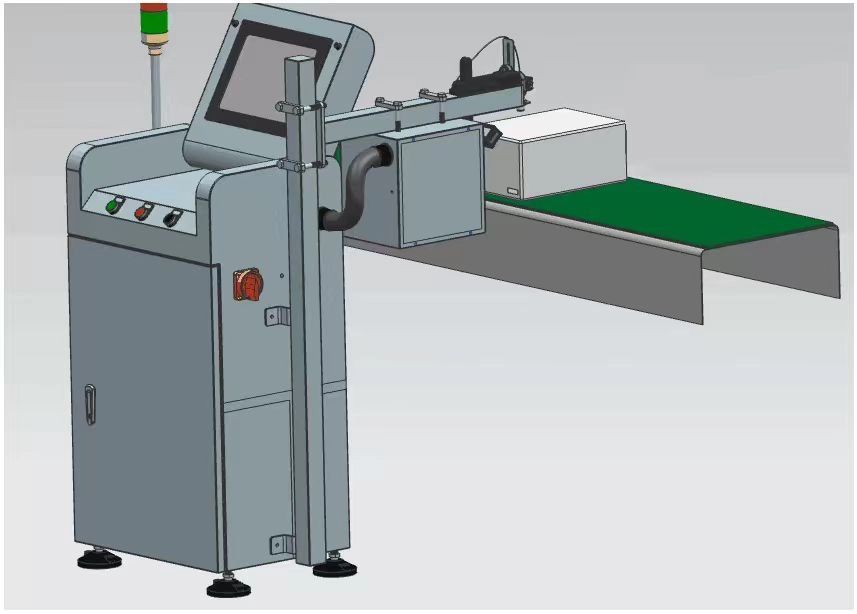
Precision at Scale: Equipment Overview
Our system is built for rigorous quality control, providing dependable performance in high-demand environments. It's not just about speed; it's about consistently identifying potential flaws that could compromise product safety and shelf life. The robust construction and intelligent design ensure long-term reliability and minimal downtime.
| Detection item | Specification |
|---|---|
| Project title | Filled Product Leakage Detection System |
| Inspection scope | Leakage, missing or excessive gaskets, seepage, bulging cans |
| Maximum throughput | Up to 1,200 cans/min |
| Compatible containers | Cans, three-piece cans, glass bottles, metal caps, flat magnetic closures |
| Product storage | Up to 10 product profiles |
| Main structure | 304 stainless steel frame and supports |
| Protection design | Sealed, fog-resistant, waterproof, up to IP65 |
The Science Behind the Seal: How EMP Acoustic Inspection Works
Our Best Can Vacuum Inspection Machine utilizes cutting-edge electromagnetic pulse (EMP) technology in conjunction with sophisticated acoustic analysis. During the inspection process, the equipment emits an instantaneous, directional electromagnetic pulse towards the cap surface. This pulse excites the magnetic lid, causing it to vibrate minutely and generate an acoustic response. A specialized sound acquisition device within the probe captures this signal and transmits it to our advanced processing system.

The core principle relies on distinguishing between a properly sealed product and one that is leaking. Since internal and external pressure conditions directly influence the acoustic response, a container with any form of leakage will produce distinct signal characteristics compared to a perfectly sealed, qualified container. This method allows the system to accurately evaluate seal integrity online, without any physical contact with the product, preserving its condition.
For glass bottle caps, the system further incorporates surface scanning technology. It continuously monitors the upper surface of each cap. If the sealing is compromised or the internal pressure is abnormal, the cap surface will exhibit sudden changes. This provides a clear basis for the system to determine whether the sealing or pressure condition meets the required quality standards.
Real-World Performance: Unmatched Detection Accuracy
A high-speed Can Vacuum Inspection Machine should be judged by more than just its speed. Detection accuracy, effective false kick control, adaptability to the production line, and reliable rejection mechanisms all play a vital role in maintaining daily production stability. The proven performance data of our Best Can Vacuum Inspection Machine is summarized below:
| Detection item | Performance Data |
|---|---|
| No lid | >99.99% rejection rate |
| Missing gasket | >99.9% rejection rate |
| Double gasket | >99.93% rejection rate |
| Air leak | >99.99% rejection rate |
| Expansion cans and other special-shaped cans | >99.9% rejection rate |
| Leakage test false kick rate | <0.03% |
Our machine seamlessly adapts to varying production line speeds, providing dynamic inspection capabilities. It features both audible and visual alarms, coupled with an automatic rejection system for unqualified containers. The robust hardware circuit design, integrated with an embedded operating system, ensures stable and reliable long-term operation. Furthermore, the user-friendly interface, complete with a large, LED-backlit LCD screen and clear interactive display, simplifies on-site operation and management.
Seamless Integration: Essential Installation Requirements
Correct installation directly impacts the inspection system's reliability and precision. Our Best Can Vacuum Inspection Machine must be installed on a horizontal, single-row conveyor chain. We recommend a conveyor section that is at least 1.5 meters long; a longer, stable section is always preferred. Maintaining a steady chain plate during conveyance is crucial, as any unstable movement can negatively affect inspection consistency and accuracy.
Crucially, the inspection point should be positioned after the cooler. Rapid temperature fluctuations can significantly influence detection results and might lead to false rejections. Consistency in closures is also paramount: the lid material must be magnetic, and all lids used during production should originate from the same batch. Mixing lids from different batches can diminish the system's detection effectiveness.
Key utility requirements for optimal operation include:
Optimizing Your Line: When Our Machine is the Right Fit
Our Best Can Vacuum Inspection Machine is most effective when integrated directly into a high-speed conveyor line for comprehensive filled-product leakage inspection. It's precisely engineered for use with compatible cans, three-piece cans, glass bottles, metal caps, and other flat magnetic closures. Before installation, buyers should carefully verify their container types, closure materials, conveyor stability, product temperature conditions, available air supply, and specific reject requirements. By ensuring these conditions are met, you unlock the full potential of our system.
Under suitable production conditions, this system provides a practical and efficient solution for non-contact seal integrity inspection at high speeds. It empowers quality control teams to accurately detect leakage-related defects early, preventing compromised products from moving further into downstream packaging processes and safeguarding overall product quality.
FAQs About Can Vacuum Inspection
Can our Can Vacuum Inspection Machine inspect 1,200 cans per minute?
Yes, absolutely. Our system is engineered for high-volume operations, with a documented maximum throughput of up to 1,200 cans per minute, ensuring your production line maintains peak efficiency.
What types of defects can it detect?
It is designed to detect a comprehensive range of leakage-related defects, including missing lids, absent or excessive gaskets, air leakage, product seepage, bulging cans, and other irregular container shapes, providing robust quality control.
Why is a magnetic lid necessary for inspection?
The inspection principle relies on electromagnetic pulse (EMP) excitation. For the system to properly generate and analyze the acoustic response from the lid, the closure must be flat and magnetically responsive.
Why is installation after the cooler recommended?
Installing the machine after the cooler helps ensure more stable inspection conditions. Rapid temperature changes can affect detection results, potentially leading to false rejections, so a consistent product temperature is beneficial.
Does the machine require compressed air for operation?
Yes, it does. An external compressed air supply is essential for the rejection mechanism, operating within a specified pressure range of 4–12 bar, to ensure prompt removal of defective products.