Catch Wrong Can Bottom Codes Before They Ship
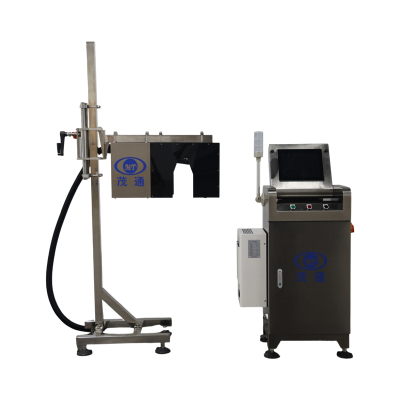
Every beverage can rolling off a high-speed production line carries a crucial piece of information: the bottom code. This isn't just a simple print; it's a vital identifier, encoding production dates, factory details, and critical anti-counterfeiting data. For both consumer safety and brand integrity, these codes must be flawless—present, perfectly readable, precisely positioned, and absolutely accurate. At Jinan Maotong Inspection Equipment Co., Ltd., we understand this critical need. That's why we've developed our advanced Code Inspection System, engineered specifically for the non-contact, online inspection of can-bottom inkjet printing. This system ensures that any can failing to meet our rigorous quality standards is automatically identified and swiftly rejected, safeguarding your product quality and reputation.

How Our Code Inspection System Works Online
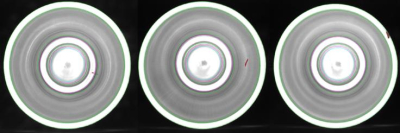
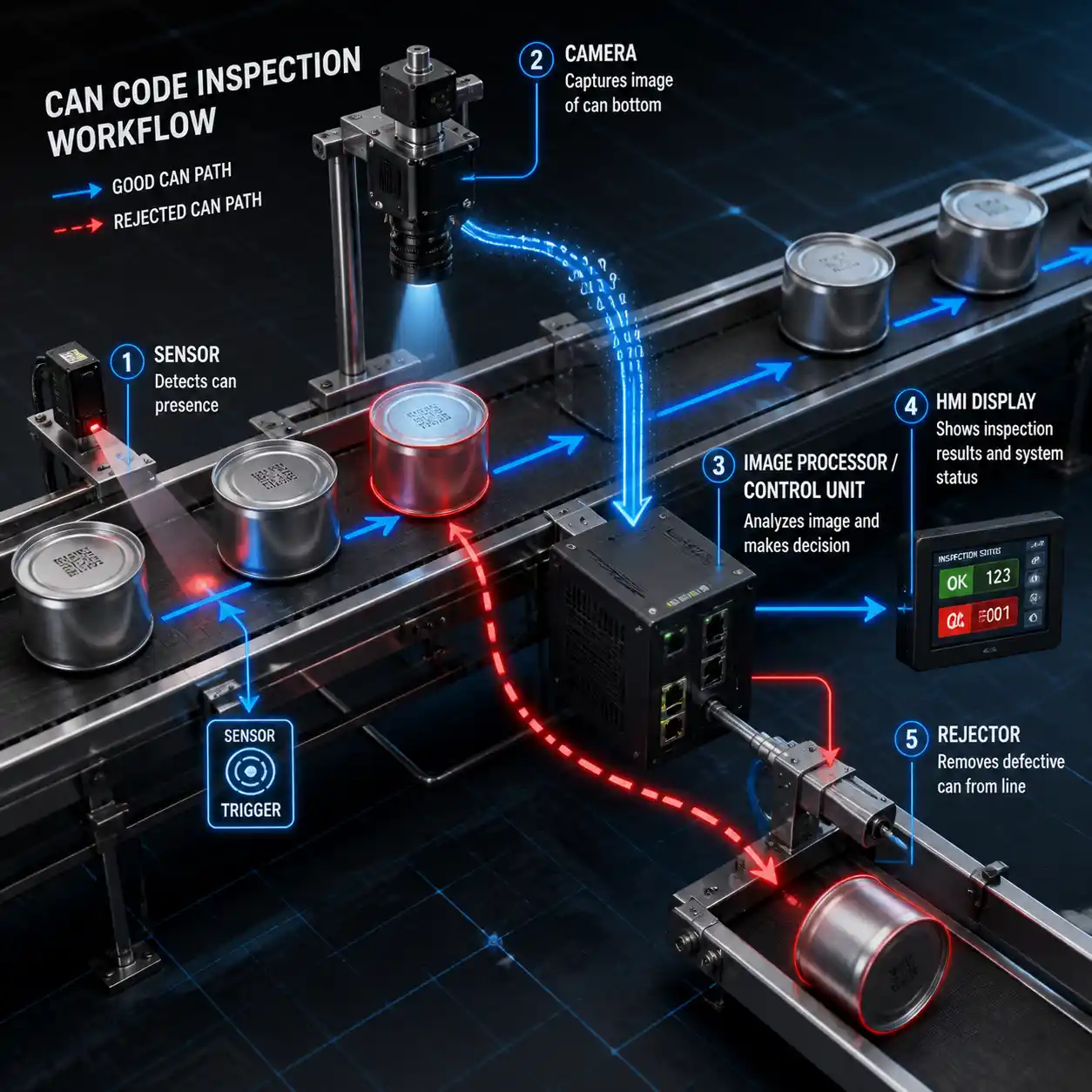
The inspection process for our Code Inspection System is a marvel of automated precision. It all kicks off when a can moves past a dedicated positioning sensor. This sensor doesn't just register the can's presence; it also relays crucial data to our control unit, which records the can's unique identification number along with the current encoder signal. Immediately after, the positioning sensor triggers a high-resolution Gigabit Ethernet digital camera. This camera captures a crystal-clear, top-down image of the can's bottom code.
That image is then rapidly transmitted over the network to our powerful image processor. Here, proprietary algorithms meticulously analyze every pixel, checking for any inconsistencies or defects. Once the analysis is complete, the processor sends the result to both the Human-Machine Interface (HMI) for real-time display and the central control unit. If the system determines that the can's code is anything less than perfect, the control unit instantly activates the rejector mechanism, which precisely removes that specific can from the production line, all without interrupting the high-speed flow.
The workflow unfolds like this: Positioning sensor → Encoder and can ID → Gigabit Ethernet camera → Image processor → HMI and control unit → Rejector
This precise tracking sequence is absolutely fundamental to our Code Inspection System. Why? Because effective rejection isn't just about spotting a faulty code; it's about ensuring the correct can is removed with pinpoint accuracy, even at blistering speeds. Our encoder-based synchronous counting system plays a vital role here, maintaining rejection precision even if the line speed fluctuates or temporarily halts after a defective can has been identified. This capability prevents costly false rejections and ensures only truly compliant products move forward.
Defects Our System Is Designed to Detect
The Can Bottom Code Inspection Machine is engineered to catch a comprehensive array of common can-bottom coding defects that could render crucial production information unusable or misleading. Our robust inspection functions include:
Here’s a snapshot of our detection accuracy:
| Inspection Item | Documented Condition | Rejection Rate |
|---|---|---|
| No Inkjet Printing | Cover print, missing print, or inverted can | >99.99% |
| Missing Inkjet Printing | More than 20% of a single character missing | >99.8% |
| Fuzzy Inkjet Printing | Characters unreadable to the human eye | >99.93% |
| Incorrect Inkjet Printing | Wrong date, factory code, security code, etc. | >99.99% |
| Position Offset | Code beyond the preset range | >99.99% |
| Duplicate Inkjet Printing | Multiple codes in the code area | >99.99% |
We pride ourselves on an exceptionally low false kick rate for inkjet printing inspection, consistently at ≤0.03%. It's important to note that these rejection-rate figures represent theoretical experimental data, and our inspection items are performed in real-time for each individual can, ensuring consistent quality control.
Built for High-Speed Can Lines
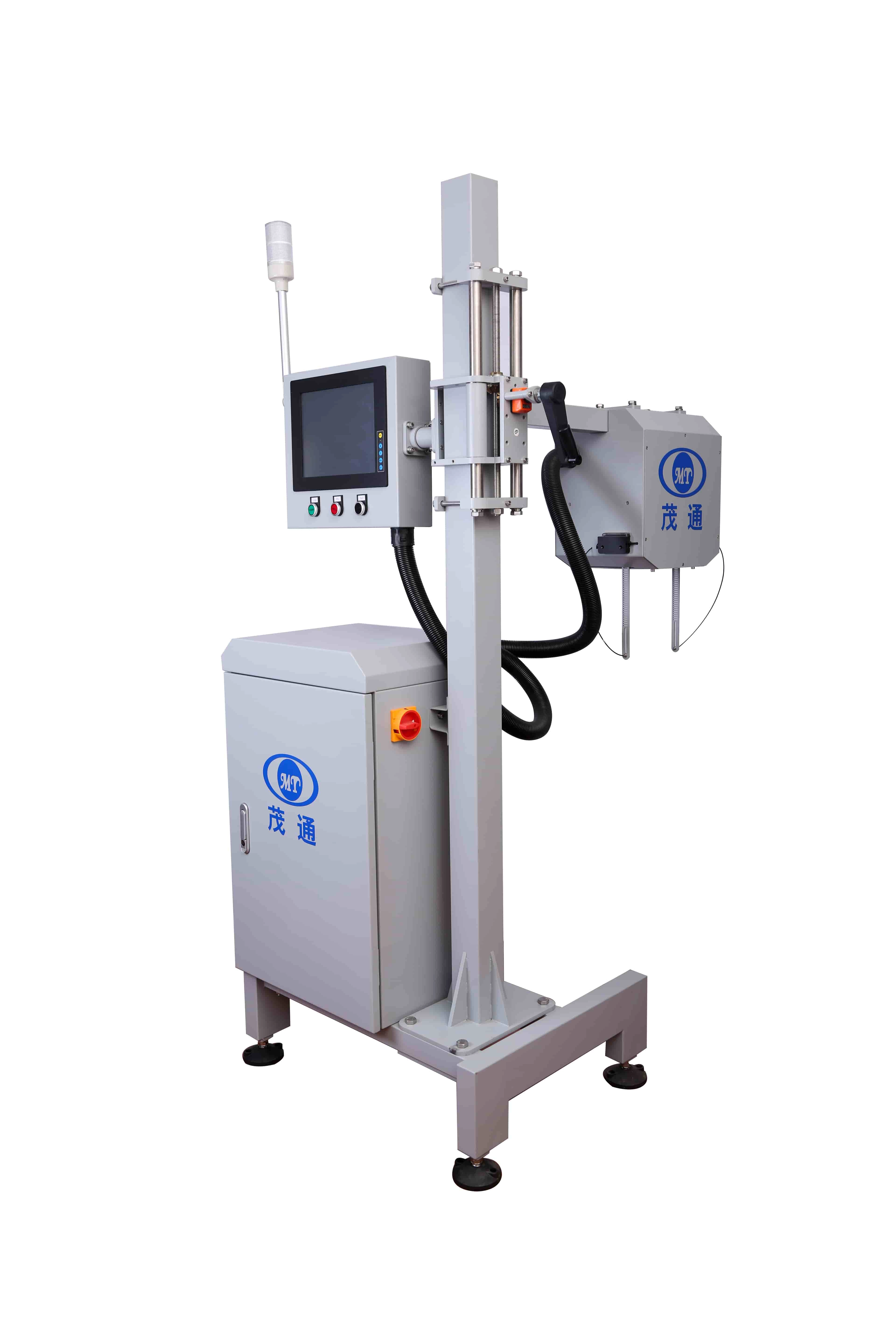
Our Code Inspection System, specifically model MT-YLG-OCR-03, is engineered to keep pace with the most demanding production environments. It supports an impressive maximum production speed of 72,000 cans/hour, which translates to an incredible 1,200 cans/minute. This high-speed capability means your line can run at peak efficiency without sacrificing quality control.
We typically install the Code Inspection System directly after the inkjet printer. This strategic placement allows for immediate inspection of codes right after printing, crucially without any physical contact with the can body. This non-contact approach prevents potential damage to the cans and ensures the integrity of the freshly printed codes.
For production lines that push beyond 72,000 BPH, our product documentation confirms the system's adaptability with servo-controlled rejection mechanisms, designed to handle even faster throughputs. Furthermore, the system boasts an IP65 protection rating, signifying its robust design against dust and water ingress, making it suitable for demanding industrial settings. An integrated industrial-grade air-conditioning unit is a standard configuration, vital for maintaining stable operation during extended periods, especially in hot environments, thereby preventing system crashes or false alarms.
Additional features that enhance its operational excellence include:
Reducing False Rejection in Real Production Conditions
We know that can bottoms often present unique challenges like embossed logos, minor scratches, and other surface interference that can confound less sophisticated inspection systems. Our latest Maotong inspection software is specifically designed with advanced algorithms that intelligently filter out the influence of these common can-bottom features. This sophisticated filtering dramatically helps reduce unnecessary rejections, optimizing your throughput and minimizing waste.
Beyond just filtering, our Code Inspection System also incorporates 360° coding inspection. This means every angle of the code is meticulously examined, eliminating blind spots where defects might otherwise hide. Coupled with zero-delay detection, our system actively prevents false rejections that could be caused by typical line issues such as cans rubbing together, sticking, blocking the conveyor, or even minor manual placement errors. By addressing these real-world production nuances, we ensure that only truly non-conforming products are removed, preserving your valuable inventory.
For production teams, the value of our stored defect images extends far beyond the immediate pass/fail decision. Our system automatically stores photos of defective products, neatly organized by day, with adjustable retention periods. This historical data is an invaluable resource for later quality analysis, allowing operators to review specific issues, identify recurring coding problems, and make informed process adjustments. This capability fosters a continuous improvement loop, helping you fine-tune your production process and enhance overall product quality.
Where Our System Fits in Wider Can Quality Control
While our Code Inspection System excels at scrutinizing can-bottom inkjet code quality, it's essential to understand its place within a holistic quality control strategy. This system is a critical component, but it works in concert with other specialized inspection stages to ensure total product integrity. For instance, it's distinct from cap quality inspection or comprehensive container integrity inspection.
At Jinan Maotong, we offer a full suite of inspection solutions designed to cover every aspect of your can production line. This includes specialized equipment like our Can Lid Inspection Machine, which focuses on the integrity and proper sealing of can lids, and our Vacuum Inspection Machine, crucial for detecting microscopic leaks and ensuring container integrity. These systems address different, yet equally vital, quality-control purposes on can production lines. By integrating our Code Inspection System with these complementary technologies, manufacturers can establish a multi-layered defense against defects, ensuring every product meets the highest standards.
For prospective buyers evaluating a configuration, the key discussion points typically revolve around several factors: the specific can type being processed, the precise content of the printed code, your current and projected line speed, the optimal installation position immediately after the inkjet printer, and your preferred rejection method. Our team at Jinan Maotong Inspection Equipment Co., Ltd. is ready to discuss these specifics and tailor a solution that perfectly fits your operational needs. You can reach us directly at +8618612569280 or via email at qibin@maotongtech.com.
FAQs
What exactly does the Code Inspection System inspect?
Our Code Inspection System is designed to meticulously inspect the quality of can-bottom inkjet printing. This includes verifying code presence, detecting blurred or illegible characters, identifying incorrect production dates, factory codes, or security codes, flagging positional offsets, and catching duplicate codes or anti-counterfeiting code errors. It ensures every printed detail is accurate and readable.
How is a defective can removed from the production line?
Once our advanced image processor analyzes a can's code and determines it to be unqualified, it immediately sends a signal to the Human-Machine Interface (HMI) for real-time display and to the control unit. The control unit then activates the rejector mechanism at precisely the right moment, removing the identified defective can without interrupting normal production flow.