Install the PP Bottle Leak Detection Machine the Right Way
A PP Bottle Leak Detection Machine is typically integrated on a packaging line to evaluate the sealing quality of aluminum films on PET/PE bottle caps. In practice, reliable results depend less on “tuning later” and more on installing the PP Bottle Leak Detection Machine in the correct position, then confirming power, grounding, and compressed air conditions before startup.

A PP Bottle Leak Detection Machine is typically integrated on a packaging line to evaluate the sealing quality of aluminum films on PET/PE bottle caps. In practice, reliable results depend less on “tuning later” and more on installing the PP Bottle Leak Detection Machine in the correct position, then confirming power, grounding, and compressed air conditions before startup.
How the PP Bottle Leak Detection Machine evaluates foil seal quality
The inspection principle described for the PP Bottle Leak Detection Machine follows the thermal pattern created after electromagnetic heating of the aluminum foil. After sealing, heat transfers to the cap through conduction. An infrared thermal imaging camera captures the heat distribution on the cap surface, and the captured distribution is used to reflect the degree of compression between the gasket and the bottle cap—indirectly indicating seal quality. When a defect occurs, the heat distribution becomes abnormal.

A common way to interpret results is to link defect sources to their thermal signatures:
| Causes of defects | Defect type | Heat distribution characteristic |
|---|---|---|
| Aluminum film problems | Missing, damaged, inverted | Incomplete heat distribution |
| Capping machine problems | Loose cover, crooked cover | Insufficient heat conduction, low temperature |
| Electromagnetic sealing machine problems | False seal, over-seal | Temperature too high or too low |
The same product description also notes Maotong image processing software methods, a unique DSP digital signal processing algorithm, and references deep learning as core technology developed through long-term R&D.
Where to place the PP Bottle Leak Detection Machine on the conveyor
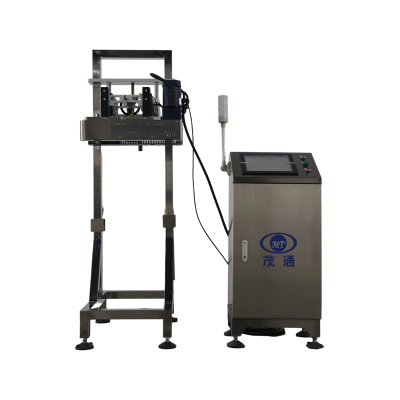
For the most reliable testing, installation guidance for the PP Bottle Leak Detection Machine specifies placing it after the electromagnetic sealer and mounting it on a straight conveyor path 1.5–2 meters long.
This placement matters because the inspection relies on the post-sealing heat pattern: installing too close, on a curve, or in an unstable transport section can reduce the consistency of the thermal image captured at speed.
Space, structure, and environmental conditions
Before mechanical integration, confirm the installation space and baseline environment match the listed conditions for the PP Bottle Leak Detection Machine:
| Item | Requirement |
|---|---|
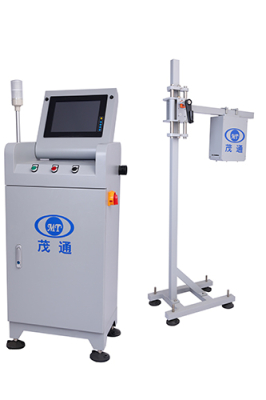
| Overall dimensions | 600 mm × 500 mm × 1700 mm |
| Weight | Approximately 50 kg |
| Frame structure | 304 stainless steel, mounted on a conveyor belt |
| Temperature | 0°C to 50°C |
| Relative humidity | 10% to 80% |
Power, grounding, and compressed air connections
Commissioning stability for a PP Bottle Leak Detection Machine depends on a disciplined pre-connection check. The installation notes emphasize cable inspection and grounding before the power supply is connected, because electronic components are sensitive to static electricity.
Electrical requirements
The PP Bottle Leak Detection Machine lists the following electrical requirements:
Before connecting power, check all cables for looseness and verify the grounding wire of the rack control box. When connecting external devices, keep both the main device and the external device powered OFF first, then turn on power after connecting.
Compressed air requirements
Compressed air is required for operation, with the specified pressure:
As with electrical connections, confirm the compressed air line is properly connected and within the stated pressure range before running the PP Bottle Leak Detection Machine.
Performance parameters buyers usually verify during line integration
For procurement and line-matching, the product description provides the following parameters for the PP Bottle Leak Detection Machine:
| Parameter | Specification |
|---|---|
| Maximum inspection speed | > 300 bottles/minute |
| Applicable cap diameter | 20–200 mm |
| Applicable bottle diameter | 25–250 mm |
| Bottle height | ≤ 500 mm |
| Detection rate | ≥ 99.99% |
| False rejection rate | ≤ 0.03% |
Additional listed functions include adaptive product tracking, high-speed accurate rejection of defective products, human-machine interface operation, a light alarm upon impact, a Chinese language menu, 24-hour remote assistance, and continuous rejection and shutdown.
For product-page details, see PP Bottle Leak Detection Machine, or browse the broader category at Infrared Imaging Inspection.
Handling, unloading, and storage notes to prevent installation damage
The equipment installation notes include practical handling guidance. During transportation, the equipment should be secured and packaged, and the sensor should be protected from pressure or tension. Moisture-proof and impact-resistant materials are recommended, and the load should be secured to the transport vehicle. For unloading, specialized loading equipment is recommended, along with secure mounting.
Safe operation checklist for daily production
Safe operation precautions for the PP Bottle Leak Detection Machine focus on guarding moving parts and preventing electrical damage:
Before power on
During operation
During maintenance