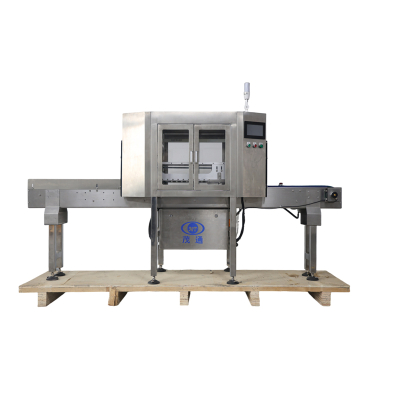
Place the Tetra Pak Detection Machine for Reliable Dual Checks
In paper-packaged beverage production, two small issues can create outsized risk: an unreadable inkjet code and a missing straw. A Tetra Pak Detection Machine is designed to reduce that risk by inspecting both items online, without contacting the package, and removing nonconforming cartons automatically.

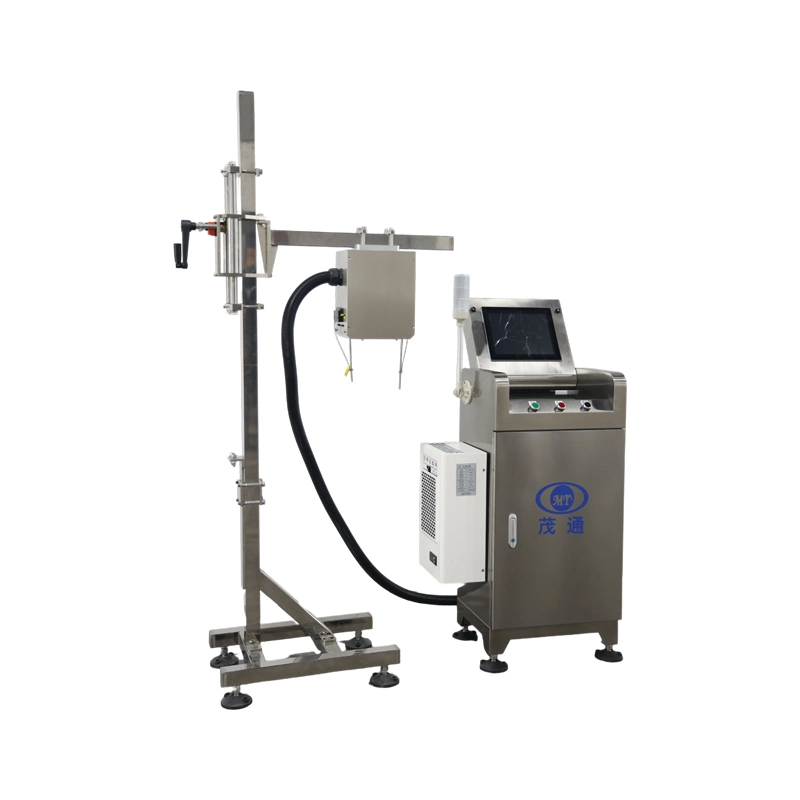
Installation point on the conveyor is not optional
For stable results, the Tetra Pak Detection Machine is installed on the conveyor line 0.5–1.0 meters downstream of the tube applicator. This placement is selected so the inspection station can check inkjet coding and straw application at the same point on the line.
A common layout is:
Tube applicator → 0.5–1.0 m → Detection station → Automatic rejector
With the Tetra Pak Detection Machine at this location, buyers typically aim to achieve two outcomes with one station:
Because the Tetra Pak Detection Machine is non-contact, image acquisition is performed without touching the package, reducing the chance of inspection itself introducing damage.
Detection principle and signal flow inside a Tetra Pak Detection Machine
A Tetra Pak Detection Machine follows a consistent sensor-to-reject workflow designed for inline operation.
Core components used for inline inspection
The inspection process uses:
Step-by-step workflow
The signal flow is typically:
Positioning sensor → Gigabit Ethernet camera → Image processor → Control unit → Rejector

In practical terms, the Tetra Pak Detection Machine works as follows:
This is the operational logic behind an inline Tetra Pak Detection Machine: image capture, analysis, decision, and removal—without interrupting continuous production.
Why encoder synchronization protects rejection accuracy
A key part of the Tetra Pak Detection Machine design is package tracking between the inspection point and the rejector. An encoder mounted on the conveyor’s synchronous motor records conveyor movement so defective package data can be matched to the correct reject timing.
This encoder-based synchronization supports stable rejection even when the conveyor speed changes or the line experiences stops. For any buyer planning a Tetra Pak Detection Machine with a rejector, this tracking method is central to keeping reject actions aligned with the right carton.
What the Tetra Pak Detection Machine inspects
A Tetra Pak Detection Machine is built for online inspection of inkjet printing and straw quality on paper-packaged products. The detection capabilities described for this inspection system include:
For procurement teams comparing options, it is also relevant that this Tetra Pak Detection Machine is described with 360° inkjet print inspection, covering the entire print area.
Model and key specifications buyers usually confirm
The inspection system model is Tetra Pak Detection Machine and is positioned for online inspection on paper-packaged beverage production lines.
Technical parameters
| Item | Specification |
|---|---|
| Equipment name | Inkjet Printing Inspection System |
| Model | Tetra Pak Detection Machine |
| Maximum production speed | 24,000 bags/hour |
| Inspection scope | Inkjet code verification and straw inspection |
| Inspection method | Non-contact, fully online |
| Image acquisition | Top-down, Gigabit Ethernet digital camera |
| Protection level | IP65 |
| Rejection method | Automated removal of defective bags |
For accuracy expectations, the documentation for this Tetra Pak Detection Machine includes examples such as rejection rates above 99.99% for “no inkjet printing” (missing code, reversed package) and for “no straw,” along with false kick rate figures shown for specific items (for example, no straw false kick rate ≤ 0.01%, and inkjet printing inspection false kick rate ≤ 0.03%).
Deep learning model changeovers and daily operation features
A Tetra Pak Detection Machine may be evaluated not only for inspection accuracy but also for how quickly it can be adapted to different package types.
Deep learning-based configuration
The algorithm principle described for this Tetra Pak Detection Machine is based on deep learning technology intended to minimize manual configuration. For model changes, approximately 300 product images are collected, and a corresponding model is developed and trained.
Production-oriented functions
For buyers specifying a Tetra Pak Detection Machine, these details matter because they affect commissioning, line stability, and how easily operators can manage the inspection station.
What to check before installing a Tetra Pak Detection Machine
Before integrating a Tetra Pak Detection Machine, production teams commonly confirm:
A well-planned setup helps the Tetra Pak Detection Machine deliver consistent inline decisions without slowing the line.