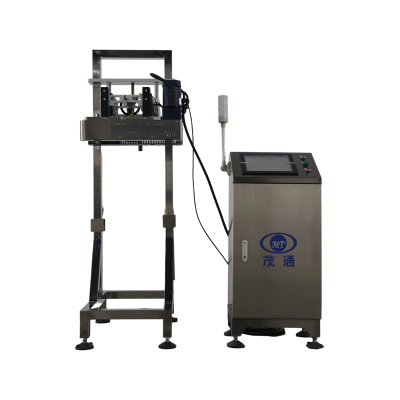
Applications of visual inspection in industrial non-destructive testing
Visual inspection technology utilizes image acquisition equipment and computer algorithms to achieve efficient and precise non-destructive quality monitoring in industrial production. The table below provides a quick overview of its core components and key capabilities.
| Detection System Core Components | Key Technologies and Performance Indicators | Main Application Areas |
| Hardware: Industrial cameras (CCD/CMOS), lenses, light sources (e.g., ring light, parallel light) | Accuracy: Detection accuracy up to 0.01-0.02mm, recognition accuracy up to 99.98% | Defect identification: such as surface cracks, scratches, and blemishes |
| Software: Platform running image processing algorithms (e.g., edge detection, morphological processing) and AI models (e.g., deep learning algorithms) (e.g., NI Vision, LABView) | Speed: Supports millisecond-level detection, e.g., detection cycle of 2.5-3 seconds/area | Dimensional measurement: High-precision dimensional measurement at the micron level |
| Processing Unit: Vision processor, embedded AI chip | Technology: 2D/3D imaging, Optical Character Recognition (OCR), integration of deep learning and traditional algorithms | Positioning and guidance: Guiding robots for automated assembly and path planning |
Industry Application Scenarios
Visual inspection systems have been deeply integrated into various fields of modern industry, ensuring product quality and production safety through non-contact methods.
• Automotive manufacturing: Used for high-precision body gap and surface difference detection, engine cylinder block crack detection, wheel hub size measurement, and paint quality inspection, with positioning accuracy up to 0.1mm.
• Electronics and semiconductors: Used in the semiconductor industry for wafer defect identification and cutting positioning. On PCB (printed circuit board) and SMT (surface mount technology) production lines, it can quickly detect solder joint defects, missing or misplaced components.
• Aerospace: Used for detecting cracks, wear, and other defects in engine blades, aircraft structural components, etc., requiring extremely high reliability and precision.
• Food, pharmaceuticals, and packaging: In the pharmaceutical industry, it is used to verify the integrity, correct labeling, and sealing of drug blister packaging. In the food and packaging industry, it is used to detect product contamination, packaging integrity, print quality, and filling volume.
Core Advantages
• High Precision and Efficiency: Capable of detecting micron-level defects that are difficult for the human eye to see, and can operate 24/7 without interruption. Detection speed far surpasses manual inspection, significantly improving production efficiency.
• Non-Contact and Safe: Completely avoids potential contact damage to the inspected objects, while also freeing operators from dangerous and tedious inspection environments.
• Data-Driven and Traceable: All inspection results (including image data) are automatically recorded and saved, providing powerful data support for production process optimization and quality traceability.
Development Trends
Visual inspection technology is evolving towards greater intelligence and integration:
• Deep AI Integration: Deep learning and other AI algorithms are being widely applied, enabling systems to adapt to more complex defect types and continuously self-optimize, reducing false positive rates to extremely low levels (e.g., 0.3%).
• 3D and Multi-Dimensional Technology: The application of 3D vision technology allows for the acquisition of depth information of objects, enabling precise control over complex geometric shapes and assembly quality. Its penetration rate in high-end inspection is continuously increasing.
• Integration of Emerging Technologies: Combined with technologies such as 5G, edge computing, and cloud computing, it enables real-time transmission and processing of inspection data, and supports new business models such as "inspection as a service."
Challenges
• The performance of the inspection system is still affected to some extent by complex industrial environments such as lighting conditions and on-site vibrations.
• Accurate identification of microscopic cracks still requires further breakthroughs in optical technology and algorithms.
• The size of high-quality defect databases somewhat limits the training accuracy and generalization ability of AI models.
Hopefully, this information helps you gain a comprehensive understanding of the application of visual inspection in industrial non-destructive testing. If you are particularly interested in a specific industry or technical detail, I can provide a more in-depth introduction.