Research on the Application of AI Visual Recognition Technology in Baijiu Packaging Coding Inspection
Abstract
With the accelerated digital transformation and upgrading of the baijiu industry, packaging coding inspection, as a key link in ensuring product quality and anti-counterfeiting traceability, is facing an urgent need to transform from traditional manual inspection to intelligent and automated inspection. This paper systematically studies the current application status, key technologies, and implementation path of AI visual recognition technology in baijiu packaging coding inspection. By analyzing the deployment effects of deep learning algorithms, machine vision hardware integration, and cloud-edge-device collaborative architecture in actual production environments, it is found that AI vision technology can significantly improve the accuracy and efficiency of coding inspection, with a recognition rate of over 99.9%, while significantly reducing labor costs and the risk of misjudgment. The study also discusses the challenges and future development trends of this technology, providing important references for intelligent quality inspection in the baijiu industry.
1. Introduction
As a traditional Chinese consumer product, the quality and safety of baijiu and brand protection have always been the core of enterprise survival and development. Packaging coding, serving as the "identity identifier" for liquor products, contains crucial information such as production date, batch number, and anti-counterfeiting code, directly impacting product traceability accuracy and market anti-counterfeiting effectiveness. Traditional manual inspection methods rely primarily on visual observation by quality inspectors, which is not only inefficient but also prone to missed or false detections due to visual fatigue and subjective judgment. With high-speed production lines becoming industry standard (up to three times the original speed), manual inspection is no longer sufficient to meet modern production demands.
AI visual recognition technology, by simulating human visual mechanisms and combining deep learning algorithms with high-performance hardware, achieves rapid and accurate identification and judgment of coding information. This technology provides a new path to address the quality inspection bottleneck in the liquor industry. Currently, this technology has been successfully applied in companies such as Guizhou Xijiu and Yunmen Winery, achieving a leap from "sampling inspection" to "full-volume inspection," setting a benchmark for intelligent transformation in the industry. This article aims to systematically analyze the specific application of AI visual recognition technology in liquor packaging coding inspection, exploring its technical principles, practical results, and development trends.
2. The Importance and Challenges of Inkjet Coding Inspection on Baijiu Packaging
2.1 The Core Value of Inkjet Coding Inspection
The value of inkjet coding inspection on baijiu packaging is mainly reflected in three aspects: First, ensuring product quality. Unclear or incorrect coding information can directly lead to consumers being unable to identify product information, and may even cause quality disputes. For example, abnormal coding on the bottle cap may cause sealing problems, accelerating the spoilage of the liquor. Second, maintaining brand reputation. Accurate coding is the foundation of anti-counterfeiting and traceability systems, effectively curbing the influx of counterfeit products into the market. Guizhou Xijiu, through its "five-code integration" traceability system, ensures transparent management of the entire chain from production to consumption. Finally, improving operational efficiency. Automated inkjet coding inspection can significantly shorten quality inspection time and adapt to the needs of high-speed production lines. For example, Yunmen Winery maintained stable testing even after its production line speed increased threefold.
2.2 The Dilemmas of Traditional Inspection Methods
Traditional manual inspection methods suffer from four major limitations: First, low efficiency, with each quality inspector only able to inspect a few hundred products per hour, unable to match the processing capacity of thousands per hour in modern production lines; second, unstable accuracy, as human eyes are easily affected by fatigue, lighting, and other factors, leading to a significant increase in the missed inspection rate with prolonged working hours; third, high cost, requiring a large investment of manpower for shift inspections, with substantial training and management costs; and fourth, difficulty in data traceability, as manual recording of inspection results is prone to errors and lacks a real-time feedback mechanism. These shortcomings make traditional methods a bottleneck for production line automation, hindering further industry development.
3. Core Components and Technological Innovations of AI Visual Recognition Technology
The application of AI visual recognition technology in the inkjet printing inspection of liquor packaging relies on the collaborative innovation of deep learning algorithms, OCR technology, and hardware systems. The following are its key components and technological innovations.
3.1 Deep Learning Algorithms
Deep learning algorithms, by constructing multi-layer neural networks, can automatically learn inkjet printing features, avoiding the limitations of manually designed features in traditional methods. Currently, mainstream algorithms include the YOLO series and CRNN models. For example, the improved YOLOv5 algorithm, combined with an attention mechanism (ECA-Net), achieves a 99.4% accuracy in locating inkjet characters in complex backgrounds. The MLT-YOLO network, on the other hand, is optimized for bottle cap packaging defects (such as inkjet printing anomalies and damage), improving the detection capability of minute flaws by introducing wavelet convolution (WTConv) and a multi-branch feature pyramid network.
Table: Performance Comparison of Mainstream Deep Learning Algorithms in Inkjet Printing Detection
| Algorithm Model | Detection Accuracy (%) | Detection Speed (FPS) | Applicable Scenarios |
| YOLOv5+CRNN | 99.4 | 28 | Character Localization and Recognition |
| MLT-YOLO | >99.9 | 35 | Bottle Cap Defect Detection |
| CNN+CTC | 95.0 | 25 | End-to-End Character Recognition |
3.2 OCR Technology Optimization
OCR (Optical Character Recognition) technology is the core of inkjet printing content interpretation. To address issues such as blurred and tilted characters in the inkjet printing on liquor packaging, OCR technology optimizes the process through the following methods: First, background erasure and perspective transformation eliminate interference from complex backgrounds and correct tilted characters to their proper positions; second, a sequence recognition mechanism uses models such as CRNN (Convolutional Recurrent Neural Network) to directly recognize the entire line of inkjet printing, avoiding single-character segmentation errors. For example, Cognex's In-Sight series smart cameras, combined with OCR algorithms, can achieve a recognition accuracy of 99.9% even in low-contrast environments.
3.3 Hardware System Integration
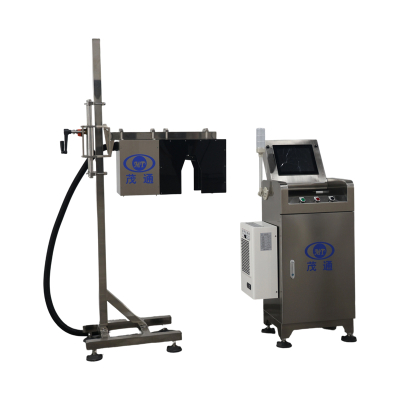
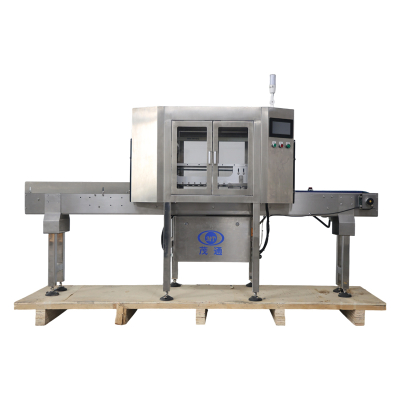
The hardware system includes components such as industrial cameras, light sources, and embedded computing platforms. The combination of a global exposure camera and a ring light source ensures the clarity and consistency of image acquisition. The deployment of embedded devices (such as the NVIDIA TX2) enables real-time edge processing; its 256 CUDA cores support parallel computing with a power consumption of less than 15W, meeting the energy efficiency requirements of the production line. Guizhou Xijiu's "cloud-edge-device collaborative architecture" further combines central computing power with edge computing, achieving a balance between unified model training and differentiated production line operation.
4 .System Architecture Design and Implementation Path
4.1 Cloud-Edge-Device Collaborative Architecture
Baijiu packaging coding inspection systems typically adopt a cloud-edge-device collaborative architecture, consisting of three parts: a central cloud, edge terminals, and a device layer. The central cloud is responsible for massive data storage and model training. Edge terminals (such as intelligent computing terminals) are deployed near the production line to perform image acquisition and real-time inference. The device layer includes sensors such as industrial cameras. The advantages of this architecture are: on the one hand, continuous model iteration is achieved through central computing power; on the other hand, edge computing reduces response latency (millisecond level), ensuring continuous operation of the production line.
4.2 Workflow
The system workflow includes four core steps: first, image acquisition, where industrial cameras capture high-definition images when products pass through the inspection station; second, edge inference, where images are transmitted to edge devices, and the AI model completes coding positioning and recognition; third, result execution, where the system immediately triggers a rejection device to remove defective products if an anomaly is detected; and fourth, model iteration, where edge data is sent back to the cloud to optimize the algorithm, forming a closed-loop optimization. For example, the Guizhou Xijiu system achieves accurate detection with a false positive rate of less than 0.1% through this process.
4.3 Algorithm Model Implementation
Deep learning-based detection algorithms require specific improvements to adapt to industrial environments. Taking MLT-YOLO as an example, its implementation path includes: first, replacing standard convolution with wavelet convolution in the backbone network to improve feature extraction capabilities; second, designing a lightweight detection head (CGNL) to reduce computational load; and finally, enhancing the detection effect of minor defects through multi-scale feature fusion. These improvements enable the model to significantly improve the detection accuracy of defects such as broken bottle caps while maintaining high speed.
5. Application Effectiveness Analysis: From Enterprise Practice to Industry Transformation
5.1 Quality Improvement and Efficiency Optimization
AI visual recognition technology has brought a qualitative leap to liquor companies. After deploying an AI detection system, Guizhou Xijiu achieved a 99.99% accuracy rate in code recognition, with an error rate of less than one in ten thousand, realizing precise association of "five codes in one". Yunmen Winery maintained a 99.9% code recognition accuracy rate even after a three-fold increase in production line speed, effectively preventing defective products from entering the market. Furthermore, the testing speed has increased from hundreds of samples per hour manually to 28-35 frames per second by the machine, a more than threefold increase in efficiency.
5.2 Economic and Social Benefits
The economic benefits are mainly reflected in cost reduction and brand value enhancement. Guizhou Xijiu eliminated sampling and quality inspection positions by replacing manual labor with machines, directly reducing labor costs. At the same time, the improved anti-counterfeiting and traceability system reduced after-sales complaints, indirectly enhancing brand awareness. In terms of social benefits, this technology promotes the digital transformation of the industry, provides practical scenarios for cultivating new industrialization talents, and strengthens consumer trust by ensuring food safety.
Table: Application Effectiveness of AI Visual Inspection System in Baijiu Enterprises
| Indicator Category | Traditional Manual Inspection | AI Visual Inspection | Improvement Rate |
| Recognition Accuracy | 90-95% | >99.9% | Improvement of nearly 10 percentage points |
| Inspection Speed | 500 pieces/person/hour | 4000 pieces/hour | Improvement of 3-8 times |
| Labor Cost | Requires shift work | No dedicated monitoring required | Reduction of over 70% |
| False Judgment Rate | 1-5% | <0.1% | Reduction of over 10 times |
6. Technical Challenges and Future Development Trends
6.1 Current Technical Challenges
Although AI visual recognition technology has achieved significant results, its application still faces three major challenges: First, the cost of data annotation is high, as deep learning models rely on a large number of labeled samples, while baijiu packaging is highly diverse, resulting in a large workload for annotation; second, insufficient environmental adaptability, as changes in lighting and equipment vibration may affect image quality, requiring data augmentation and transfer learning to improve model robustness; third, limited computing power of edge devices and limited resources of embedded platforms, requiring techniques such as model pruning and quantization to balance accuracy and speed. 6.2 Future Development Trends
In the future, AI visual recognition technology will evolve towards intelligence, integration, and adaptability: First, few-shot learning and self-learning technologies will reduce reliance on labeled data, enabling models to quickly adapt to new scenarios with a small number of samples; second, multimodal fusion will become a trend, combining 3D vision, spectral imaging, and other technologies to build a comprehensive detection system; finally, deep integration with anti-counterfeiting technologies, such as NFC chips and dynamic QR codes, will achieve synergy between physical anti-counterfeiting and digital recognition.
7. Conclusion: Empowering a New Era of Intelligent Quality Inspection in the Baijiu Industry
AI visual recognition technology, by simulating human visual mechanisms and combining deep learning with hardware innovation, provides an efficient, accurate, and reliable solution for baijiu packaging coding detection. This paper systematically analyzes the core components, system architecture, and practical effects of this technology. The results show that it can significantly improve detection accuracy (to over 99.9%), optimize production line efficiency (by more than 3 times), and reduce labor costs. Despite current challenges such as data annotation and environmental adaptability, AI visual recognition will play an increasingly important role in the intelligent transformation of the liquor industry, driven by the development of few-shot learning and multimodal technologies.
In the future, this technology is expected to expand from single-code detection to full-chain quality control, assisting enterprises in achieving digital upgrades through data-driven decision-making. Liquor companies should actively embrace this transformation, increase investment in technology, and leverage AI visual recognition as a fulcrum to drive a comprehensive reform of their quality control systems.