Detailed Explanation of Tetra Pak Lid Adhesive Quantity Detection Technology: A Key Aspect in Ensuring Packaging Sealing
Detailed Explanation of Tetra Pak Lid Adhesive Quantity Detection Technology: A Key Aspect in Ensuring Packaging Sealing
Those seemingly insignificant traces of glue are actually a crucial line of defense in ensuring the safety and quality of dairy products.
In the field of liquid food packaging, the lid of a Tetra Pak carton plays a vital role during transportation, storage, and consumption. The integrity of the lid seal directly affects the product's shelf life and safety, and adhesive quantity control is a core factor in determining the sealing effect.
The appropriate amount of adhesive not only ensures the sealing performance of the packaging but also avoids various problems caused by too much or too little adhesive. This article will delve into the technical essentials and industry standards of Tetra Pak lid adhesive quantity detection, providing professional guidance for packaging quality control.
1. The Importance of Adhesive Quantity Detection
Adhesive quantity control for Tetra Pak lids is a fundamental aspect of packaging sealing, directly affecting packaging integrity and product safety. Too little adhesive can lead to weak lid adhesion, causing leakage and potentially contaminating the contents; too much adhesive can cause overflow, affecting aesthetics and potentially making it difficult to open the package.
On high-speed production lines, the adhesive application process for Tetra Pak lids has clear standards. Taking the Tetra Pak brick carton as an example, the top flap has three adhesive application points, located in the middle and on both sides, and the adhesive is only allowed to be applied to the flap, not contaminating the carton body or the sides of the box.
For point-based adhesive application, the area of a single point should be no less than 1 square centimeter; for line-based adhesive application, the length of a single point should be controlled between 2.5 and 3.0 centimeters. These refined standards ensure the reliability and consistency of packaging sealing.
The significance of adhesive quantity detection is also reflected in cost control. Precise adhesive quantity control reduces adhesive waste, lowers production costs, and ensures continuous and stable operation of the production line, avoiding the risk of product recalls due to poor sealing.
2. Mainstream Adhesive Quantity Detection Methods
Traditional Detection Methods
Traditional adhesive quantity detection mainly relies on manual visual inspection and weighing methods. Operators regularly sample finished packages and visually inspect whether the adhesive line is continuous and uniform to initially determine if the adhesive quantity is appropriate.
The weighing method estimates the adhesive quantity by comparing the weight difference of the product before and after adhesive application. Although this method is intuitive, it is inefficient and cannot provide real-time feedback on changes in adhesive volume during the production process, and has gradually been replaced by modern automated inspection technologies.
Modern Automated Inspection Technology
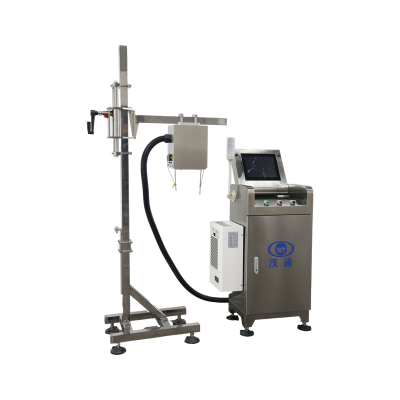
With technological advancements, 3D laser scanning technology has become the mainstream method for adhesive volume inspection. This method uses a 3D laser sensor to scan the outer contour of the adhesive bead, obtaining high-precision three-dimensional data, and then constructing a point cloud data model.
Based on the point cloud data, the system can accurately calculate the length, width, and height of the adhesive bead, and thus calculate the overall quality of the adhesive. This method is not only highly accurate but also non-contact, and does not affect the production line speed.
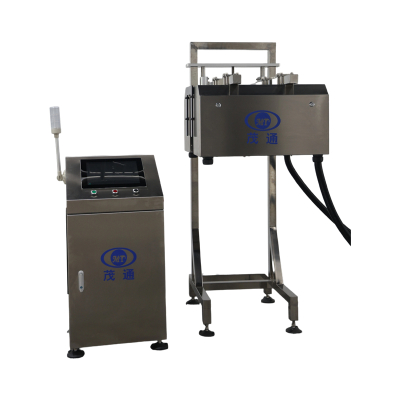
Another widely used technology is infrared scanning. The detection device typically includes a conveyor and a conveyor belt mounted on the conveyor. As the packaging boxes move on the conveyor belt, an infrared scanner located above the conveyor belt scans the adhesive layer.
The scanned data is transmitted to a PLC (Programmable Logic Controller) system and compared with a preset standard range. When an abnormal adhesive volume is detected, the system automatically triggers an alarm device and activates a rejection mechanism to remove the unqualified products from the production line.
3. Technical Standards and Parameters for Adhesive Volume Inspection
Tetra Pak adhesive volume inspection has a series of clear technical standards. First, regarding the number of adhesive points, the side flaps of Tetra Pak packages require 8 adhesive points, 4 on each side; while the top flap requires 3 adhesive points.
The geometric parameters of the adhesive volume are also clearly defined: the single-point area of dot-shaped adhesive application should be no less than 1 square centimeter; the single-point length of line-shaped adhesive application should be controlled between 2.5-3.0 centimeters. These parameters are the basic basis for evaluating whether the adhesive volume is qualified.
In terms of bonding strength, industry standards require that when the bonded area is torn apart, it must lift the cardboard layer, and the ratio of the length of the lifted paper layer to the actual adhesive length must reach more than 90% to be considered good bonding.
The detection equipment itself also has corresponding accuracy requirements. For example, the guardrail gap of the detection device needs to be less than 1 millimeter to ensure operational safety; the butt joint gap of the sealing opening should be less than 3 millimeters to ensure the stability of the detection environment.
4. Common Problems and Solutions Related to Uneven Adhesive Application
Problems and Solutions for Excessive Adhesive Application
Excessive adhesive can lead to glue overflow, contaminating the packaging appearance and even affecting the normal opening and closing function of the lid. Excessive glue may also penetrate into the packaging interior, contaminating the contents.
Solutions include: calibrating the adhesive dispensing equipment, checking if the dispensing pressure is too high; adjusting the dispensing time to shorten the duration of each dispensing cycle; and regularly cleaning the dispensing nozzle to prevent glue accumulation due to partial blockage.
Problems and Solutions for Insufficient Adhesive Application
Insufficient adhesive will directly lead to incomplete sealing, increasing the risk of leakage and posing a threat to product safety. When the detection system indicates insufficient adhesive, the adhesive tank level should be checked first. If the level is below 50%, it needs to be refilled promptly.
Other solutions include: checking if the adhesive viscosity is suitable for the current production environment; checking if the dispensing nozzle is completely blocked; and evaluating whether the production line speed matches the adhesive dispensing system.
Equipment Maintenance and Calibration
Regular maintenance is crucial to preventing adhesive application problems. It is recommended to check the chain surface for burrs and inspect the chain guard clearance after each shutdown. In addition, a regular calibration system should be established to ensure the accuracy of the detection equipment.
For tube filling machines, the compressed air pressure should be maintained within the range of 5-8 bar to ensure stable equipment operation. Insufficient pressure will lead to incomplete sealing, while excessive pressure may cause equipment overload.
5. Professional Testing Instruments and Quality Control System
Several professional instruments are available on the market for testing the integrity of Tetra Pak packaging. For example, a seal testing instrument uses negative pressure vacuum testing to create an internal and external pressure difference in the product, observing for any leakage problems; an intelligent electronic tensile testing machine can test the peel strength, tensile strength, and heat seal strength of flexible packaging.
Leakage and seal strength testers use positive pressure inflation to test the sealing performance of various products; while micro-leakage seal testers are suitable for higher-priced products, ensuring that testing does not affect sales and reduces cost budgets.
Establishing a complete quality control system is crucial. This includes raw material incoming inspection, production process monitoring, and finished product sampling. For example, at least one sample should be taken per shift per product type, and the sample should be soaked in hot water to confirm the odor.
In actual production, the bottle top cutting effect should be checked every hour, and the capping effect should be checked every 30 minutes. This high-frequency inspection ensures that problems are detected and corrected promptly, preventing large-scale quality incidents.
With the continuous advancement of testing technology, modern Tetra Pak production lines have achieved highly automated adhesive volume detection. From 3D laser scanning to infrared imaging, from offline sampling to online real-time monitoring, technological innovations have made the control of packaging seal integrity more precise and reliable.
Future adhesive volume detection technology will be more intelligent and data-driven. By integrating Internet of Things (IoT) technology, production lines will be able to collect and analyze adhesive volume data in real time, predict equipment maintenance needs, and even automatically adjust parameters before problems occur, truly achieving preventative quality control.
Although adhesive volume detection is only a small part of the packaging process, it is crucial to overall product quality. Mastering its core technical aspects means grasping a vital link in ensuring food safety.