Modern Packaging Inspection's Dual Core: Full-Box Weighing and Inkjet Code Visual Inspection Technology Analysis
On high-speed modern production lines, precise quality control is a crucial line of defense for protecting corporate reputation and consumer safety.
As the "quality gatekeepers" on the production line, full-box weighing and inkjet code visual inspection technologies, from the dimensions of weight and labeling respectively, constitute the final quality control checkpoint for packaged finished products before they leave the factory. Full-box weighing inspection uses high-precision sensors to determine in real time whether there are missing or insufficient items in the box, while inkjet code visual inspection uses advanced image recognition technology to ensure the clarity and accuracy of product labeling. The combined application of these two technologies is becoming an indispensable quality control method in modern smart factories.
1. Full-Box Weighing Inspection Technology
Full-box weighing inspection equipment is the "weight inspector" on modern production lines. It uses high-precision sensors to automatically verify the weight of packaged products.
The core mission of this technology is to ensure the accurate quantity of products leaving the factory and prevent defective products such as missing or insufficient items from entering the market. The equipment usually adopts a three-stage structure: speed matching section, weighing section, and rejection section, forming a complete inspection production line.
When the packaging box enters the inspection system, it first undergoes sorting and spacing adjustment in the speed matching section to ensure sufficient distance between products to avoid mutual interference. Then it enters the critical weighing section, where the system collects the weight of each box through precision sensors and compares the measured data with the preset standard value.
Based on the comparison results, the system automatically classifies products into three categories: qualified, overweight, and underweight. The detection accuracy can reach ±1-5 grams, and the speed can reach 120 pieces/minute. This accuracy and efficiency are far beyond what manual inspection can achieve.
The technical highlight lies in the breakthrough of dynamic weighing algorithms. Traditional static weighing requires the product to be completely stationary, while the new dynamic three-stage scale uses a dynamic compensation algorithm, effectively solving the industry pain point of large weighing errors on high-speed production lines.
Through the combination of three-stage conveying and intelligent algorithms, the accuracy of identifying missing, insufficient, or excess items is improved to ±0.1g, significantly enhancing the reliability of the detection results.
The rejection section is the final execution link of quality control. When the system detects products with abnormal weight, it automatically removes the non-conforming products from the main line using devices such as pneumatic cylinders and push rods, sending them to a temporary storage area for defective products, ensuring that only compliant products proceed to the next process.
2. Inkjet Printing Visual Inspection Technology
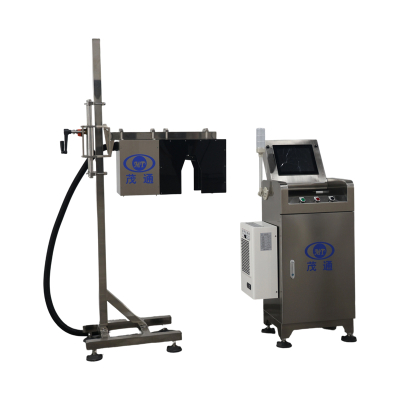
The inkjet printing visual inspection system acts as the "identification gatekeeper" for products, using high-speed industrial cameras and intelligent algorithms to ensure the clarity, accuracy, and completeness of each product's identification.
In industries such as food, pharmaceuticals, and cosmetics, information such as production date, expiration date, batch number, and QR code on product packaging are crucial for traceability and compliance. Any printing error can lead to the recall or return of the entire batch of products.
The visual inspection system's workflow consists of three precise stages: image acquisition, processing and analysis, and result execution. The system first uses a high-speed camera, under precise trigger control, to quickly photograph products passing through the printing area, using a dedicated lighting system to obtain clear, high-contrast images.
Subsequently, intelligent image processing software performs image preprocessing, positioning and segmentation, and content recognition, finally comparing the recognition results with the preset correct information for judgment.
In terms of technical advantages, the visual inspection system achieves 100% full inspection capability, with a detection speed that can match high-speed production lines of hundreds or even thousands of items per minute, completely eliminating subjective judgment errors and missed detections caused by fatigue in manual inspection.
In terms of accuracy, the system can identify micron-level defects that are difficult for the human eye to detect, such as faint ink dot omissions, slight distortions, or character defects.
The application scenarios cover a wide range of industries. In the pharmaceutical field, the visual inspection system strictly inspects the batch number and expiration date on drug aluminum foil plates, vials, and medicine boxes, which is critical for medication safety and has a very low tolerance for errors.
In the food and beverage industry, the system inspects the date, batch number, and QR code on bottle caps, bottles, can bottoms, and packaging bags, ensuring that the information is clear, readable, and compliant with regulations.
3. Technological Integration and Collaborative Application
In modern intelligent factories, full-box weighing and inkjet printing visual inspection technologies are moving from isolated operation to deep integration. The collaborative application of these two technologies creates a value-added effect of 1+1>2, building a more comprehensive product quality control system.
Innovative solutions are already showing a trend towards integrated systems. For example, Guangzhou Xinshi Intelligent Equipment Co., Ltd.'s "Dynamic Three-Stage Weighing and Visual Inspection Integrated Machine" successfully integrates weight detection and AI visual inspection into a single device.
This design breaks through the limitations of traditional single-function detection, achieving simultaneous detection of weight, appearance, and coding, forming a "multi-functional" detection closed loop.
The advantages of this technological integration are evident. First, it significantly improves detection efficiency, avoiding production bottlenecks caused by multiple processing steps. Second, the integrated design reduces equipment footprint and hardware costs, simplifying production line layout.
More importantly, the integrated system can share detection data for correlational analysis—for example, binding coding information with weight data to provide more comprehensive data support for product quality traceability.
The collaborative application scenario is particularly outstanding on high-speed production lines. Taking the beverage filling industry as an example, modern production lines have speeds exceeding 72,000 bottles/hour, and even reaching 120,000 bottles/hour.
In this high-speed production environment, the integrated detection system can simultaneously monitor filling volume, capping quality, coding, and carton weight, ensuring high-speed production without compromising quality.
4. Technological Development Trends and Future Outlook
With the in-depth advancement of Industry 4.0 and intelligent manufacturing, full-box weighing and coding visual inspection technology is developing towards a more intelligent, precise, and integrated direction. Several significant technological trends are shaping the form of next-generation detection equipment.
The integration of artificial intelligence and deep learning is currently the most important trend. Traditional visual inspection relies on preset rules and templates, while AI-based detection systems can autonomously learn defect features through training, continuously improving recognition accuracy.
For example, the newly released X-ray foreign object visual inspection machine is equipped with a self-developed AI algorithm, increasing the recognition accuracy of high-density impurities such as sand and glass fragments to 99.8%, significantly reducing misjudgment rates.
The continuous improvement of accuracy and speed is another major trend. High-speed full-box weighing scales have reached a detection speed of 6000 boxes/hour, redefining new standards for the packaging inspection industry.
At the same time, detection accuracy is also moving towards the micron level. For example, high-precision measurement solutions can achieve micron-level accuracy, supporting ultra-high-precision assembly production needs.
Integrated and modular design is becoming an important development direction for equipment manufacturers. Integrated detection equipment can reduce production line space and lower overall costs for users. For example, an integrated leak detection, cap inspection, and liquid level detection machine combines acoustic detection, surface scanning, and X-ray liquid level detection technologies, specifically designed for the food and beverage industry, enabling one-stop core product quality screening.
In the future, with the popularization of the Internet of Things and digital twin technologies, testing equipment will no longer be isolated quality control points, but rather data nodes integrated into the enterprise's overall quality management system, achieving a shift from detection to prevention and providing solid support for intelligent manufacturing.
As technology continues to advance, integrated and intelligent testing solutions will become mainstream. Companies such as Guangzhou Xinshi Intelligent Equipment Co., Ltd. have launched intelligent quality control equipment integrating weight detection and AI vision, achieving a "multi-functional" closed-loop detection system.
These devices not only improve detection efficiency but also provide strong support for enterprises to build a comprehensive quality traceability system.
In the future, with the deep integration of Industry 4.0 technologies, full-box weighing and inkjet coding visual inspection technologies will become more intelligent and adaptive, becoming an indispensable core component of smart factories.
They are not only guardians of product quality but also intelligent terminals for enterprises to obtain production data, optimize process flows, and achieve refined management.