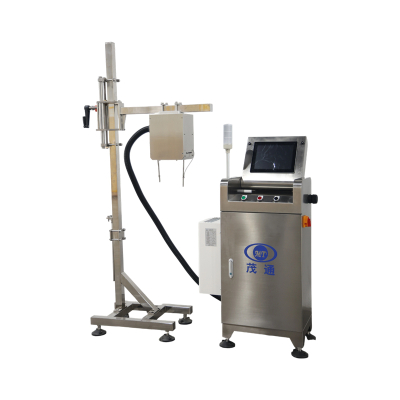
Ceramic Bottle Crack Detection Technology for Baijiu: An Innovative Evolution from Traditional Tapping to Intelligent Image Recognition
Introduction
Ceramic bottles, as an important packaging material for Baijiu (Chinese liquor), have their integrity directly related to the product's sealing and quality. However, the inherent brittleness of ceramic materials and the complexity of the manufacturing process easily lead to defects such as cracks and glaze peeling. Traditional manual inspection is inefficient and prone to misjudgment. With the development of automation technology, detection technologies based on image recognition, acoustic analysis, and 3D modeling have gradually become solutions, enabling efficient and accurate crack identification and ensuring production quality.
I. Core Challenges and Necessity of Crack Detection
1. Concealment and Diversity of Defects
Ceramic bottle cracks include inner wall cracks, microcracks, and stress cracks. Inner wall cracks are difficult to detect with the naked eye due to the opacity of the bottle. These defects may lead to slow evaporation of the liquor after filling, resulting in economic losses. In addition, complex areas such as the bottle shoulder and bottom are prone to cracks due to transportation stress, requiring targeted detection methods.
2. Limitations of Traditional Manual Inspection
Reliance on workers tapping and listening or visual inspection is easily affected by subjective experience, resulting in a high rate of missed detections, and the labor intensity is high, making it difficult to meet the needs of modern high-speed production lines.
II. Mainstream Detection Technology Principles and Innovative Solutions
1. Internal Visual Inspection Based on Image Recognition
• Technical Principle: A wide-angle camera (≥1.3 million pixels) and a white LED light are fixed at the end of a hollow tube, inserted into the bottle to capture images. The computing system constructs a grayscale image, and then uses binarization processing and feature extraction to identify cracks.
• Innovative Applications:
Partition Analysis Algorithm: Gaussian curvature analysis, Euclidean distance deviation calculation, and normal vector dispersion evaluation are used for the bottle shoulder stress zone, bottle bottom pressure zone, and bottle neck transition zone, respectively, to accurately locate crack types (such as glaze peeling and wall thinning).
◦ Circularity Judgment Method: By calculating the circularity of the crack area (C = P² / (4πA)), when C > 5, it is automatically determined as a crack, improving the accuracy of identification. 2. Acoustic Automatic Tapping Detection System
• Technical Principle: A tapping rod (such as a bimetallic rod with a flexible connection) is driven by a telescopic cylinder to tap the bottle body. A sound sensor collects the audio, and the frequency characteristics are analyzed – intact bottles produce a crisp sound, while cracked bottles produce a dull sound.
• System Advantages: The equipment is highly adaptable and can be adjusted to suit different bottle types. The non-contact design avoids secondary damage.
3. 3D Point Cloud and Environmental Risk Assessment
• Comprehensive Evaluation Model: A 3D scan generates a point cloud map of the bottle's inner wall. Combined with transportation environment data (such as vibration frequency and stacking pressure), the risk probability of each area is calculated (e.g., the risk probability formula for the bottle shoulder stress zone: P_1 ∝ (Number of cracks / Material fatigue strength) × Stress factor), quantifying the severity of defects.
III. Technical Comparison and Application Scenario Analysis
| Detection Method | Accuracy Characteristics | Applicable Scenarios | Limitations |
| Image Recognition | High crack recognition accuracy (up to ±0.1mm) | Online inspection of new bottles on production lines, quality inspection of recycled bottles | High requirements for lens cleanliness, requires stable light source |
| Acoustic Tapping | Strong adaptability, fast speed (up to 300 bottles/minute) | High-speed production line initial screening, milk glass bottle detection | Cannot locate the specific location of cracks |
| 3D Point Cloud | Supports defect risk assessment | High-value wine bottle recycling inspection | High cost, complex data processing |
IV. Technical Challenges and Future Trends
1. Current Challenges
• Environmental Interference: Production line vibration and light changes may affect the stability of image acquisition.
• Algorithm Generalization: Dark glazed ceramic bottles are prone to image noise, requiring optimization of filtering algorithms.
2. Development Trends
• Multimodal Fusion: Combining image and acoustic data with deep learning (such as CNN models) to improve the detection rate of complex defects.
• Dynamic Evaluation System: Integrating IoT sensors to monitor transportation conditions in real time and predict crack propagation risk.
Conclusion
Ceramic bottle crack detection technology is evolving from single-sensory judgment to multi-dimensional intelligent analysis. The complementary application of image recognition and acoustic detection, combined with 3D modeling for risk prediction, provides a more reliable quality assurance solution for the baijiu industry. In the future, with algorithm optimization and reduced hardware costs, intelligent inspection systems are expected to become standard equipment in the industry, driving the quality inspection of baijiu packaging towards digitalization and greater precision.
The technical solutions discussed in this article are based on publicly available patents and academic research; actual application requires verification and debugging in conjunction with production line parameters.