Power Battery Electrode Coating Visual Inspection System: A Fusion of Precision, Efficiency, and Intelligence
Introduction: A Key Link in Quality Control
Against the backdrop of the rapid development of the new energy vehicle industry, power batteries, as core components, directly determine the driving range, safety, and lifespan of electric vehicles. Electrode coating is a crucial step in battery manufacturing, with coating quality directly impacting the battery's energy density, cycle life, and safety performance. Traditional manual inspection methods can no longer meet the stringent requirements of precision, efficiency, and consistency in modern large-scale production. Therefore, machine vision inspection technology has become an indispensable quality control tool in intelligent manufacturing of power batteries.
Coating Process and Inspection Challenges
Electrode Coating Process Overview
Power battery electrode coating is the process of uniformly coating a slurry made from a mixture of active materials, conductive agents, and binders onto the surface of a metal current collector (aluminum foil or copper foil). The coating must ensure uniform thickness, neat edges, no defects, and that the areal density meets design requirements. Typical coating process parameters include: coating width 100-300 mm, coating speed 20-80 m/min, coating thickness 80-200 μm, and areal density control accuracy within ±1.5%.
Limitations of Traditional Inspection Methods
Traditional inspection methods primarily rely on manual sampling and contact measuring instruments, which have significant drawbacks:
1. Low sampling rate: Typically only 1%-5%, many defects cannot be detected in time.
2. High subjectivity: Inconsistent human judgment standards lead to high missed detection rates.
3. Low efficiency: Unable to keep up with the pace of high-speed production lines (modern coating line speeds can reach 80m/min).
4. Destructive risk: Contact measurements may damage the electrode surface.
5. Data gaps: Difficult to achieve full-process quality data traceability.
Core Advantages of Machine Vision Inspection
Machine vision systems effectively solve the above problems through non-contact, full-area, real-time inspection:
• 100% online inspection: Achieves comprehensive inspection of each electrode.
• Objectivity and consistency: Standardized algorithms eliminate human bias.
• High speed: Inspection speed is synchronized with the production line, without speed bottlenecks.
• Quantitative Data: Generating detailed defect classification statistics and quality trend analysis
Technical Requirements of the Visual Inspection System
Inspection Item Classification
A complete electrode coating visual inspection system needs to cover the following key quality indicators:
Geometric Dimension Inspection:
• Coating width and position deviation (accuracy requirement ±0.2mm)
• Coating edge straightness (deviation ≤1mm/10m)
• Clarity of the boundary between coated and uncoated areas
• Coating thickness uniformity (indirectly through image grayscale analysis)
• Macroscopic defects: missed coating, scratches, bubbles, wrinkles, foreign matter, accumulation, edge shrinkage, etc.
• Microscopic defects: pinholes, bright spots, dark spots, streaks, etc.
• Periodic defects: repetitive defects related to the condition of equipment such as the coating head and back roller
Functional Inspection:
• Areal density uniformity (calculated through a grayscale-thickness correlation model)
• Coating Drying Status Assessment (Avoiding Over-drying or Incomplete Drying)
Accuracy and Speed Requirements
Modern power battery production lines impose stringent technical specifications on inspection systems:
• Inspection Accuracy: Minimum defect detection capability of 0.1mm²
• Inspection Speed: Synchronized with the production line, maximum processing speed up to 100m/min
• False Positive Rate: Over-detection rate <0.1%, under-detection rate <0.01%
• Response Time: Delay from detection to alarm <100ms
• Stability: Continuous operation MTBF (Mean Time Between Failures) >2000 hours
System Architecture and Key Technologies
Hardware Configuration Scheme
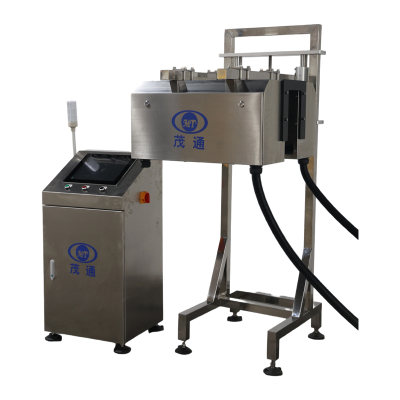
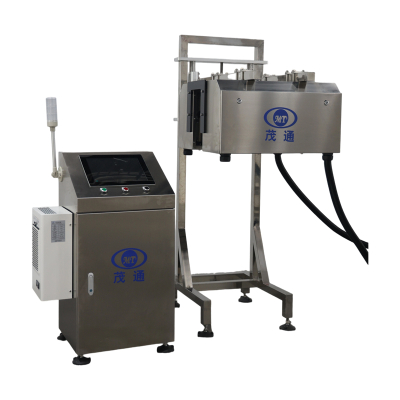
A typical coating vision inspection system employs a multi-camera collaborative architecture:
Illumination System Design:
• Forward Illumination: For surface texture and macroscopic defect detection
• Backlight Illumination: For edge detection and transmissivity defect identification
• Coaxial Illumination: For imaging reflective surfaces
• Multi-Angle Light Sources: Eliminate shadows and reflection interference
Imaging System Configuration:
• High-resolution line scan camera: Used for full-frame continuous scanning, typically with a resolution of 8K-16K pixels.
• Area scan camera: Used for local high-definition imaging and depth analysis.
• Infrared camera: Used for monitoring drying conditions and temperature distribution.
• 3D contour camera: Used for coating thickness and surface flatness measurement (optional).
Processing Unit:
• Industrial-grade PC: Equipped with a high-performance GPU for real-time image processing.
• Distributed processing architecture: Multiple processing nodes perform parallel computing, distributing the computational load.
• Dedicated image acquisition card: Ensures stable transmission of high-speed image data.
Core Algorithm Technologies
Image Preprocessing Techniques:
• Non-uniformity correction: Eliminates the effects of uneven illumination.
• Noise filtering: Adaptive median filtering, wavelet denoising, etc.
• Image enhancement: Contrast stretching, histogram equalization.
Defect Detection Algorithms:
1. Rule-based detection:
• Edge detection algorithms (Canny, Sobel) for boundary recognition.
• Threshold segmentation for separating coated and uncoated areas.
• 1. Morphological Operations (Erosion, Dilation) for Defect Enhancement
2. Machine Learning-Based Detection:
• Feature Engineering Extraction: Texture Features (LBP, GLCM), Shape Features, Statistical Features
• Traditional Classifiers: SVM, Random Forest for Defect Classification
• Clustering Algorithms for Defect Pattern Analysis
3. Deep Learning-Based Detection:
• CNN Architectures (e.g., ResNet, U-Net variants) for End-to-End Defect Detection
• Object Detection Networks (YOLO, Faster R-CNN) for Defect Localization and Classification
• Generative Adversarial Networks (GANs) for Data Augmentation and Anomaly Detection
Special Algorithm Modules:
• Sub-pixel Edge Localization: Accuracy up to 0.1 pixels
• Phase Correlation Method: For Frequency Domain Analysis of Periodic Defects
• Optical Character Recognition (OCR): For Reading Identification Marks such as Batch Numbers and Production Dates
Implementation Challenges and Solutions
Technical Challenges and Countermeasures
Highly Reflective Surface Imaging:
• Challenge: High reflectivity of metal current collector surfaces leads to image saturation or low contrast
• Solutions: Utilizing polarized illumination, multi-angle light sources, and HDR imaging technology
High-speed motion blur:
• Challenge: High-speed production line operation causes image blurring.
• Solution: Using a global shutter camera, short exposure time (microsecond level), and motion compensation algorithms.
Complex background interference:
• Challenge: Slurry color is similar to the background, resulting in low defect contrast.
• Solution: Multispectral imaging, specific wavelength illumination, and deep learning feature extraction.
Imbalded defect sample:
• Challenge: The number of normal samples far exceeds the number of defect samples, making model training difficult.
• Solution: Data augmentation techniques, cost-sensitive learning, and few-shot learning algorithms.
Environmental adaptability:
• Challenge: Workshop environment vibration, temperature changes, and dust interference.
• Solution: Mechanical vibration damping design, temperature control system, and periodic automatic calibration.
System integration and production line adaptation:
The vision inspection system needs deep integration with the production line control system:
• Communication interface: Communicating with the PLC via industrial protocols such as Profinet and EtherCAT.
• Synchronous triggering: Using encoder signal synchronization to ensure accurate image acquisition position.
• Sorting Integration: Inspection results are transmitted to sorting equipment in real time, enabling automatic rejection of defective products.
• Data Integration: Interconnects with the MES system to achieve full-process traceability of quality data.
Practical Application Results and Case Analysis
Application Case of a Leading Battery Company
This company deployed a fully automated vision inspection system on its third-generation super coating line, achieving significant results:
System Configuration:
• 8 sets of 16K line array cameras, covering the entire coating width
• 4 sets of 5-megapixel area array cameras for re-inspection of key areas
• NVIDIA Tesla T4 GPU processing platform
• Customized multi-angle LED lighting system
Performance Indicators:
• Inspection Speed: 65m/min (synchronized with the production line)
• Defect Detection Rate: 99.7%
• False Positive Rate: 0.05%
• Minimum Defect Size: 0.08mm²
• System Availability: 99.5%
Economic Benefits:
• Quality Loss Reduced by 42%
• Manual Inspection Costs Reduced by 80%
• Customer complaint rate decreased by 65%
• Investment return period: 14 months
Typical Defect Detection Examples
1. Coating edge defects: A 0.15mm edge gap was detected using a sub-pixel edge extraction algorithm, avoiding the risk of tape breakage in subsequent slitting processes.
2. Periodic streaks: Periodic defects related to back roller scratches were identified through Fourier transform analysis, providing early warning for equipment maintenance.
3. Microscopic pinholes: Pinholes with a diameter of 0.2mm were detected using high-resolution local scanning, preventing the risk of internal short circuits in the battery.
4. Uneven drying: Localized drying temperature deviations were detected through infrared thermal imaging analysis, allowing for timely adjustment of drying parameters.
Technology Development Trends and Prospects
Intelligent Upgrade Direction
Comprehensive Application of Deep Learning:
• Self-supervised learning reduces labeling dependence
• Transfer learning adapts to different production lines and materials
• Federated learning enables multi-factory collaborative optimization while ensuring data privacy
Multimodal Data Fusion:
• Correlation analysis between visual data and process parameters (temperature, speed, viscosity)
• Closed-loop verification of online detection and offline laboratory data
• Cross-process quality data traceability (coating-rolling-slitting)
Predictive quality control:
• Time-series-based quality trend prediction
• Root cause analysis of defects and suggestions for process parameter optimization
• Equipment health monitoring and preventive maintenance
Cutting-edge inspection technologies
Popularization of 3D vision technology:
• Laser triangulation enables direct measurement of coating thickness
• White light interferometer for surface roughness analysis
• Structured light 3D scanning for coating smoothness assessment
High-speed, high-precision imaging:
• TDI (Time Delay Integration) cameras improve signal-to-noise ratio
• Event cameras reduce data redundancy and improve processing efficiency
• Computational imaging technology breaks through traditional optical limitations
Cloud collaboration and digital twins:
• Continuous training and updating of cloud-based models
• Production line digital twins enable virtual debugging and optimization
• Cross-regional, multi-factory quality benchmarking and analysis
Conclusion
Visual inspection technology for power battery electrode coating has evolved from simple defect identification in the early stages to a comprehensive, intelligent quality control system. With the continued expansion of the new energy vehicle market and the ever-increasing demands for battery performance, visual inspection systems will evolve towards higher precision, faster speeds, and greater intelligence. Future inspection systems will not only be the "eyes" of quality control but also the "brain" of process optimization. Through data-driven continuous improvement, they will help power battery manufacturing achieve higher quality consistency, production efficiency, and cost control, providing a solid technological guarantee for the healthy development of the new energy vehicle industry.
With the deep integration of artificial intelligence, the Internet of Things, and digital twin technologies, coating visual inspection systems will become one of the core components of intelligent battery manufacturing, driving the entire industry towards Industry 4.0. For battery manufacturers, investing in advanced visual inspection systems is not only a necessary means to improve product quality but also a strategic choice for building core competitiveness and achieving sustainable development.