Application of Intelligent Visual Inspection Technology in Quality Control of Seasoning Oil Packet Leakage
Seasoning oil packets are an indispensable component of the modern food industry, and their sealing integrity and quality directly affect product safety and user experience. Traditional leakage detection methods mainly rely on manual visual inspection or simple sensing technologies, which suffer from low efficiency, high false negative rates, and difficulty in precise localization. In recent years, with the rapid development of machine vision and intelligent detection technologies, vision-based leakage detection solutions have gradually become key to solving this problem. This article, combining the latest patent research and technical solutions, systematically introduces the principles, methods, and development trends of visual inspection for seasoning oil packet leakage.
1. Technical Challenges and Limitations of Traditional Leakage Detection Methods
In the production process of seasoning oil packets, leakage problems may stem from poor packaging sealing, material damage, or filling process defects. Traditional detection methods such as cardboard absorption methods or single-point sensor detection have significant shortcomings: the former relies on manual observation of wet marks on the cardboard, which is inefficient and prone to missed detections; the latter, such as photoelectric sensors or detection ropes, can only cover a single point or line, failing to comprehensively capture the location and extent of the leakage. Furthermore, the viscous nature, reflective properties, or similarity in color to the background of the oil further increases the complexity of visual inspection. For example, in production environments with uneven lighting, oil traces may be misidentified as shadows or packaging patterns, leading to false positives or false negatives.
2. Core Technologies of Vision-Based Leakage Detection
2.1 Multi-Region Sensing and RFID Tag Technology
An advanced leakage detection system divides the detection platform into multiple independent detection regions, each embedded with a sensing unit containing electrically responsive materials (such as radio frequency identification tags). When leakage contacts a specific region, the electrical characteristics of the tag change. An RFID reader collects this status information, precisely locating the leakage and calculating parameters such as leakage volume and rate. This solution supports full coverage of the entire detection surface and improves the accuracy of determining the cause of leakage by training a leakage detection model using historical data.
2.2 Image Processing and Fluorescence/Blue Light Dual-Spectrum Analysis
To address the physical characteristics of the oil, multi-spectral imaging technology can be used to enhance detection sensitivity. For example, the detection area is illuminated with an ultraviolet light source (360nm wavelength) to induce fluorescence in the liquid, while a blue light source (380–500nm) is used to acquire auxiliary images. Differential processing of the fluorescence and blue light images effectively separates the liquid signal from environmental noise. The specific process includes:
1. Image preprocessing: Gaussian filtering is used for noise reduction, and image enhancement algorithms (such as multiplication and grayscale adjustment) are used to strengthen features.
2. Channel analysis: The RGB image is converted to the YUV color space, and channel differentiation (e.g., Y-U, Y-V) is used to highlight the liquid area.
3. Threshold segmentation and area calculation: The leakage situation is determined by comparing the leakage area with a preset threshold, reducing human misjudgment.
2.3 Semantic Segmentation Based on Contrastive Learning
For micro-leak detection in complex backgrounds, contrastive learning provides a self-supervised feature extraction scheme. Through an encoder-decoder structure, the model can learn the common features of the leakage area without a large amount of labeled data. For example, combining RGB and infrared images as input to the network, multi-scale features are extracted through the SD-Block module and attention mechanisms (such as CBAM), and finally, the segmentation result is output through upsampling. This method has good adaptability to room temperature liquids or weak leaks and has stronger anti-interference capabilities than traditional thermal imaging detection.
3. System Implementation and Integrated Applications
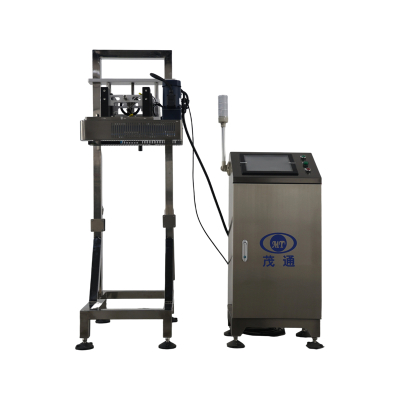
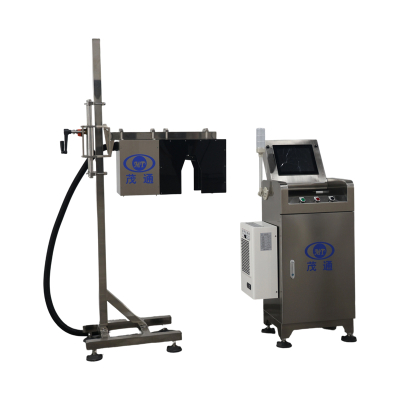
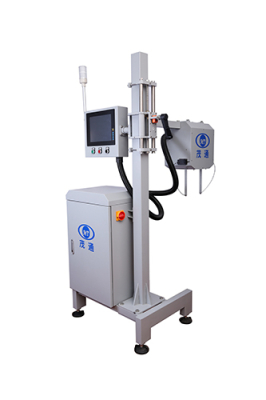
A complete visual inspection system usually includes the following modules:
• Image acquisition unit: High-definition industrial cameras with specific light sources (such as ultraviolet or blue light modules) ensure image clarity.
• Processing platform: A controller based on FPGA or embedded processors realizes sensor data fusion and real-time analysis.
• Auxiliary devices: Automatic cleaning module (for removing residual liquid from the detection plate), handling robot (for adjusting the detection position), and liquid injection device (for simulating leakage conditions).
• Alarm and feedback mechanism: When a leak is detected, the system automatically marks the location and triggers an alarm, while simultaneously overlaying the leakage area on the original image to assist in manual verification.
4. Technical Advantages and Future Trends
Visual inspection technology has significant advantages in liquid leakage quality control:
• Non-contact detection: Avoids secondary contamination of the packaging. • Quantitative Analysis: The system can accurately calculate the leakage area, location, and even leakage rate.
• Adaptive Capability: Through deep learning models, the system can adapt to different oil viscosities, packaging materials, and lighting conditions.
In the future, with the popularization of multimodal sensor fusion (such as combining infrared and visible light imaging) and edge computing, visual inspection systems will develop towards greater efficiency and lower power consumption. At the same time, models based on self-supervised learning are expected to further reduce the reliance on labeled data, lowering deployment costs for businesses.
Conclusion
The visual inspection technology for detecting leakage in condiment oil packets, by combining multispectral imaging, intelligent sensors, and artificial intelligence algorithms, achieves accurate and efficient localization of leakage problems. This not only improves the quality control level of food packaging but also provides crucial support for the intelligent transformation of the entire food industry. In the future, with the continuous optimization of algorithms and hardware, this technology is expected to play a core role in a wider range of fluid packaging scenarios.