Aluminum Foil Sealed PE Bottle Leak Detection Technology: A Comprehensive Analysis of Methods and Devices
In the modern packaging industry, aluminum foil sealed PE bottles are widely used in food, beverage, pharmaceutical, and daily chemical industries. To ensure product quality and safety, leak detection is a crucial link in the production process. This article provides a comprehensive analysis of the technical principles, classification of methods, and practical applications of aluminum foil sealed PE bottle leak detection.
I. Importance and Challenges of Leak Detection
Leaks in aluminum foil sealed PE bottles can lead to spoilage, contamination, or failure of the contents, seriously affecting product quality and safety. Especially for products requiring high sterility, even a tiny leak can lead to microbial invasion, causing serious consequences.
Aluminum foil sealed PE bottle leak detection faces several challenges: firstly, it needs to identify different types of defects, such as false sealing of the aluminum foil, micro-leaks, and bottle body leaks; secondly, it needs to meet the detection efficiency requirements of high-speed production lines (up to 36,000 containers/hour); and thirdly, it needs to balance detection accuracy and efficiency to avoid false rejections or missed detections.
II. Main Leak Detection Methods and Technical Principles
1. Ultrasonic Detection Method
The ultrasonic detection method is a non-contact detection method. This method uses an ultrasonic probe to emit ultrasonic waves to the aluminum foil at the bottle opening and receives the reflected signal. By analyzing the characteristics of the reflected signal, the sealing quality can be determined.
Specific implementation steps include:
• Parameter setting: Set ultrasonic parameters based on the PE bottle material, aluminum foil characteristics, etc.
• Signal acquisition: The ultrasonic wave scans the bottle opening sealing area and collects the reflected signal.
• Signal analysis: Generate an image or curve from the reflected signal, or compare it with a preset threshold to determine the sealing integrity.
The advantage of this method is that it does not require contact with the product, does not damage the packaging, and can adapt to the needs of high-speed production lines. However, it should be noted that errors such as "double refraction" or "pulse envelope, cyclic jumping" may occur when detecting ultra-thin materials, which need to be avoided through multiple measurements and verification.
2. Pressure Detection Method
The pressure detection method is divided into positive pressure and negative pressure methods, both of which are contact detection methods.
The positive pressure method (pressure decay method) involves filling the bottle with compressed air at a certain pressure (e.g., 0.1-0.3 MPa), sealing it, and then monitoring the pressure change. If the pressure continues to drop, it indicates a leak. This method is suitable for online testing of rigid bottles and has the advantages of being non-destructive and fast.
The negative pressure method (vacuum decay method) involves placing the bottle in a sealed chamber and applying a vacuum (e.g., -50kPa to -80kPa), then observing the rate of pressure recovery. This method is more suitable for soft or thin-walled bottles (such as PE bottles) and can detect minute leaks.
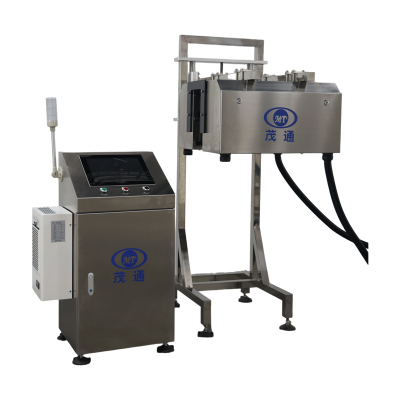
An improved pressure detection method uses a combination of a synchronous extrusion device and a measuring device: when the product reaches a predetermined position, the measuring device descends to compress the aluminum foil, and dynamically measures the pressure value; the sealing performance is determined by analyzing the pressure curve data—if there is a leak in the aluminum foil, the measured pressure is lower; if there is no leak, the pressure is higher.
3. Visual Inspection Method
The visual inspection method uses a high-resolution camera and an intelligent image analysis system to inspect the aluminum foil seal. This system collects images of the bottle opening and uses an expert decision system to determine the sealing quality, detecting defects such as poor sealing and missing aluminum foil.
The advantages of this method are non-contact, high speed, and high detection accuracy (rejection rate ≥99.5%, false rejection rate ≤0.3%). Advanced visual inspection systems integrate world-leading camera and optical technologies and can meet the needs of high-speed PE bottle filling production lines.
4. Multi-Sensor Fusion Detection Method
The multi-sensor fusion detection method integrates liquid level sensors and high-precision pressure sensors. By using the feedback values of the liquid level and internal pressure of each container under different extrusion strengths, it comprehensively determines its capacity and sealing performance.
This method uses an adaptive algorithm (such as the AdaBoost four-dimensional nonlinear machine learning algorithm) to fully utilize the container characteristic information collected by the sensors, automatically adjust the detection threshold, effectively improve detection accuracy, and reduce the false rejection rate.
Table: Comparison of Main Leak Detection Methods for Aluminum Foil Sealed PE Bottles
| Detection Method | Detection Principle | Applicable Scenarios | Advantages | Limitations |
| Ultrasonic Detection Method | Analysis of ultrasonic reflection signals | High-speed production lines, various bottle types | Non-contact, does not damage packaging | May produce measurement errors requiring verification |
| Pressure Detection Method | Monitoring pressure changes | Rigid/flexible bottles | High detection sensitivity | Requires contact with the product |
| Visual Inspection Method | Image analysis and pattern recognition | Detection of external defects | Non-contact, fast | Limited detection of internal micro-leaks |
| Multi-sensor Fusion Method | Multi-parameter joint judgment | High-precision requirements | Strong adaptability, low misjudgment rate | Complex system, higher cost |
III. Process Flow and Equipment Configuration of Leak Detection
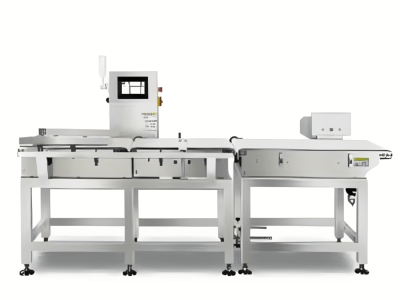
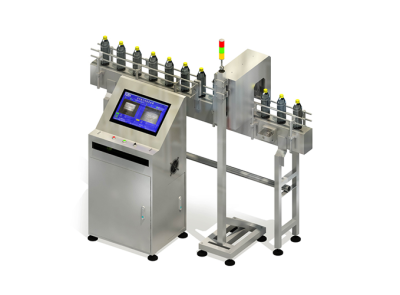
A complete leak detection system usually includes a transmission module, detection module, signal acquisition module, calculation module, and rejection module.
The detection process generally includes:
1. Bottles are transported to the detection station via a conveyor belt or turntable.
2. The detection mechanism scans or compresses the bottles.
3. Sensors collect relevant signal data.
4. The processing system analyzes the data and determines whether it is qualified.
5. The rejection device removes unqualified products.
Advanced detection systems use a turntable multi-station layout, integrating feeding, sealing detection, coding detection, defective product rejection, and unloading stations, achieving efficient integrated detection. This layout is compact and highly integrated, significantly improving production efficiency.
IV. Application Scenarios in Different Industries
Aluminum foil sealed PE bottle leak detection technology has wide applications in different industries:
In the daily chemical industry, it is used to detect the sealing performance of products such as disinfectants, preventing leaks that could lead to product deterioration or shortened shelf life.
In the food and beverage industry, it is widely used for leak detection of large bottled products such as coconut milk, soy milk, and fermented yogurt, ensuring food safety.
In the pharmaceutical industry, it is used for sealing detection of bottled medicines to ensure the sterile state and shelf life of the drugs.
V. Technological Development Trends and Outlook
Aluminum foil sealed PE bottle leak detection technology is developing towards intelligence, high precision, and high efficiency:
The application of adaptive detection algorithms is becoming increasingly widespread. Equipment can automatically adjust detection thresholds based on factors such as bottle thickness, material, and temperature, improving detection accuracy. The integration of multiple technologies is becoming a trend, such as combining visual inspection with pressure testing, which allows for simultaneous detection of various indicators, including aluminum film seal quality and bottle bottom printing status.
High-speed operation is another development direction, with the highest detection speed reaching 36,000 containers per hour, meeting the needs of large-scale production.
In the future, with the application of artificial intelligence and the Internet of Things technologies, leak detection systems will become more intelligent, enabling advanced functions such as real-time quality monitoring, production data analysis, and predictive maintenance.
Conclusion
Leak detection of aluminum film sealed PE bottles is a critical step in ensuring product quality and safety. Different methods, such as ultrasonic testing, pressure testing, visual inspection, and multi-sensor fusion detection, each have their advantages and are suitable for different scenarios. With technological advancements, leak detection methods are becoming more precise, efficient, and intelligent, providing strong guarantees for product quality across various industries. Manufacturing companies should choose the appropriate detection solution based on their product characteristics, production speed, and accuracy requirements to ensure that product quality meets standards.