Online Metal Detection in Food Production: The Invisible Guardian of Food Safety
From flour raw materials to packaged finished products, even 0.5 mm metal fragments cannot escape its watchful eye.
In today's industrialized food production, a tiny metal fragment can trigger not only a food safety crisis but also a direct threat to consumer health. Globally, more than 3,000 product recalls occur annually due to metal contamination, resulting in direct economic losses of billions of dollars.
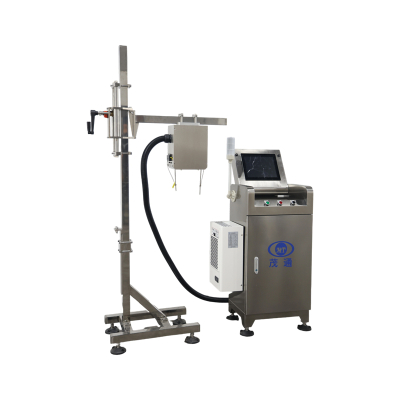
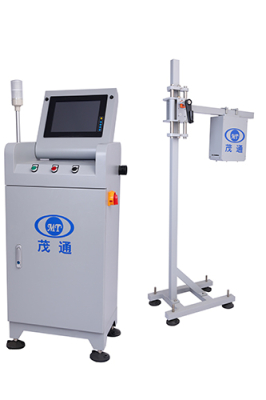
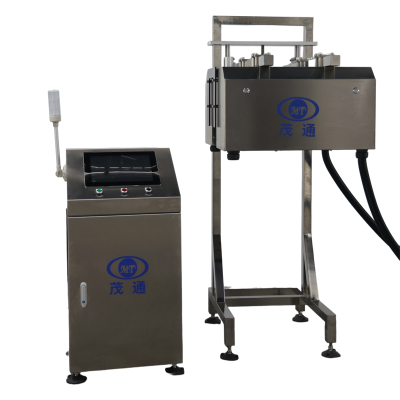
As the "invisible guardian" of food production, online metal detection technology has emerged in this context and is gradually becoming standard equipment on food production lines.
1. Sources and Hazards of Metal Impurities
Metal impurities can enter food through various routes throughout the entire chain of production, processing, and transportation. During the raw material procurement stage, crops may absorb heavy metals from the soil; during the production process, wear and tear of equipment and detachment of parts can lead to metal impurities; and during transportation, damaged packaging can allow external metal foreign objects to enter the food.
These metal impurities pose a serious threat to human health. Sharp metal fragments can scratch the mucous membranes of the mouth, esophagus, and gastrointestinal tract, causing mechanical damage; heavy metal elements such as lead, mercury, and cadmium can accumulate in the body, damaging the nervous system, hematopoietic system, and kidneys, and even causing cancer.
For food companies, metal contamination incidents can trigger a crisis of consumer trust, leading to product recalls and damage to brand reputation. According to industry statistics, baked goods account for as much as 30% of food safety complaints caused by metal foreign objects, making them a "high-risk area" for corporate quality control.
2. Working Principle of Metal Detection Technology
The core principle of modern metal detection equipment is based on electromagnetic induction technology. When food passes through the detection channel, the transmitting coil of the equipment generates a high-frequency variable magnetic field. If the food contains metal impurities, it will cause a change in the magnetic field of the receiving coil.
The metal detection system consists of three key components: the transmitter coil is responsible for generating the magnetic field surrounding the product; the receiving coil detects any interruptions in the magnetic field; and the response system issues an alarm or triggers an automatic rejection device when metal is detected.
The choice of operating frequency directly affects the detection performance. Metal detectors typically operate at working frequencies of 80 to 800 kHz. Lower frequencies are better for detecting iron, while higher frequencies are better for detecting high-carbon steel.
Technological advancements have enabled modern metal detection equipment to distinguish between actual contaminants and the inherent characteristics of the product itself. Multi-frequency synchronous detection technology allows the equipment to use multiple frequencies simultaneously to differentiate between the product and metal contaminants, significantly improving detection accuracy.
3. Applications of Different Types of Metal Detection Equipment
Based on different food forms and production processes, various specialized types of metal detection equipment have been developed:
Conveyor-type metal detectors are the most common type, equipped with a conveyor belt mechanism, suitable for detecting bagged and boxed products, and can be integrated at the end of the production line to automatically reject unqualified products.
Gravity-feed metal detectors are designed for powdered and small granular products, mainly used in the plastics and rubber industries. When items fall through, the system immediately activates a separation mechanism upon detecting metal impurities.
Pipeline metal detectors are used to detect paste-like or fluid products in sealed pipes, such as meat paste in sausages, chewing gum base, and oral liquids, allowing for real-time online removal of metal impurities.
Flatbed metal detectors are suitable for detecting thin products such as textiles and extruded sheets, primarily to protect downstream equipment such as cutting tools.
4. Application Examples of Metal Detection Technology in the Food Industry
In the baking industry, metal detection technology demonstrates significant value. Every stage of the small cake production process carries the risk of metal foreign matter contamination, from metal fragments in the flour to metal powder generated by mixer wear.
To address the unique challenges of baked goods, such as the "product effect" caused by high moisture or high salt content, modern metal detectors combine intelligent algorithms with multi-frequency synchronous detection technology to effectively distinguish between true metal signals and product interference signals.
In the dairy industry, a large dairy company introduced high-precision inline metal detectors, reducing the product metal contamination rate from 0.15% to 0.02%, resulting in annual savings of over 2 million yuan. The detection sensitivity can reach Φ0.2mm (iron), Φ0.3mm (non-ferrous), and Φ0.5mm (316 stainless steel). For the meat processing industry, maintenance-free food metal detection equipment can quickly and accurately detect impurities such as metal shavings from worn tools, ensuring the safety of meat products.
5.Technological Innovation and Future Development Trends
Food metal detection technology is developing towards greater intelligence and precision. Maintenance-free design is a significant innovation in recent years. Traditional equipment requires frequent maintenance, while maintenance-free equipment uses a sealed structure to effectively prevent food debris, dust, and moisture from entering the interior, reducing contamination and corrosion.
The integration of artificial intelligence and big data technology is driving metal detection technology into a new stage. AI-assisted metal detectors, by integrating electromagnetic induction and image recognition technologies, build a "dual-modal" detection system, significantly reducing false positives.
After a bakery introduced an AI-powered detection machine, the number of false positives decreased from 20 per day to 3, and production line downtime was reduced by 85%.
Continuous improvement in detection accuracy is another major trend. Ultra-micro detection technology aims to detect metal particles as small as 0.1 millimeters, while multi-frequency band metal detection technology can achieve full material coverage, detecting various metal impurities such as iron, stainless steel, copper, and aluminum.
From a sustainable development perspective, green and energy-saving design is also receiving increasing attention, including the development of low-radiation, low-energy consumption detection equipment, in line with carbon neutrality goals.
6. Food Companies' Selection and Implementation Strategies
Choosing the right metal detection equipment requires considering multiple factors. Food companies first need to analyze their product characteristics, including moisture content, salt content, and packaging materials, as different products have different requirements for detection equipment.
For challenging applications such as wet, high-temperature, refrigerated, or metal film-packaged products, high-end equipment with multi-frequency synchronous technology and product signal suppression functions should be selected to maintain detection sensitivity without increasing the false rejection rate.
Equipment installation location is also crucial. Metal detectors should be placed at critical control points in the production process. Common locations include: early in the production process (to capture contaminants before they enter the main processing stage), during processing (after product manufacturing but before packaging), and at the end of the production line (for final product inspection).
Regular maintenance and verification are essential for ensuring long-term performance. Food manufacturers must conduct continuous performance verification, and routine testing (typically every 6-12 months) is crucial to demonstrating that the system continues to operate as expected. With continuous technological advancements, food metal detection equipment is becoming increasingly intelligent, precise, and reliable. In the future, detection systems integrating artificial intelligence, big data, and the Internet of Things will become mainstream, shifting from "passive detection" to "proactive prevention."
From simple electromagnetic induction to complex multi-frequency synchronous detection, and from single metal detection to simultaneous identification of multiple foreign objects, metal detection technology has become an indispensable guardian of quality in the food industry.
For food companies, investing in advanced metal detection equipment is not only a compliance requirement but also a core element of brand protection and market competitiveness.