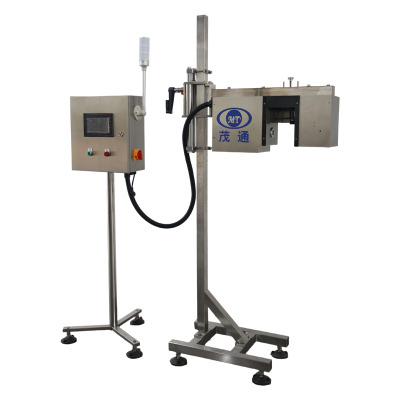
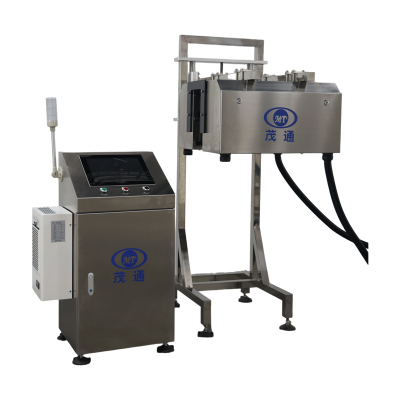
Glass Bottle Inkjet Code and Label Visual Inspection Technology: A Precise and Efficient Quality Guardian
In the food, beverage, and pharmaceutical industries, glass bottles are common packaging containers, and their surface inkjet codes and labels carry crucial information such as production date, batch number, and expiration date. The clarity, completeness, and accuracy of this information directly relate to product quality, safety, and corporate reputation. Traditional manual inspection methods are susceptible to fatigue and subjective factors, making it difficult to meet the demands of high-speed production lines. Automated inspection technology based on machine vision, through image acquisition, processing, and intelligent analysis, can achieve rapid and accurate identification of inkjet code and label defects, significantly improving production efficiency and quality control. The following sections will elaborate on the technical principles, system composition, detection process, advantages, and development trends.
I. Technical Principles: The Fusion of Image Processing and Deep Learning
The core of the visual inspection system lies in simulating the collaborative work of the human eye and brain: an industrial camera captures images of the glass bottle surface, and then algorithms are used to extract features and determine defects. Its technical implementation mainly relies on the combination of two types of methods:
1. Traditional image processing technology: This includes preprocessing steps such as image grayscale conversion, filtering and noise reduction, and binarization to enhance image quality. Subsequently, morphological operations (such as dilation and erosion) are used to segment character regions, and a template matching method is used to calculate the matching degree between the target character and the standard template (usually with a threshold of ≥0.85 for acceptance).
2. Deep learning algorithms: For complex defects that are difficult to handle with traditional methods (such as slight character deformation and background interference), deep learning models (such as YOLOv5) automatically learn feature patterns by training on a large amount of sample data. For example, training the model after applying Mosaic data augmentation to the bottle sample images can accurately identify the inkjet code area and extract the detection target (ROI), effectively addressing challenges such as rotation and deformation.
The combination of these two technologies allows for both the quantification of simple features (such as missing characters and positional deviations) and the identification of complex defects such as blurring and adhesion, forming a hierarchical detection system.
II. System Composition: Collaborative Configuration of Hardware and Software
A complete visual inspection system requires close cooperation between hardware and software modules, including:
• Image acquisition unit:
• Industrial camera: Usually, a global shutter camera with more than 1.3 million pixels is selected to ensure that there is no motion blur during dynamic shooting. To address the reflective properties of curved glass bottles, multiple cameras can be configured (e.g., four cameras covering 360° of the bottle body) or a rotating shooting mechanism can be used to eliminate detection blind spots.
• Light Source and Optical Design: A white ring light or bowl light uniformly illuminates the bottle body using the principle of diffuse reflection, reducing reflections and dark corners. Some systems are equipped with a soft light structure to further improve image consistency.
• Auxiliary Mechanisms: Including a sleeve assembly that drives the camera up and down (for adjusting the focal length to photograph the bottle cap), an intermittent rotation mechanism (to allow the camera to photograph the bottle body at different angles), and an imaging component (to expand the single-shot range).
• Processing and Control Unit:
• Core Processor: A high-performance controller with a GPU (such as the TNP-01 host) supports multi-camera parallel processing, with a detection speed of up to 75,000 bottles/hour.
• Software Algorithm Platform: Integrates an OCR character recognition engine (such as Tesseract-OCR) and custom detection algorithms, with functions such as template management, defect classification, and data statistics. The system can store over 1000 product parameters and automatically retrieve the corresponding template when changing product categories.
• Execution Unit:
After the photoelectric sensor triggers the camera to take a picture, the system analyzes the image in real time. If a defect is found (such as missing or blurry printing), the system immediately controls the rejection mechanism (such as a pneumatic push rod) through the I/O interface to remove the defective product and triggers an audible and visual alarm.
III. Detection Process: From Image Acquisition to Quality Judgment
The system's workflow is interconnected, ensuring high efficiency and accuracy:
1. Image Acquisition and Enhancement:
After the glass bottle enters the workstation, the ring light illuminates the area to be inspected, and the camera captures images of the bottle body or cap. Median filtering is used to reduce noise, and binarization is used to highlight character contours. Affine transformation is used to correct the image angle if necessary.
2. Feature Extraction and Defect Recognition:
• Printing Detection: First, the presence or absence of printing is determined (missing printing), and then the number and content of characters are verified (e.g., whether the date and batch number are complete). If the number of characters is less than the standard template, it is judged as "partially missing"; if the matching degree of a single character is lower than the threshold (e.g., 0.85), it is marked as "blurry" or "incorrect". • Label Detection: Multi-angle analysis is performed on label position and integrity to identify defects such as missing labels, misaligned labels, wrinkled labels, and perforations. Mingjia Technology's splicing detection algorithm integrates 360° images to eliminate false positives caused by bottle rotation.
3. Result Output and Rejection:
The detection results are displayed in real-time on the human-machine interface (such as a touch screen), and data such as pass rate and defect types are recorded. Defective products are automatically rejected at the end of the production line. The system also supports cloud data upload for quality traceability.
IV. Technological Advantages: The Core Value of Automated Inspection
Compared with manual inspection, the visual inspection system highlights three major advantages:
1. Improved Accuracy and Efficiency: Deep learning algorithms enable defect recognition accuracy exceeding 99.9%, with a detection speed of tens of thousands of bottles per hour, far exceeding human capabilities.
2. Cost and Risk Control: One device can replace multiple quality inspectors, reducing long-term labor costs; it also avoids safety risks associated with manual contact with high-temperature, high-speed production lines.
3. Adaptability and Traceability: The system can be adapted to different bottle types (such as PET bottles, glass bottles) and coding types (ink, laser) by adjusting parameters. All inspection images and data are automatically archived, supporting quality analysis and process optimization.
V. Challenges and Future Development Trends
Despite the maturity of the technology, some challenges remain: such as the need for better optical design to address reflective interference from glass bottles, and the difficulty in recognizing laser coding on dark bottles. Future trends will focus on:
• Flexible Inspection Systems: As described in patent CN202310153197, equipment integrating lifting and rotating mechanisms can achieve multi-functional capabilities, simultaneously inspecting bottle caps, bottle bodies, and labels.
• Continuous Evolution of AI Algorithms: Deep learning models will further integrate 3D vision technology to improve sensitivity to subtle defects such as slight dents and bubbles.
• Cloud-Integrated Solutions: Through the Internet of Things, the system connects to the enterprise cloud platform to achieve equipment status monitoring, remote maintenance, and big data predictive analysis, building a "smart factory" quality closed loop.
Conclusion
Glass bottle coding and labeling visual inspection technology, by integrating machine vision, OCR, and deep learning, has become a cornerstone of quality control in modern industrial production. It not only solves the efficiency and accuracy bottlenecks of manual inspection but also optimizes production processes through data-driven approaches. With algorithm iterations and hardware innovations, this technology will continue to evolve towards greater intelligence and flexibility, providing a solid guarantee for industry quality and safety.