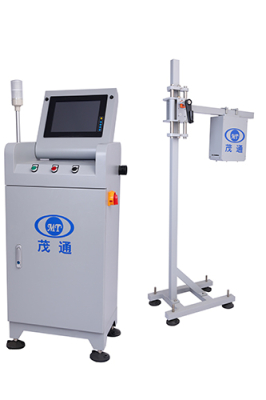
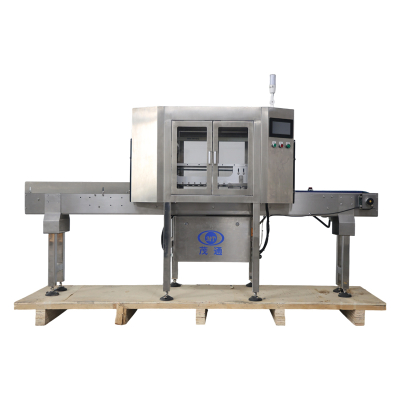
Code Inspection System Cuts False Rejects on Can Lines
For beverage can lines, a readable bottom code is more than just a printing detail. It's crucial for product traceability, date verification, factory-code control, and anti-counterfeiting checks. Jinan Maotong Inspection Equipment Co., Ltd.'s Code Inspection System is a sophisticated solution specifically designed for non-contact inline inspection of inkjet printing on can bottoms. This system automatically rejects cans with missing, incorrect, blurred, displaced, incomplete, or duplicate codes, ensuring only quality products proceed.
Understanding Can Coding Challenges
Producing flawless can bottom codes presents several hurdles. Often, issues stem from the production environment itself. For instance, an improperly adjusted water blower, typically positioned before the inkjet printer, might fail to completely remove water droplets from the can bottom, leading to blurred or missing codes. The printer itself can also malfunction; clogged ink nozzles, a common problem from extended use or insufficient cleaning, can result in missed or incomplete codes if not addressed promptly. Furthermore, any displacement of the printer's trigger sensor or printhead can cause critical errors such as missing characters, incorrect positioning, or entirely absent codes.
Adding to these complexities, the concave and reflective nature of metal can bottoms makes visual inspection particularly tricky. Unlike transparent materials, metal surfaces demand specialized lighting solutions to achieve stable and clear images for accurate analysis. These factors underscore the need for a robust and intelligent inspection system.
Why False Rejects Matter on Can Bottom Codes
False rejects, which incorrectly label a perfectly good can as defective, can significantly impact high-speed production lines. This leads to increased material waste, disrupts stable rejection control, and creates unnecessary review tasks for operators. Our Code Inspection System tackles this by meticulously focusing its inspection on the actual coding area, minimizing interference from unrelated features on the can's bottom surface.
Maotong’s advanced inspection software is engineered to filter out visual noise, such as the Yangyuan logo and minor scratches that often appear on can bottoms. This is vital because if the inspection logic treats every mark as a potential inkjet defect, logos or surface imperfections can be mistakenly flagged. By effectively filtering these interferences, the Code Inspection System drastically reduces false rejections while ensuring genuine code problems are still accurately identified. This optimization ensures production efficiency isn't compromised by unnecessary stoppages or material loss.

For operations running at sustained high throughput, this filtering logic is not simply a convenience. It directly affects yield, operator confidence, and the stability of downstream reject actions. A system that distinguishes true coding defects from harmless surface features helps maintain both product quality and production efficiency under real factory conditions.
Defects the System Is Built to Identify
Our Code Inspection System is built to check common can-bottom inkjet issues in real time with exceptional precision. It supports character recognition for year, month, and day, along with fixed information like factory codes such as TN, HB, GM, and HG, “Qualified” marks, and various anti-counterfeiting codes. Moreover, it can automatically adjust date settings without any manual intervention, enhancing operational flexibility.
Beyond basic presence, the system detects a wide array of defects:
Our published performance figures reflect the system's robust capabilities:
| Inspection Item | Published Performance |
|---|---|
| False kick rate for inkjet printing inspection | ≤0.03% |
| No inkjet printing, incorrect printing, position offset, duplicate printing | >99.99% rejection |
| Missing inkjet printing (single character > 20% incomplete) | >99.8% rejection |
| Fuzzy inkjet printing (unreadable to the human eye) | >99.93% rejection |
These figures represent theoretical experimental probabilities, with each listed inspection item tested in real time for every can. For production teams evaluating can-bottom inspection solutions, our Can Bottom Code Inspection Machine offers a highly focused and reliable configuration for this critical application.
Stable Rejection at High Line Speed
The Code Inspection System is engineered for high-speed production, capable of inspecting up to 72,000 cans per hour. However, speed is just one part of the equation; maintaining accurate rejection at such velocities is paramount. Our system ensures inspection results are precisely matched to the correct can until rejection, preventing any mix-ups.
This precision is achieved through an encoder installed on the conveyor’s synchronous motor. As a can passes the positioning sensor, the control unit accurately records its unique identification number and encoder signal. A high-speed Gigabit Ethernet digital camera captures the current coding image from above, transmitting it via the network to the image processor. After rapid analysis, the result is sent to both the Human-Machine Interface (HMI) and the control unit. If a can is classified as unqualified, the rejector mechanism is activated, removing the corresponding defective can from the line with pinpoint accuracy.
Crucially, because the defective-can number is tied to the encoder signal, rejection accuracy remains consistent, even if the conveyor line stops or changes speed after the defective can has been recorded. The system also features continuous rejection and shutdown functions, offering stronger production control when repeated defects are detected, thereby enhancing overall line stability and quality assurance.
Full Coverage Without Contact
Our Code Inspection System provides 360° coding inspection without any blind spots, all while maintaining non-contact inline operation. This design ensures that the inspection process thoroughly covers the entire coding area without ever damaging the can body – a critical factor for maintaining product integrity and preventing additional waste.
Zero-delay inkjet detection further bolsters stability in real-world conveyor conditions. This feature is specifically designed to prevent false rejections that could be caused by common line disturbances, such as cans rubbing against the line, getting stuck, becoming blocked, or being manually placed. When combined with our advanced logo and scratch filtering capabilities, the Code Inspection System excels at handling practical line irregularities, delivering consistent and reliable performance even in less-than-ideal inspection environments.
Quality Records and Remote Operation
Beyond immediate defect detection, the utility of inspection extends to post-rejection analysis. Our Code Inspection System automatically stores photos of all defective products, organized by date, with a customizable image-retention period. These detailed records are invaluable for subsequent review, comprehensive troubleshooting, and in-depth production quality analysis, empowering your team with actionable data.
For seamless operation, the system includes a user-friendly HMI with multi-level access control, enabling tailored user experiences. Fast character training simplifies the setup for different coding formats, and its customizable functions allow adaptation to specific production needs. To ensure continuous, stable performance, especially during prolonged high-temperature operations in summer, the inspection machine is equipped with industrial-grade air conditioning, preventing system crashes and alarms. Furthermore, its 24-hour remote monitoring and control capabilities provide continuous oversight and rapid response, transforming the Code Inspection System into an integral part of your routine quality management, rather than just a pass/fail station.
FAQs
What can the Code Inspection System detect?
It detects missing or absent printing, blurred or human-unreadable codes, incorrect codes, missing characters, position deviations, duplicate printing, and supported date, factory-code, and anti-counterfeiting information errors.
What is the maximum inspection speed?
The stated maximum inspection capability is 72,000 cans per hour.
How does it reduce false rejects from can-bottom markings?
Maotong’s latest inspection software filters interference from specific logos like Yangyuan and can-bottom scratches, helping the system focus precisely on inkjet code quality instead of unrelated surface features.
What happens if the conveyor stops or changes speed?
The encoder-based counting method records the defective can number together with the encoder signal, ensuring rejection accuracy is maintained even if the line stops or changes speed after the defective can has been recorded.
Does the system support remote operation?
Yes, the Code Inspection System supports 24-hour remote monitoring and control, along with automatic defect-image storage and multi-level HMI access, enhancing operational flexibility and oversight.