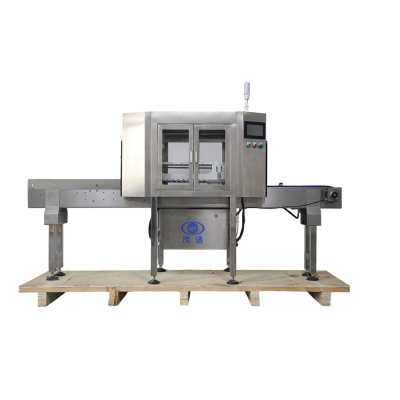
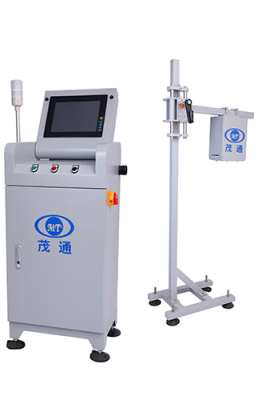
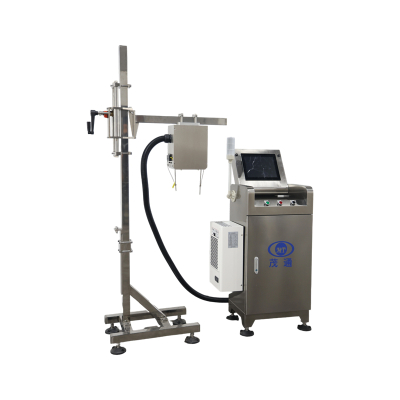
Confirm Bottles Mouth Inspection Machine Conditions Before Startup
A Bottles Mouth Inspection Machine is only as stable as the site conditions around it. On PET and PE bottle lines rated up to 48,000 bottles per hour, buyers should confirm noise, power, compressed air, temperature, humidity, altitude, flooring, and storage requirements before installation. These checks help protect inspection consistency, reduce commissioning surprises, and keep the bottle finish inspection process aligned with actual production conditions.

Why Site Conditions Matter Before Commissioning
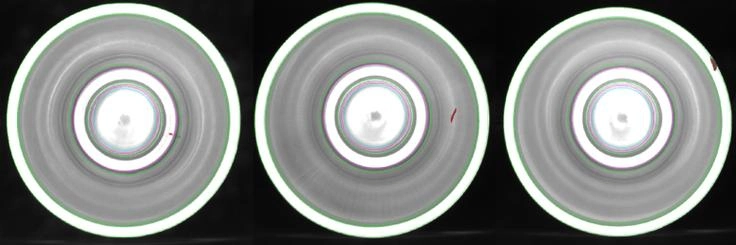
A Bottles Mouth Inspection Machine for PET and PE bottles is designed for fully automatic, non-contact, online inspection of bottle finishes for deformation and damage. In high-speed production, the inspection result depends not only on machine vision, but also on whether the machine can operate in a stable mechanical and electrical environment.
When site conditions are not confirmed early, installation teams may face avoidable problems: unstable triggering, inconsistent bottle positioning, lighting variation, or delayed adjustment during startup. For procurement teams, the best approach is to treat operating conditions as part of the technical specification, not as an afterthought.
Noise Level Should Stay Within 85 dB
The specified noise condition for this type of Bottles Mouth Inspection Machine is ≤85 dB. Actual noise may vary depending on the container or package being processed, machine power, building acoustics, and surrounding production conditions.
This limit matters because noise often reflects the broader mechanical state of the line. Excessive vibration, unstable conveying, or resonance around the inspection position can affect bottle movement and image capture. Keeping the operating area within the stated noise range supports a more predictable inspection environment and helps operators identify abnormal mechanical conditions earlier.
Electrical Supply Must Be Confirmed Upfront
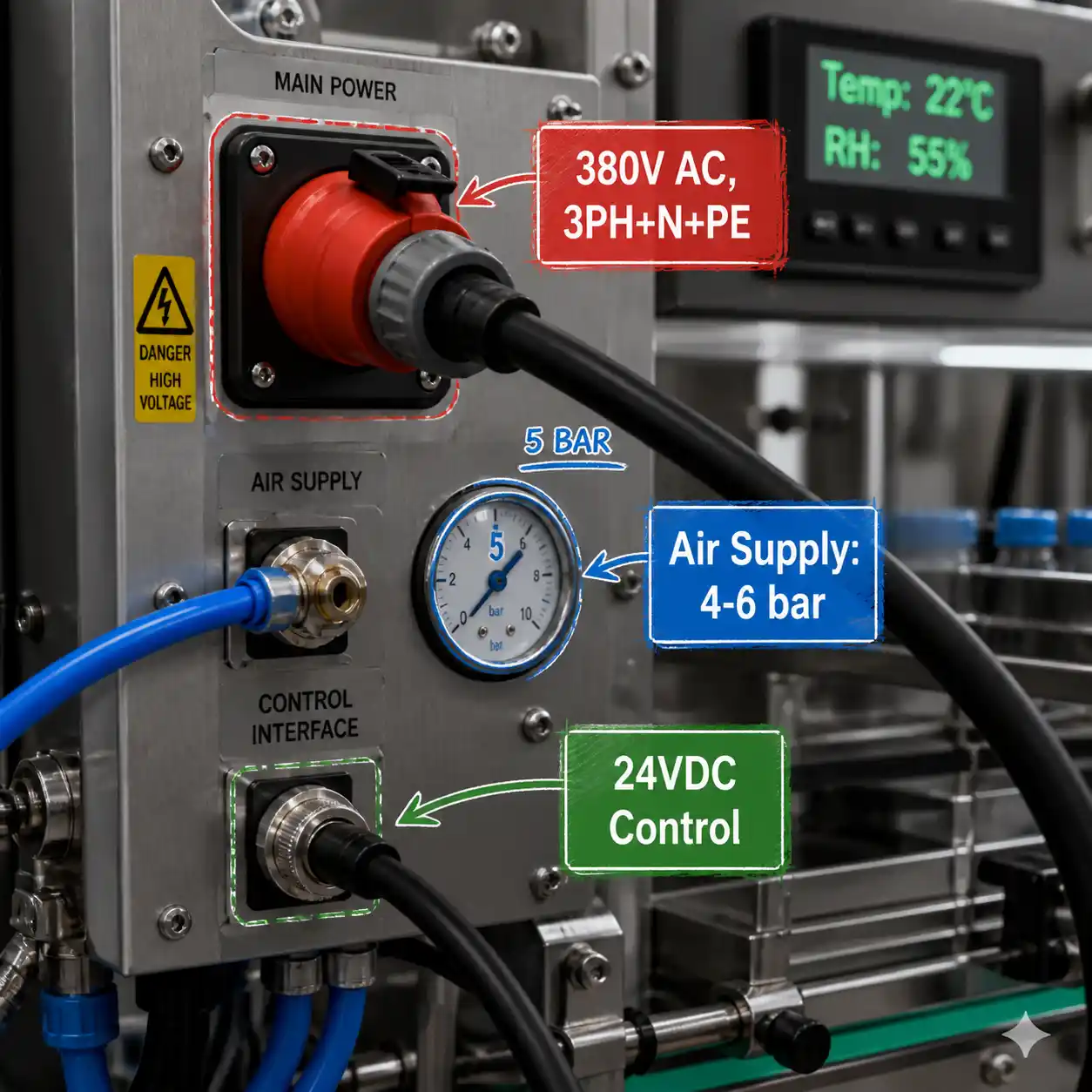
The power connection is made from the customer’s main electrical cabinet to the equipment control cabinet. For the Bottles Mouth Inspection Machine, the standard electrical conditions include:
| Item | Requirement |
|---|---|
| Main power supply | 3 × 380V AC ±10%, 50 Hz, 3PH + N + PE |
| Lighting power | 220V AC, 50 Hz, single-phase |
| Control voltage | 24VDC |
| Total power | Approximately 1.0 kW |
This structure separates the main supply, lighting supply, and control voltage clearly. The 24VDC control voltage supports stable signal transmission for sensors and control components, while the lighting power supports consistent illumination for the inspection area. If a project requires a special voltage, it should be specified before ordering because it may affect equipment specifications, delivery time, and cost.
Compressed Air Must Remain Between 4 and 6 Bar
The compressed air requirement for the Bottles Mouth Inspection Machine is minimum 4 bar and maximum 6 bar. The customer provides the air piping connection between the air source and the equipment main unit.
For buyers, the key point is consistency. A pressure range that is too low or too high may affect pneumatic response and make the system harder to tune during commissioning. Before installation, the plant should confirm air availability at the actual machine position rather than only at the central air source.
Environmental Conditions Define the Operating Envelope
A suitable installation environment helps the Bottles Mouth Inspection Machine maintain stable operation over time. The recommended operating conditions are:
Temperature and humidity are especially relevant for inspection equipment because the optical area, lighting, and bottle surface conditions should remain stable during production. Factory floor conditions also matter, particularly when the machine is installed inside the blow molding machine area, at the suitable bottle exit position, or on the conveyor chain.
Storage Conditions Before Installation
Proper storage is part of reliable startup. After equipment and parts arrive at the site, they should be stored in a location that meets relevant standards. During storage, lubrication and maintenance should be performed to prevent surface damage or deformation that could affect installation, commissioning, or normal operation.
This step is easy to overlook, but it protects the mechanical condition of the Bottles Mouth Inspection Machine before it reaches the line. Poor storage can create alignment or movement issues that are only discovered during commissioning.
Buyer Checklist Before Startup
Conclusion
A Bottles Mouth Inspection Machine should be evaluated as both an inspection system and a production-line asset. The machine’s rated speed and inspection function matter, but stable site conditions determine how smoothly it can be installed and operated. By confirming electrical supply, compressed air, noise, environment, and storage requirements early, buyers make the startup process more predictable and support long-term inspection stability.