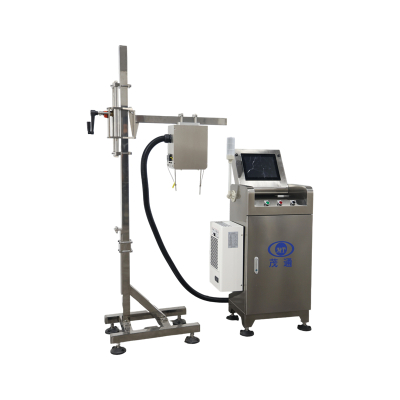
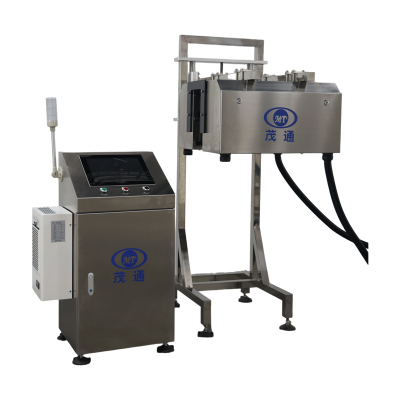
Inspect Bottle Finishes Reliably at 48000 BPH
The Bottles Mouth Inspection Machine is designed for the Online Bottle Finish Inspection System, supporting automatic, non-contact inspection of bottle finishes during production. With a rated capacity of 48,000 bottles per hour, the system focuses on deformation, breakage, chips, through-holes, and oval neck conditions in the bottle mouth area. For PET and PE bottle lines, this inspection stage helps identify defective containers before they continue toward filling, sealing, or downstream packaging.

Why Bottle Finish Inspection Matters
The bottle finish is the point where the container and closure meet. A small crack, chip, deformation, or uneven mouth shape can affect sealing reliability and may cause later rejection in the production process. The Bottles Mouth Inspection Machine applies machine vision technology to inspect this critical area online without physical contact with the container.
The system is positioned for high-speed production environments where manual inspection is not practical. By checking the bottle mouth while the line continues running, the Bottles Mouth Inspection Machine supports stable quality control and reduces the chance that visibly defective bottles move into later process stages.
Core System Configuration
The equipment is identified as the Bottle Finish Inspection Machine, model MT-PK021, with one set configured for a production line rated at 48,000 bottles/hour. It is suitable for PET and PE bottles and can be installed inside the blow molding machine at the bottle discharge section or along the conveyor chain, depending on the site layout.
Key inspection technologies include double evaluation ring technology, graded bottle mouth image evaluation, and an independently developed image processing system. The bottle mouth image is analyzed as a structured bright ring, helping the system evaluate finish defects with stable judgment at production speed.
Environmental and Utility Requirements
For reliable operation, the Bottles Mouth Inspection Machine should be used under defined industrial conditions. The recommended operating altitude is 5–3000 meters above sea level, with an operating temperature of 5°C–40°C and relative humidity of 50%–65% RH. Factory floor flatness, load-bearing capacity, and related site conditions should comply with applicable national standards to support stable equipment operation.
Utility conditions include a noise level of ≤85 dB, main power supply of 3 × 380V AC ±10%, 50 Hz, 3PH + N + PE, lighting power of 220V AC, 50 Hz, single-phase, total power consumption of approximately 1.0 kW, control voltage of 24 VDC, and compressed air of 4–6 bar. Special voltage requirements should be confirmed in advance because they may affect specifications, delivery, and cost.
How the Inspection Workflow Operates
The workflow begins when a positioning sensor detects a passing bottle. The control unit records the bottle ID and the corresponding encoder value, allowing the system to track that specific container through the inspection and rejection process.
After triggering, the camera captures an image of the bottle mouth. The image processor analyzes the result, sends it to the HMI for real-time display, and transmits the decision to the control unit. If the finish is judged defective, the rejector removes the bottle associated with the recorded ID. This synchronized process allows the Bottles Mouth Inspection Machine to inspect continuously while maintaining line movement.
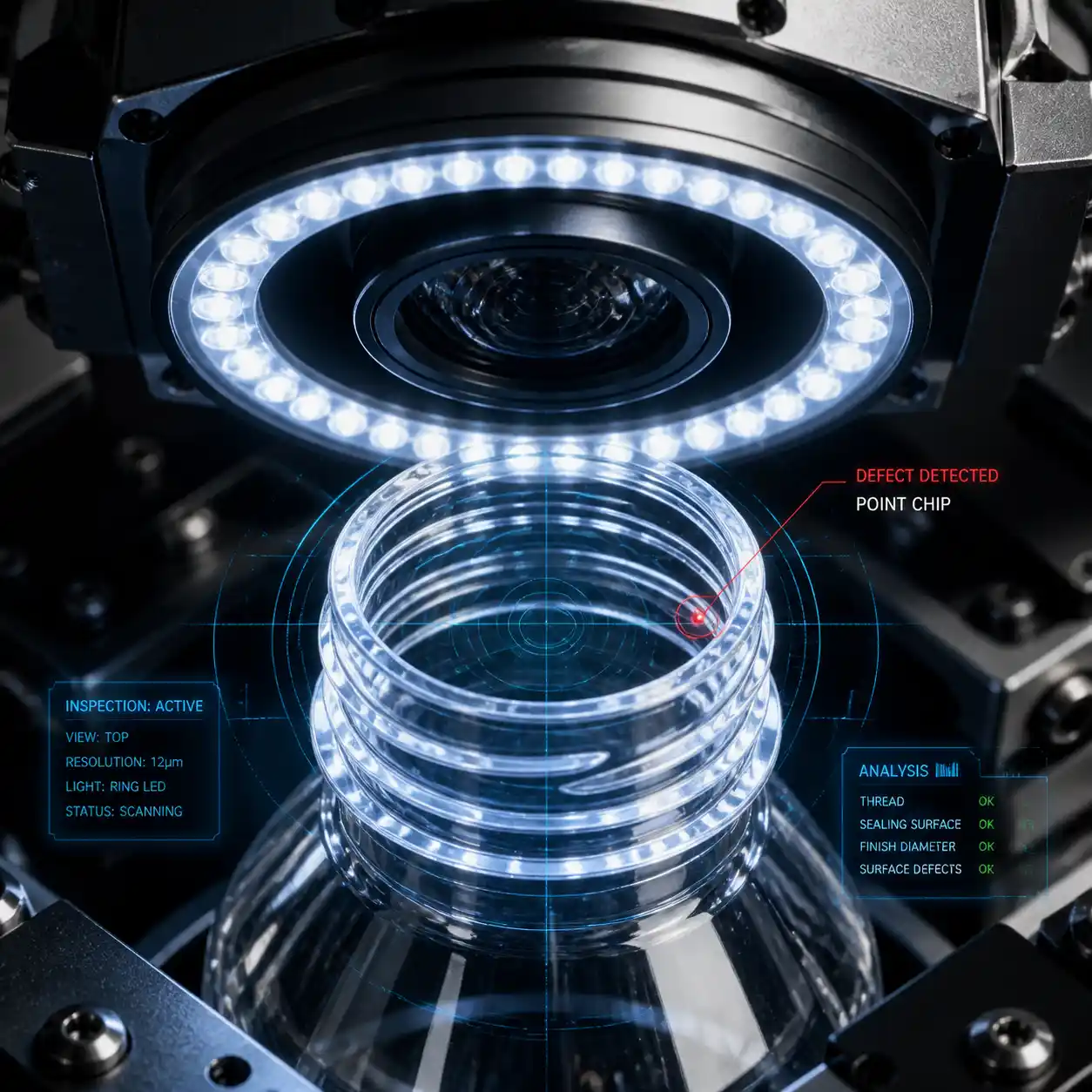
The image acquisition system uses an LED area light source with a service life of up to 30,000 hours. Front illumination makes the bottle mouth appear as a continuous bright ring. A fixed-focus lens with manual aperture adjustment is used, while the area-array CCD analog camera provides 640 × 480 pixels resolution and captures images at up to 60 frames per second.
Defects and Detection Accuracy
The bottle mouth detection module focuses on defects that directly affect finish quality. Inspection content includes through-holes, internal chips, external chips, point chips, and deformed bottle necks with oval shape.
| Inspection item | Detection reference | Detection accuracy | False rejection rate |
|---|---|---|---|
| Through-hole / penetration | Vertical section width 0.8 mm, depth 0.25 mm | ≥99.99% | ≤0.03% |
| Internal defect | Vertical section width 0.8 mm, depth 0.25 mm | ≥99.95% | |
| External defect | Vertical section width 0.8 mm, depth 0.25 mm | ≥99.95% | |
| Point defect | Diameter 0.8 mm, depth 0.25 mm | ≥99.99% | |
| Neck deformation | Diameter difference 2 mm | ≥99.95% |
These values describe the intended inspection performance for the defined defect dimensions. In practical production planning, buyers typically review bottle type, line layout, utilities, rejection space, and changeover requirements before selecting a bottle finish inspection configuration.
Integration With Broader Quality Control
The Bottles Mouth Inspection Machine is part of a wider inspection approach for bottle production. For post-filling quality control, a Filled Bottle Inspection Machine can be evaluated as a complementary solution. Upstream mouth inspection needs may also involve an Embryo Mouth Inspection Machine, while downstream verification can include a Cap and Liquid Level Inspection Machine for filling and sealing checks.
For buyers comparing online finish inspection options, the most important points are clear: match the line speed, confirm the installation position, verify utilities, and define the defect standards before commissioning. When these conditions are aligned, the Bottles Mouth Inspection Machine can serve as a focused inspection station for bottle mouth quality on high-speed PET and PE bottle lines.
FAQs
What is the main purpose of the Bottles Mouth Inspection Machine?
It performs automatic, non-contact online inspection of bottle finishes to detect deformation, breakage, chips, through-holes, and oval neck conditions during production.
What production speed does the system support?
The system is designed for a rated capacity of 48,000 bottles per hour.
Which bottle materials are supported?
The equipment is suitable for PET and PE bottles.
Where can the machine be installed?
It can be installed inside the blow molding machine at the bottle discharge section or along the conveyor chain.
How are defective bottles removed?
The control unit uses the recorded bottle ID and encoder value to trigger the rejector and remove the corresponding defective bottle.
What makes the inspection stable at high speed?
The system uses LED illumination, CCD image acquisition, graded image evaluation, and double evaluation ring technology for bottle mouth analysis.