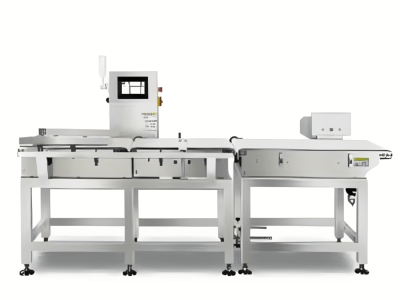
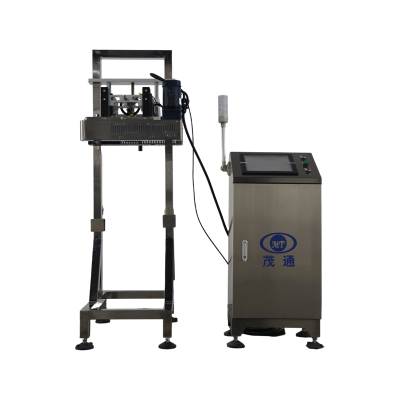
Cut False Rejects with Cap Inspection For Tetra Pak Bags
On fast diamond packaging lines, quality risk often concentrates in two places: the cap (missing, off-center, or rotated) and the inkjet code (missing, incomplete, or duplicated). Cap Inspection For Tetra Pak Bags is positioned as an inline solution that checks both points after capping, so nonconforming packs can be removed online without relying on constant manual checking. The approach is designed for continuous operation on diamond packaging production lines, with an applicable speed of 24,000 packs/hour.

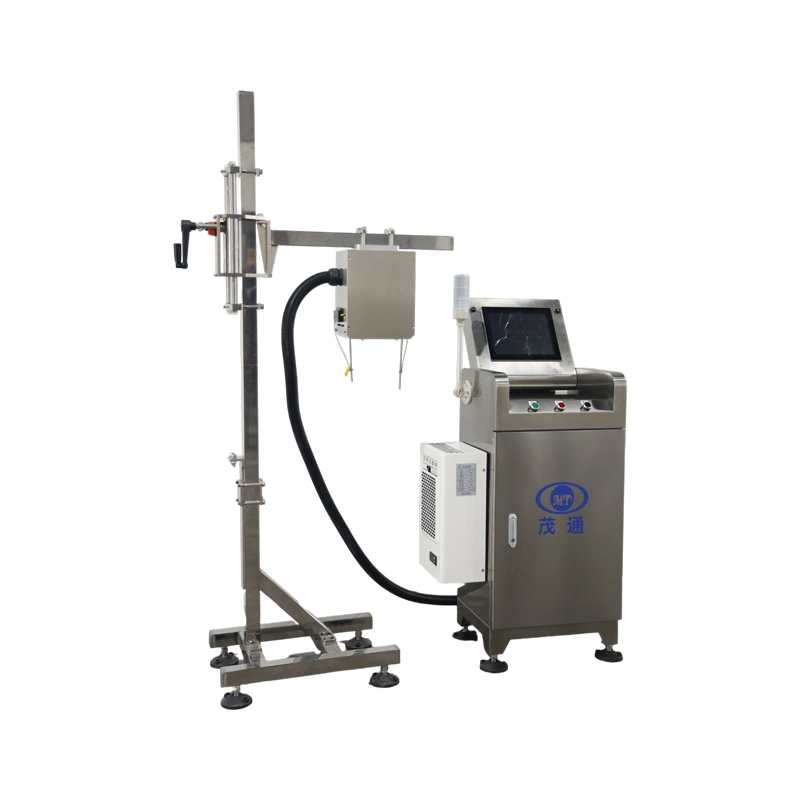
Where Cap Inspection For Tetra Pak Bags Sits on the Line
For predictable timing between image capture and rejection, Cap Inspection For Tetra Pak Bags is installed 1.5–2 meters straight behind the capping machine.
Capping machine → Inspection station → Rejector
This placement ensures every diamond pack is inspected only after the cap has been applied, and rejected packs can be removed online as they pass the rejector. Because the inspection is non-contact, it is intended to avoid physical impact on the package while still enabling full-time inline checks.
How Dual-Camera Inspection Works in Practice
The detection principle for Cap Inspection For Tetra Pak Bags is based on two Gigabit digital cameras taking photos from top to bottom, capturing images of paper bags, bottle caps, and inkjet codes. The captured images are digitally analyzed, and paper bags with unqualified bottle caps or inkjet codes are automatically removed online.

A typical cycle on Cap Inspection For Tetra Pak Bags follows the same control logic throughout production:
For buyers evaluating Cap Inspection For Tetra Pak Bags, this workflow matters because it links each inspection decision to the conveyor timing (encoder signal) and executes rejection automatically when a failed signal is received.
What Cap Inspection For Tetra Pak Bags Checks
Inspection functions in Cap Inspection For Tetra Pak Bags cover both cap quality and inkjet printing quality on diamond packaging production lines. Key detection items include:
To help reduce unnecessary rejection caused by surface handling, the system description also includes:
For more detailed product positioning and scope, see the official page for Cap Inspection For Tetra Pak Bags.
Standard Detection Accuracy Benchmarks
The following table lists standard benchmark values published for Cap Inspection For Tetra Pak Bags (actual results can vary with product and packaging conditions, equipment adjustment, and final agreement terms).
| Inspection item | Rejection rate | False detection rate | Notes |
|---|---|---|---|
| Absent cap | ≥99.99% | ≤0.01% | |
| Cap misalignment | ≥99.99% | ≤0.01% | Offset from center: 5 mm max |
| Cap rotation | ≥99.99% | ≤0.03% | Vertical distance difference (top/bottom) ≥ 5 mm |
| No inkjet print | ≥99.99% | ≤0.01% | |
| Overall inkjet print missing >30% | ≥99.96% | ≤0.01% | |
| Deformed / duplicated / reversed print | ≥99.98% | ≤0.01% |
These benchmarks are often used by buyers to set initial acceptance expectations when comparing Cap Inspection For Tetra Pak Bags against line speed and defect definitions.
Configuration and Operation Features Buyers Commonly Request
In addition to detection, Cap Inspection For Tetra Pak Bags is described with production-support functions that help teams manage recurring faults and shift-to-shift consistency:
For installation wording and the step-by-step detection principle in a single reference, buyers often review the documentation page for Paper Bag Lid Inspection Machine.
Technical Parameters at a Glance
| Parameter | Specification |
|---|---|
| Model | Cap Inspection For Tetra Pak Bags |
| Application | Diamond packaging production lines |
| Applicable production speed | 24,000 packs/hour |
| Camera configuration | Two Gigabit digital cameras |
| Inspection areas | Cap inspection, inkjet printing inspection |
| Rejection method | Automatically rejects packages with defective caps or inkjet printing |
| Safety protection rating | IP65 |
For buyers standardizing multiple carton inspection points, the broader category page for Tetra Pak Inspection Machine can be used to review related inspection equipment.