How Encoder Tracking Makes Cap Inspection For Tetra Pak Bags Predictable
Reliable Cap Inspection For Tetra Pak Bags is built around one goal: keep cap quality and inkjet printing quality under control at production speed, without touching the package. On diamond packaging beverage lines, Cap Inspection For Tetra Pak Bags is typically evaluated for how consistently it can detect non-conforming caps and inkjet codes, then reject them online while keeping operator workload manageable.

What this Cap Inspection For Tetra Pak Bags system is designed to do
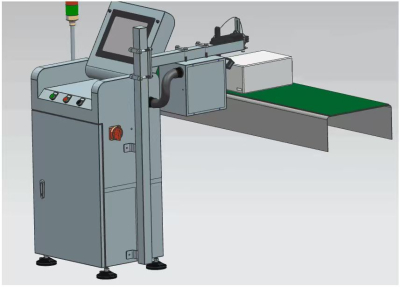
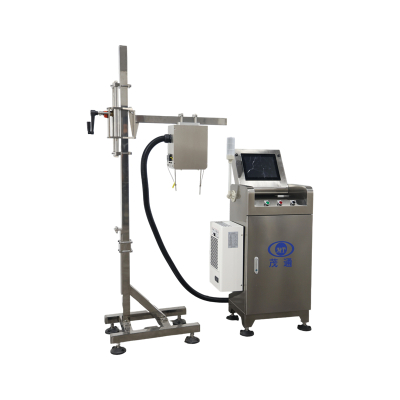
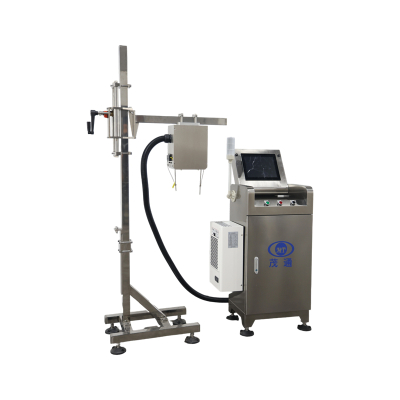
The system is designed for online inspection of cap quality and inkjet printing quality on the Diamond Packaging production line. In practical terms, Cap Inspection For Tetra Pak Bags focuses on two inspection targets within one station:
Any products with defective caps or poor-quality inkjet codes are automatically identified and rejected. This makes Cap Inspection For Tetra Pak Bags a single, inline checkpoint before packages continue to downstream processes.
How camera and encoder tracking work in Cap Inspection For Tetra Pak Bags
The inspection flow is designed to stay synchronized with continuous conveyor motion. A typical Cap Inspection For Tetra Pak Bags cycle follows these steps:
Positioning sensor detection and encoder recording
When a package passes a positioning sensor, its arrival is detected. At the same moment, the control unit records:
This pairing is the foundation of predictable reject timing in Cap Inspection For Tetra Pak Bags, because the inspection decision must be applied to the correct package at the reject point.
Camera triggering and image transmission
The positioning sensor triggers the digital camera to capture images of the package’s cap and inkjet print. The system uses two Gigabit digital cameras to capture images from top to bottom, covering paper bags, bottle caps, and inkjet codes.

Captured images are transmitted via network to the image processor for analysis.
Image processing, HMI display, and online rejection
The image processor processes and analyzes the received images, then transmits results to:
If the package is judged unqualified, the control unit instructs the rejector to remove the non-compliant package online. This end-to-end chain—sensor, encoder, cameras, processor, HMI, rejector—is the operational core of Cap Inspection For Tetra Pak Bags.
Detection items covered by Cap Inspection For Tetra Pak Bags
The inspection capabilities include both cap checks and code checks, which is why many buyers look at Cap Inspection For Tetra Pak Bags as a combined quality gate.
Cap inspection items
Inkjet printing inspection items
Standard rejection and false detection rates
The following table lists the published standard values for rejection and false detection performance for this Cap Inspection For Tetra Pak Bags system.
| Inspection Items | Inspection Contents | Rejection Rate | False Detection Rate |
|---|---|---|---|
| Bottle cap inspection | Absent cap | ≥99.99% | <= 0.01% |
| Bottle cap inspection | Cap misalignment (offset from center: 5mm max) | ≥99.99% | <= 0.01% |
| Bottle cap inspection | Cap rotation (vertical distance difference between top/bottom ≥ 5mm) | ≥99.99% | <= 0.03% |
| Inkjet printing inspection | No inkjet print | ≥99.99% | <= 0.01% |
| Inkjet printing inspection | Overall inkjet print missing > 50% | ≥99.99% | <= 0.01% |
| Inkjet printing inspection | Overall inkjet print missing > 30% | ≥99.96% | <= 0.01% |
| Inkjet printing inspection | Deformed (stretched, squeezed), duplicated, or reversed packaging print | ≥99.98% | <= 0.01% |
These detection accuracy and rejection rate data are standard values. Specific accuracy requires adjustment based on the product and packaging situation, and final accuracy is subject to the contract agreement. A reference explanation commonly used for Cap Inspection For Tetra Pak Bags is that a 99.99% rejection rate for “no bottle cap” implies that out of 10,000 unqualified packages, theoretically only 1 might not be rejected.
Integration and installation details buyers typically confirm
For stable performance, Cap Inspection For Tetra Pak Bags is intended for straight conveyor integration. The on-site installation location is:
Key technical parameters include:
To explore the product page for this Cap Inspection For Tetra Pak Bags system, see Cap Inspection For Tetra Pak Bags.
Operational features that support day-to-day quality control
Beyond detection, Cap Inspection For Tetra Pak Bags commonly supports routine quality management through several functions:
The system also lists 360° cap inspection, 360° inkjet code inspection, and zero-delay cap inspection, described as measures intended to reduce false rejects associated with packaging friction, scraping, and handling.
For readers comparing related inspection stations on carton lines, the broader category pages include Tetra Pak Inspection Machine and Tetra Pak Code Inspection Machine.