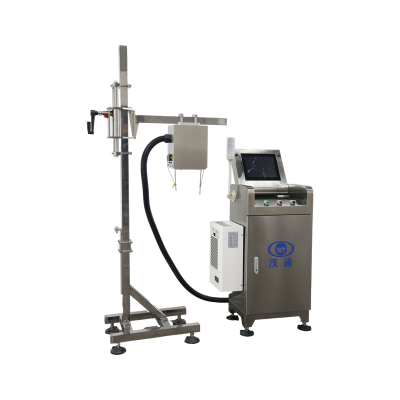
Health Product Bottles Infrared Imaging Inspection for 300 Bottles Per Minute
Aluminum foil sealing is widely used to create a physical barrier against air, moisture, and contaminants at the bottle opening—a crucial safeguard for packaged products throughout their shelf life. On fast PET/PE lines, the challenge lies in verifying sealing quality without slowing production or opening caps. Health Product Bottles Infrared Imaging Inspection tackles this by making post-induction sealing conditions measurable inline, without contacting or opening the bottle.

What This Inline Inspection System Achieves
The Health Product Bottles Infrared Imaging Inspection is a fully automated inspection system designed for evaluating the quality of aluminum foil seals on PET/PE bottle caps, boasting a maximum throughput of 300 bottles per minute. The Health Product Bottles Infrared Imaging Inspection system employs a non-contact, inline thermal imaging approach, capturing and accurately characterizing the heat distribution pattern of the aluminum foil within each cap. This ensures stable, reliable, and precise inspection results. Its detection accuracy surpasses comparable systems both domestically and internationally. At the core of the Health Product Bottles Infrared Imaging Inspection system lies proprietary deep learning technology, refined through more than a decade of in-house R&D, delivering unmatched inspection performance and reliability.
In the same production environment, many lines still rely on manual checks. Manual visual inspection typically requires unscrewing caps and judging seal appearance by eye. Though straightforward, this method is time-consuming, labor-intensive, and prone to subjective errors, making it easy to miss defects, especially with high throughput.
Understanding the Inspection Principle
Health Product Bottles Infrared Imaging Inspection uses the thermal “signature” left after induction sealing to infer whether the seal condition is normal. The process unfolds in a few steps:
The captured heat distribution serves as an indicator, reflecting the degree of compression between the gasket and the bottle cap. A normal seal typically produces an expected pattern, whereas defects result in abnormal thermal patterns. Health Product Bottles Infrared Imaging Inspection then applies image processing to analyze these thermal images and identify abnormalities inline.
Mapping Thermal Patterns to Common Foil-Seal Defects
A significant advantage of Health Product Bottles Infrared Imaging Inspection is its ability to link temperature behavior to specific sealing conditions that can occur across the capper, foil, and induction sealer. The documented defect logic is summarized below:

| Cause of Defects | Detectable Defect Type | Heat-Distribution Indication |
|---|---|---|
| Aluminum film problems | Missing, damaged, inverted film | Incomplete heat distribution |
| Capping machine problems | Loose cover, crooked cover | Insufficient heat conduction, low temperature |
| Electromagnetic sealing | False seal, over-seal | Temperature too high or too low |
This table proves especially useful for defining acceptance criteria and facilitating discussions on corrective actions among packaging, maintenance, and QA teams. In many plants, defect handling is most efficient when the line can detect the issue quickly, isolate affected product, and feed the observation back to the station most likely to be responsible.
Detection Accuracy and What the Numbers Mean
For the Health Product Bottles Infrared Imaging Inspection, Health Product Bottles Infrared Imaging Inspection specifies:
These figures describe the system's inspection behavior under defined conditions: Health Product Bottles Infrared Imaging Inspection is designed to detect abnormal thermal patterns associated with the listed defect types, while limiting unnecessary rejects. When procuring, buyers typically weigh these metrics together. A high detection rate secures risk control, while a low false rejection rate safeguards yield and prevents downstream handling problems.
Production-Line Integration Requirements
Health Product Bottles Infrared Imaging Inspection is designed for installation downstream of the electromagnetic sealer. Installation requires a straight conveyor section of 1.5–2 meters for stable product presentation during thermal capture and tracking.
Key documented parameters include:
| Item | Specification |
|---|---|
| Power supply | Single-phase AC 220 V, 50 Hz |
| Total power consumption | 250 W |
| Compressed air | 4–8 bar |
| Applicable cap diameter | 20–200 mm |
| Applicable bottle diameter | 25–250 mm |
| Applicable bottle height | ≤500 mm |
| Equipment dimensions | 600 × 500 × 1700 mm |
| Net weight | Approximately 50 kg |
| Frame material | 304 stainless steel |
For teams comparing inspection options, this footprint and utility profile clarifies what must be prepared on-site: electrical power, suitable air supply, line space, and a stable conveyor segment.
Operating Safety and Maintenance Guidelines
As with most inline automation on packaging lines, Health Product Bottles Infrared Imaging Inspection demands disciplined operation. For Health Product Bottles Infrared Imaging Inspection, documented precautions include:
These precautions are crucial on high-throughput lines, where repetitive motion, compressed air, and electrical systems present inherent hazards.
Why Many Buyers Move Beyond Manual Checks
Manual checks can still be useful for spot verification, but they inherently fall short when a line requires consistent, repeatable decisions at speed. Health Product Bottles Infrared Imaging Inspection shifts the control point from “open and look” to “capture and analyze,” using infrared imaging to evaluate the post-induction condition of every cap inline.
Health Product Bottles Infrared Imaging Inspection is often considered when a line aims to reduce subjectivity, eliminate the need to open caps, and maintain inspection aligned with production flow. For procurement and QA teams, it also fosters a clearer discussion about what's being measured: a thermal pattern linked to sealing compression and the previously listed defect modes, rather than just a visual assessment.
Where to Learn More
For product details, configuration discussions, and application context, see the official Health Product Bottles Infrared Imaging Inspection page. For broader background on aluminum foil sealing inspection methods—manual inspection, mechanical testing, machine vision, and infrared thermal imaging—buyers often reference the PE Bottle Aluminum Foil Sealing Inspection Technology and Application Guide.