How Air Leakage Detection Of Bagged Products Prevents Seal Escapes
Packaging defects are not always visible. Poorly sealed seams, trapped material in the sealing area, and abnormal internal pressure can all compromise nitrogen-filled and other inflatable bagged food products. In high-speed production, a practical approach is to verify pressure characteristics during conveying—so suspect packs can be rejected before they move downstream.

Why Air Leakage Detection Of Bagged Products is used on fast lines
Air Leakage Detection Of Bagged Products is positioned for situations where appearance-based checks are not enough. A bag may look acceptable, yet still leak under handling or show pressure drift after sealing. For buyers evaluating inline controls, Air Leakage Detection Of Bagged Products is typically considered when the goal is to screen every pack continuously and remove defects automatically.
How Air Leakage Detection Of Bagged Products works in-line
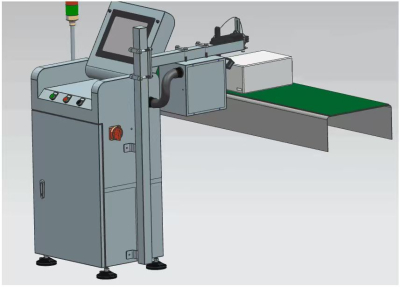
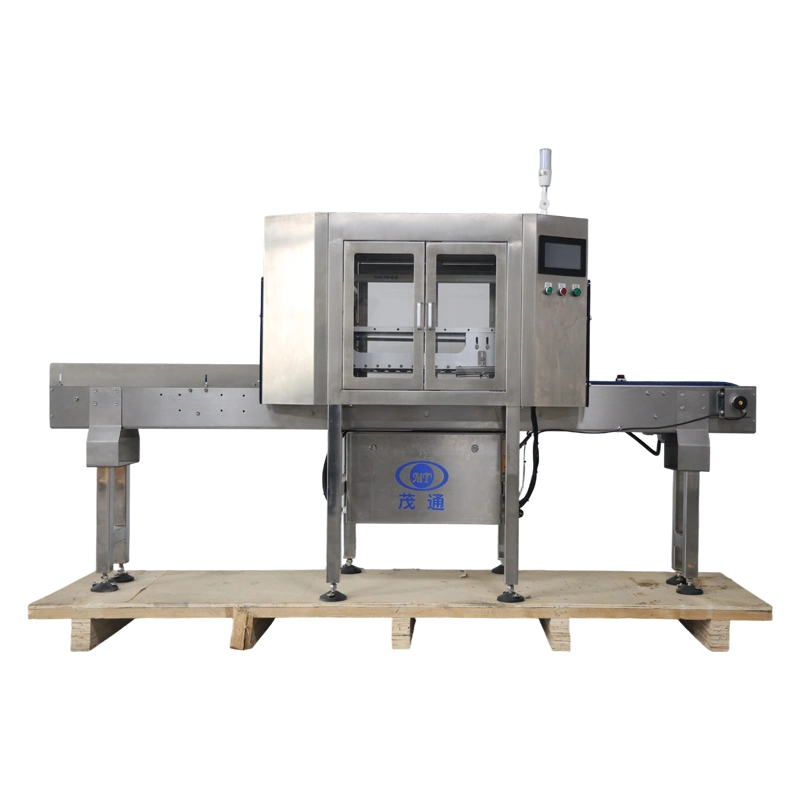
The Air Leakage Detection Of Bagged Products is described as a fully automated functional testing system that uses a contact-based online detection method. In simple terms, Air Leakage Detection Of Bagged Products applies controlled extrusion through a flexible clamping belt while sensors capture the bag’s pressure response.

Extrusion detection mechanism and decision flow
The working sequence of Air Leakage Detection Of Bagged Products follows an ID-and-measure approach:
Operationally, Air Leakage Detection Of Bagged Products relies on the stated principle that intact packs show relatively small pressure change, while defective packs with leakage or poor sealing show a significantly larger pressure variation under extrusion.
What Air Leakage Detection Of Bagged Products can inspect
Air Leakage Detection Of Bagged Products is stated as suitable for nitrogen filled and other inflatable bagged food products. Documented applicable products also include:
In terms of inspection outcomes, Air Leakage Detection Of Bagged Products is described as capable of detecting and eliminating:
For buyers comparing options, Maotong also lists related equipment such as the Bag Air Tightness Testing machine and the Bag Product Leakage Inspection Machine.
Performance details buyers usually confirm
The manufacturer’s specifications for Air Leakage Detection Of Bagged Products include both speed and measurement performance.
| Item | Specification (Air Leakage Detection Of Bagged Products) |
|---|---|
| Inspection method | Contact-based belt extrusion |
| Processing technology | Proprietary DSP algorithm |
| Pressure measurement accuracy | ±0.02 MPa |
| Inspection throughput | Up to 300 packs per minute |
| Bag leakage rejection rate | ≥99.98% |
| Leakage false rejection rate | ≤0.05% |
| Bag pressure rejection rate | ≥99.93% |
A separate headline statement indicates the fastest output can reach 400 bags/min. For line planning, many teams treat the detailed 300 packs per minute figure as the conservative reference and validate speed on the actual conveyor and product format.
Installation checklist for stable inspection
Air Leakage Detection Of Bagged Products is recommended to be installed on a straight conveyor section of 1.5–2 m, and products are recommended to be tested after cooling.
Key requirements include:
For transportation and handling, the guidance emphasizes securing the equipment, preventing force or tension on sensors, protecting against moisture and impact, and checking cables plus grounding before power connection.
Safety guidelines for operators and maintenance teams
Before operation, Air Leakage Detection Of Bagged Products safety guidance includes:
Practical operation notes for continuous production
Air Leakage Detection Of Bagged Products is described as automatically synchronizing with production line speed and stopping with the line to help avoid rupture or blockage during idle conditions. The HMI supports real-time display of multiple rejection data sets, and the system includes visual alarms for abnormal impacts plus automatic continuous rejection and line shutdown functions.
For product-page details and configuration context, see the official Air Leakage Detection Of Bagged Products listing.