Keep Snack Bags Sealed With Inline Air Leakage Detection
Packaging integrity is a frontline quality issue for nitrogen-filled snacks and other inflatable bagged food products. Small sealing defects, defective bag seams, or abnormal internal pressure can quietly turn into downstream waste, customer complaints, and avoidable rework. That is why many high-speed lines consider Air Leakage Detection Of Bagged Products as a process step—not an afterthought. This article explains how Air Leakage Detection Of Bagged Products works in-line using extrusion-based pressure analysis, and what to check when planning installation on a running conveyor.

What the system is designed to do on a snack line
A typical Air Leakage Detection Of Bagged Products setup is positioned as an online, contact-based inspection method that measures the internal pressure characteristics of a bagged product container while it is being conveyed. In practical terms, it is used to detect and eliminate issues such as:
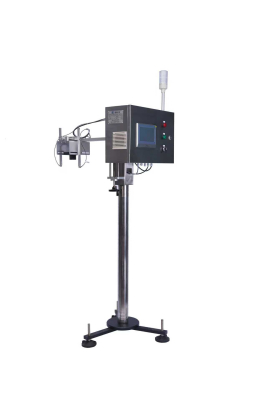
Within Maotong’s product line, the relevant equipment is presented as Air Leakage Detection Of Bagged Products, using refined belt squeeze detection developed through long-term research and field application.
How extrusion force makes leaks measurable in motion
The core idea behind Air Leakage Detection Of Bagged Products is the relationship between controlled compression and the bag’s pressure response.
At the front end of the equipment, a guide mechanism applies a pre-extrusion force to the product and maintains a certain level of pressure as the bag travels through the inspection area. The logic is straightforward:
Because the inspection happens on the moving conveyor, Air Leakage Detection Of Bagged Products can be integrated into continuous production without interrupting normal conveying. This makes the method especially relevant for snack lines that prioritize throughput, stable handling, and immediate removal of questionable packs before they move deeper into cartoning, case packing, or palletizing. In practice, the inspection zone acts as a controlled mechanical stimulus: the bag is compressed in a repeatable way, and the resulting pressure behavior becomes a measurable signature of package integrity.

That distinction matters because many defects are subtle enough to pass visual inspection, especially at higher line speeds. A weak seal, a small seam defect, or internal pressure drift may not be obvious to operators standing beside the conveyor, but it can still affect shelf life, appearance, and consumer acceptance. By converting package response into signal data, the inline system provides a more repeatable basis for accept or reject decisions than simple manual checks.
How sensors, DSP processing, and ID tracking enable accurate rejection
In a production environment, detection is only useful if the reject action is synchronized with the correct pack. For Air Leakage Detection Of Bagged Products, the workflow combines positioning, tracking, pressure capture, and decision output.
When a product enters the belt, it first passes a positioning sensor, which detects its presence and records both the product’s ID and the current encoder value via the control unit. The positioning sensor then triggers the force sensor, which measures the instantaneous pressure exerted by the product against the belt.
The collected pressure data is transmitted through the network to the Maotong signal processing board, where it is processed and analyzed. The results are sent simultaneously to:
If the system determines that the product does not meet the pressure standard, the control unit issues a rejection command so the rejector removes the product with the corresponding ID. This end-to-end coordination is a defining reason buyers evaluate Air Leakage Detection Of Bagged Products as an inline quality gate, not a standalone lab test.
Throughput and inspection specifications buyers typically compare
For high-speed snack packaging, published performance indicators are often used as a starting point for line-matching. The Air Leakage Detection Of Bagged Products is described as suitable for high-speed production lines with inspection throughput up to 300 packs per minute, while the product highlights also state the fastest output can reach 400 bags/min.
Key specifications (manufacturer-stated)
| Parameter | Specification |
|---|---|
| Model | Air Leakage Detection Of Bagged Products |
| Inspection throughput | Up to 300 packs/min |
| Pressure measurement accuracy | ±0.02 MPa |
| Bag leakage rejection rate | ≥99.98% |
| Bag leakage false rejection rate | ≤0.05% |
| Abnormal bag pressure rejection rate | ≥99.93% |
| Frame material | 304 stainless steel |
| Equipment weight | Approximately 100 kg |
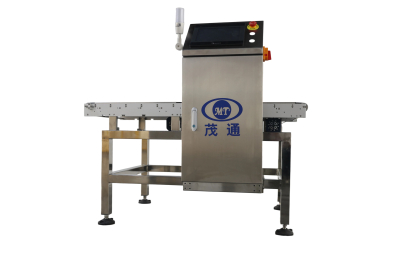
Operational features described for Air Leakage Detection Of Bagged Products include automatic speed synchronization, a user-facing HMI, real-time display of multiple rejection data sets, visual alarms for abnormal impacts, continuous rejection, and an automatic line shutdown function.
Packaging formats where Air Leakage Detection Of Bagged Products is applied
In food packaging, Air Leakage Detection Of Bagged Products is positioned as suitable for nitrogen-filled and other inflatable bagged food products. Applicable products listed also include:
For buyers comparing inspection approaches, one practical takeaway is that this Air Leakage Detection Of Bagged Products method evaluates pressure response under controlled extrusion, supporting inline inspection for sealing defects and abnormal pressure conditions.
For broader leak-related inspection planning, Maotong also presents a related category page for the Bag Product Leakage Detection Machine.
Installation and operating conditions that affect stability
A stable installation is essential for consistent results in Air Leakage Detection Of Bagged Products.
Installation essentials
| Parameter | Requirement |
|---|---|
| Straight conveyor section | 1.5–2 m |
| Operating temperature | 0–50°C |
| Relative humidity | 10%–80% |
| Power supply | Single-phase AC 220V, 50Hz |
| Total power | 250W |
| Compressed air supply | 4–8 bar |
| Installation alignment | Horizontal; clamping belt parallel to bottom conveyor |
For test reliability, products are preferably tested after cooling. During transport and unloading, the equipment should be protected to avoid force or tension on sensors.
Safety points commonly enforced on-site
If you are comparing offline confirmation methods, Maotong also lists a separate product page for a Bag Air Tightness Testing Machine.