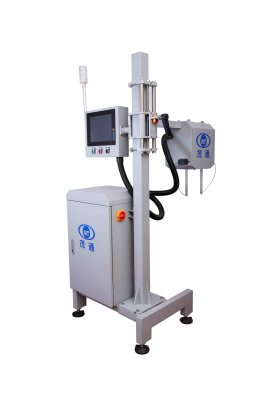
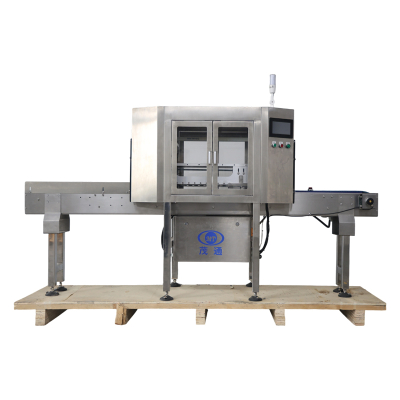
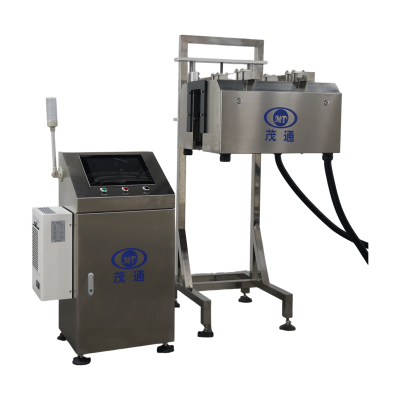
Prevent Transit Damage to Air Leakage Detection Of Bagged Products
Handling and site conditions can make or break inspection stability for Air Leakage Detection Of Bagged Products systems. This is especially true for contact-based equipment where a flexible clamping belt applies controlled pressure and side-mounted sensors capture the pressure response for analysis.

For buyers planning a new line integration or relocating equipment between plants, the safest approach is to treat transportation, unloading, storage, and installation as one continuous protection process—focused on preventing force, tension, moisture, and impact from reaching the sensors and core structure.
To keep specifications and operating safety aligned with the manufacturer’s requirements, the steps below summarize what to protect and what to verify for Air Leakage Detection Of Bagged Products.
Transportation controls that protect sensors and alignment
Because Air Leakage Detection Of Bagged Products uses belt squeeze detection and sensor measurement during conveying, it is essential to prevent any external loads from transferring into the sensing elements while the machine is in transit.
The manufacturer’s transportation requirements focus on three priorities:
A simple pre-dispatch checklist for Air Leakage Detection Of Bagged Products shipments:
| Item to confirm | What to check before departure |
|---|---|
| Sensor protection | No external force or tension acting on sensors |
| Outer packaging | Moisture-proof, impact-resistant protection applied |
| Vehicle fixation | Machine firmly fixed to prevent movement |
| Surface condition | Packaging prevents scratches and dents |
| Final inspection | Equipment and packaging checked before dispatch |
Unloading steps that reduce impact risk
The Air Leakage Detection Of Bagged Products system is described with a 304 stainless steel frame and an approximate weight of 100 kg, so unloading should be planned like an industrial installation task—not a manual handling job.
The manufacturer specifies:
A practical, low-risk sequence for Air Leakage Detection Of Bagged Products receiving:
Arrival → External inspection → Specialized handling → Stable positioning → Installation preparation
During this flow, the highest-risk areas are the conveyor assemblies, belt path, and any sensitive sensing components. Avoid sudden shocks and do not allow the unit to slip during placement.

Storage and operating environment limits
Environmental control matters for Air Leakage Detection Of Bagged Products because the system includes electronic control components, sensors, and electrical connections.
The specified environment ranges for storage and operation are:
| Parameter | Required range |
|---|---|
| Temperature | 0°C–50°C |
| Relative humidity | 10%–80% |
Keeping temperature and relative humidity within these limits supports stable commissioning and helps reduce moisture-related risk before power-on.
Installation checks before powering on
Transportation and storage protection should transition into installation discipline. For Air Leakage Detection Of Bagged Products, installation requirements include conveyor geometry, electrical checks, and utilities.
Key installation and utility requirements:
| Installation item | Requirement |
|---|---|
| Positioning | Place equipment horizontally |
| Conveyor alignment | Clamping conveyor belt parallel to the product bottom conveyor belt |
| Cable check | Check all cables for looseness before connecting power |
| Grounding | Verify grounding wire of the rack control box |
| Electrical supply | Single-phase AC 220V, 50Hz |
| Total power | 250W |
| Air supply | Compressed air 4–8 bar (meeting relevant industry quality standards) |
| Location on line | Straight conveyor section of 1.5–2 m |
The manufacturer also notes that, for best test reliability, products should be tested after cooling.
Why handling discipline supports stable detection results
In production, Air Leakage Detection Of Bagged Products is positioned for online inspection of bag integrity using extrusion and force analysis. It is described as suitable for nitrogen-filled and other inflatable bagged food products, and its published performance items include a pressure measurement accuracy of ±0.02 MPa and inspection throughput up to 300 packs per minute.
The system’s stated inspection capabilities include detecting and eliminating:
Published test performance items include:
These outcomes depend on consistent mechanical alignment and protected sensing components. That is why transport fixation, moisture-proof packaging, careful unloading, and controlled storage conditions are operational necessities—not administrative paperwork.
For plants comparing offline verification approaches with inline inspection, Bag Air Tightness Testing machine solutions are often evaluated alongside Air Leakage Detection Of Bagged Products for different deployment needs and line layouts.