Install Air Leakage Detection Of Bagged Products Without Startup Surprises
Correct installation is the fastest way to stabilize Air Leakage Detection Of Bagged Products on an automated packaging line. Small details—straight conveyor length, belt parallelism, grounding, compressed air pressure, and product temperature—directly affect inspection consistency and rejection behavior. This guide consolidates the key installation conditions and safe-start checks for the Air Leakage Detection Of Bagged Products so commissioning stays predictable.

How Air Leakage Detection Of Bagged Products Works on a Conveyor Line
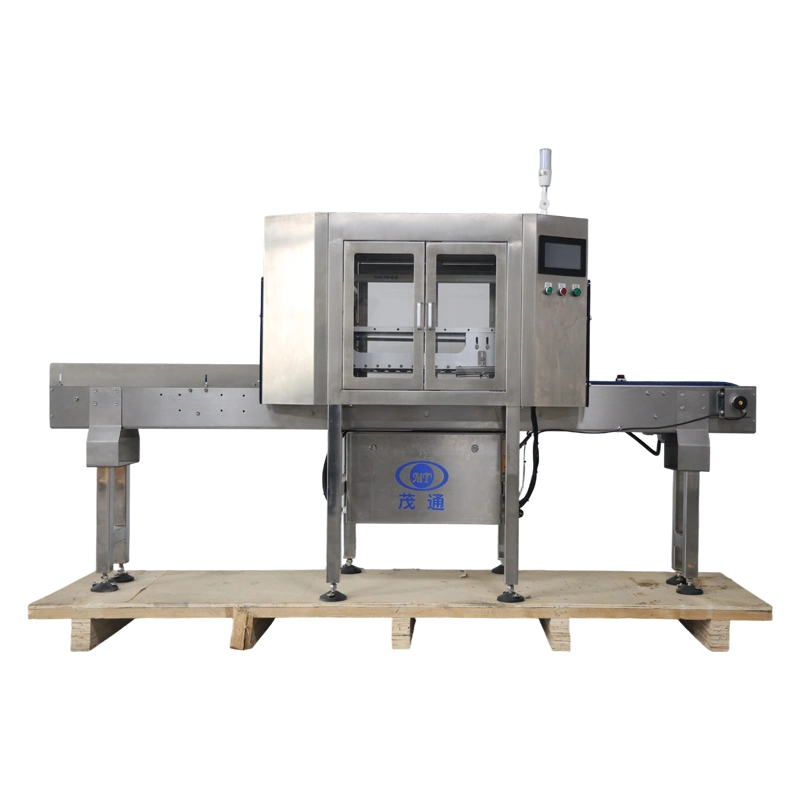
The Air Leakage Detection Of Bagged Products is positioned as a conveyor-type Air Leakage Detection Of Bagged Products system that uses an extrusion method with a force analysis algorithm. During conveying, a flexible clamping belt applies pressure to the package, while sensors capture the pressure response. A controller converts these measurements into digital signals for processing, and the Human–Machine Interface (HMI) displays inspection and rejection information.
In practice, Air Leakage Detection Of Bagged Products follows a simple online sequence:
This approach is used to detect issues such as leakage caused by poor sealing or defective bag seams, as well as abnormal internal pressure conditions, including abnormally low internal pressure or bag swelling.
Product Types Commonly Matched to Air Leakage Detection Of Bagged Products
When buyers evaluate Air Leakage Detection Of Bagged Products, the first check is whether the package format and filling condition fall within the stated scope. The Air Leakage Detection Of Bagged Products is described as suitable for nitrogen-filled and other inflatable bagged food products. It is also described as suitable for inspection of:
For a broader view of related equipment categories, see the Bag Product Leakage Detection Machine section.
Installation Requirements That Keep Air Leakage Detection Of Bagged Products Stable
Below is a field-oriented checklist built strictly around the stated installation requirements and operating environment for the Air Leakage Detection Of Bagged Products. These items are the same ones that typically determine whether Air Leakage Detection Of Bagged Products starts cleanly or drifts into inconsistent rejects.

Prepare a Straight, Suitable Conveyor Section
Install the equipment on a straight conveyor section of 1.5–2 m. The installation and operation environment is specified as:
For best test reliability, products are recommended to be tested after cooling. In commissioning terms, this matters because product temperature can shift the pressure response measured during Air Leakage Detection Of Bagged Products, especially on inflatable or nitrogen-filled packages.
Place the Machine Horizontally and Align the Belts
Place the equipment horizontally, and ensure the clamping conveyor belt is parallel to the product’s bottom conveyor belt. Because Air Leakage Detection Of Bagged Products is based on belt extrusion and pressure-response comparison, belt geometry is not a cosmetic setup item—it is a measurement condition.
Confirm Electrical Wiring and Grounding Before Power-On
Before connecting power, carefully check all cables for looseness and verify the grounding wire of the rack control box.
Electrical connection is specified as:
Grounding is emphasized because electronic components are sensitive to static electricity, and stable grounding helps protect the control system during long-run Air Leakage Detection Of Bagged Products operation.
Connect Compressed Air in the Specified Range
Connect compressed air in the specified operating range:
Keeping compressed air within range supports stable actuation where pneumatic components are involved in online handling and rejection behavior during Air Leakage Detection Of Bagged Products.
Run Pre-Production Verification on Real Samples
Before continuous production, verify the conveyor alignment, electrical connections, and pneumatic connections. Pay particular attention to:
Running representative acceptable and defective packages is a practical way to confirm that Air Leakage Detection Of Bagged Products and rejection logic are synchronized with the production line.
For an equipment overview page dedicated to this category, refer to Air Leakage Detection Of Bagged Products.
Technical Snapshot for Air Leakage Detection Of Bagged Products
Procurement teams often want a quick “does it fit our utilities and line speed” scan before requesting deeper drawings. The following parameters are stated for Air Leakage Detection Of Bagged Products and commonly used during line integration planning for Air Leakage Detection Of Bagged Products.
| Parameter | Specification |
|---|---|
| Equipment model | Air Leakage Detection Of Bagged Products |
| Power supply | Single-phase AC 220V |
| Frequency | 50Hz |
| Total power | 250W |
| Compressed air | 4–8 bar |
| Straight conveyor section | 1.5–2 m |
| Operating temperature | 0–50°C |
| Relative humidity | 10%–80% |
| Equipment weight | Approximately 100 kg |
| Frame material | 304 stainless steel |
| Inspection throughput | Up to 300 packs/min |
| Pressure measurement accuracy | ±0.02 MPa |
A separate performance statement notes that the fastest output can reach up to 400 bags/min. In practice, buyers typically confirm the applicable speed window during line matching for Air Leakage Detection Of Bagged Products.
Safety Rules to Keep Operators and Hardware Protected
Safe operation of Air Leakage Detection Of Bagged Products depends on training, protective covers, and disciplined lockout behavior. The following precautions are explicitly stated for operation and maintenance: