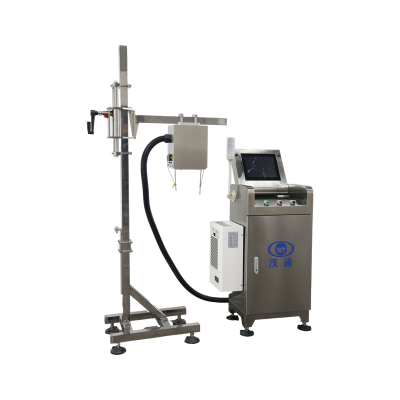
How to detect leaks in filled beverage bottles?
Leak detection for filled beverage bottles can be broadly categorized into two main types: automated detection on the production line, and manual methods used for routine checks or spot sampling. The following outlines a systematic approach to these detection processes:
I. Automated In-Line Production Line Detection (Industrial Grade)
1. Vacuum/Pressure Decay Leak Detection
Principle: The bottle is sealed within a test chamber; a vacuum is drawn or pressure is applied, and high-precision sensors monitor changes in the pressure within the chamber.
Detection Logic:If the bottle has a leak, the pressure will fail to remain stable (either dropping or rising), and the system will automatically reject the defective product. This is currently the most prevalent and highest-precision non-destructive method for in-line leak detection.
2. Vision Inspection Systems
Principle:High-speed industrial cameras are utilized to capture images of the bottle's mouth, body, and base from multiple angles.
Inspection Criteria:
▪ Liquid Level: Using transmitted or reflected light, the system verifies the consistency of the liquid level. A level that is too low may indicate underfilling; a level that is too high—or contains bubbles—may suggest a poor seal, allowing contents to leak out or gas to enter.
▪ Cap Sealing Integrity: The system checks whether the cap is tightened to the proper position, is free of misalignment, and has an intact tamper-evident ring.
▪ Bottle Body Integrity: The system detects the presence of any cracks or perforations in the bottle body.
3. Torque Detection
Principle: Immediately following the capping process, sensors are used to measure the tightening torque applied to the bottle cap.
Detection Logic: If the torque falls below a preset threshold, it indicates that the cap has not been tightened sufficiently, posing a risk of leakage. Conversely, if the torque is excessively high, it may result in damage to the cap or the bottle's neck threads. The system will automatically reject any non-conforming products.
4. Acoustic Detection
Principle: High-frequency sound waves are used to "tap" the bottle body; microphones capture the resulting echoes, and the system analyzes their specific frequency characteristics.
Detection Logic:The acoustic spectrum of the echoes differs significantly between a perfectly sealed bottle and one containing cracks or a defective seal, allowing the system to accurately sort the bottles based on these acoustic signatures.
II. Offline Manual / Laboratory Testing Methods
1. Underwater Bubble Leak Detection Method
Method: Completely immerse the bottle in a water tank. Manually—or using a specialized device—apply a specific air pressure into the bottle through the bottle opening (alternatively, utilize the bottle's own internal carbonation pressure).
How to Identify Leaks:Observe the bottle body, cap, base, and other areas for the appearance of a continuous stream of bubbles. This is the simplest and most intuitive method for pinpointing the exact location of a leak.
Applicability: Carbonated beverages (by utilizing their inherent pressure) or any bottle capable of being pressurized. *Note: The applied pressure must not be excessively high to prevent the bottle from bursting.*
2. Vacuum Chamber Bubble Method
Method: Place the bottle inside a transparent, sealed chamber and evacuate the air to create a vacuum. If the bottle has a leak, gas (or liquid) from inside the bottle will escape outward, generating bubbles within the water contained inside the chamber.
Advantages: Requires no internal pressurization of the bottle, making it safer; it is particularly suitable for non-carbonated beverages or bottles with thin walls.
3. Weight Detection Method
Principle: Perform high-precision weighing of the bottles at two distinct stages: immediately after filling and again after the sterilization and cooling process.
How to Identify Leaks: If the weight recorded after cooling is significantly lower than the weight recorded after filling, it indicates that some of the contents leaked out during the sterilization and cooling process. This serves as a common spot-checking technique utilized on production lines.
4. Dye Penetration Method
Method: Apply a water-soluble dye to specific areas suspected of leaking—such as the bottle neck threads or the inner surface of the cap.
How to Identify Leaks: After allowing the bottle to sit upright or be gently inverted for a period, observe whether the dye has been drawn into the bottle interior or has penetrated through to the opposite side of the contact surface; this method is used to detect microscopic leaks.
5. Seal Integrity Tester (Offline)
Equipment: A compact, benchtop-style seal integrity tester.
Operation: Connect the bottle opening to the instrument in a sealed manner. The instrument automatically performs either vacuum evacuation or internal pressurization, and then determines whether the resulting pressure decay falls within the acceptable tolerance range. This constitutes a precise testing method frequently employed by Quality Control departments.
III. Specialized Testing for Carbonated Beverages
Leaks in carbonated beverage bottles result in more than just liquid loss; they also lead to the escape of carbon dioxide (CO₂), which negatively impacts the product's taste and sensory quality. Therefore, the following additional checks are also required:
1. CO₂ Content Measurement: Using a "carbonated beverage refractometer," pierce the bottle cap to measure the volume of CO₂ within the beverage (referred to simply as "volume").
2. Headspace Analysis: Measure the content of the gas (primarily oxygen) present in the bottle's neck (headspace). An excessively high oxygen level indicates a poor seal, allowing air to enter.
Summary
| Scenario | Recommended Methods | Key Assessment Criteria |
| Production Line (Full Inspection) | Pressure Decay Leak Detection, Visual Inspection, Torque Testing | Pressure Change, Image Analysis, Torque Values |
| Laboratory / Sampling | Underwater Bubble Method, Seal Integrity Tester, Weight Measurement | Observation of Bubbles, Pressure Decay Values, Weight Change |
| Leak Point Localization | Underwater Bubble Method, Dye Penetration Method | Location of Emerging Bubbles, Traces of Dye Penetration |
| Key QC Indicators | CO₂ Content Measurement, Headspace Analysis | CO₂ Volume, Oxygen Content |
Important Note
For consumers, it is advisable to visually inspect the bottle after purchase for any cracks in the body, ensure the cap is flat and securely tightened, check for abnormal liquid levels, and look for any signs of leakage. Observe the bottle after shaking: if a carbonated beverage loses its "fizz" too easily, this may be a sign of a slow leak. If any leakage is detected, do not consume the product.