Online Leak Detection Technology for Tetra Pak Packaging: Principles, Methods, and Intelligent Development
As a primary form of aseptic packaging for liquid foods, the seal integrity of Tetra Pak cartons directly impacts product safety, shelf life, and brand reputation. Even minute leaks can lead to severe quality issues—such as microbial contamination and oxidative spoilage—making online leak detection technology a critical quality control component in the production of liquid foods like dairy products and fruit juices.
I. Importance and Challenges of Tetra Pak Leak Detection
Tetra Pak packaging utilizes a multi-layer composite material consisting of paper, aluminum, and plastic, achieving long-term preservation through Ultra-High Temperature (UHT) sterilization and aseptic filling processes. However, on high-speed production lines (typically exceeding 200 cartons per minute), microscopic defects in the sealing area—such as incomplete heat seals, material creases, or micro-perforations—can serve as entry points for microbial intrusion. Traditional manual sampling methods are inefficient and prone to high rates of missed detections, rendering them inadequate for meeting the rigorous quality standards of modern food production.
The core challenges in leak detection include:
High-Speed Production: Production lines operate at extremely high speeds, requiring response times in the millisecond range.
Micron-Scale Defects: The technology must be capable of detecting minute leaks exceeding 0.5 μm in size.
Non-Destructive Requirement: The detection process must not damage the packaging, thereby ensuring the product remains marketable.
Real-Time Capability: Detection must occur online and in real-time, enabling the immediate rejection of non-conforming products.
II. Principles and Methods of Major Detection Technologies
1. Vacuum Decay Method (The Gold Standard for Non-Destructive Testing)
The vacuum decay method is currently recognized within the industry as the non-destructive testing technique offering the highest sensitivity and broadest applicability. Its underlying principle involves placing a Tetra Pak sample inside a sealed test chamber and evacuating the air within the chamber to create a vacuum environment (typically ranging from -400 mbar to -750 mbar). If a leak exists in the packaging, internal gases will escape through the defect into the test chamber, causing the internal pressure to rise. High-precision differential pressure sensors (with a resolution of up to 0.1 Pa) monitor these pressure fluctuations in real-time, while the system automatically calculates the leak rate and the equivalent leak hole size.
This method complies with international standards such as GB/T 15171-2025, ASTM F2338, and USP 1207. It is capable of detecting micro-leaks exceeding 0.5 μm, boasting a detection sensitivity as high as 10⁻⁵ Pa·m³/s.
2. Positive Pressure Method vs. Negative Pressure Method
The positive pressure method evaluates seal integrity by injecting compressed gas into the package interior and monitoring the subsequent pressure decay. The MFY-G06 Leak and Seal Strength Tester employs a multi-stage positive pressure principle; by setting a test pressure of 150 kPa and a pressure-holding duration of 30 seconds, it identifies leaks based on observed pressure fluctuations. This method is particularly suitable for detecting microporous leaks in paper-based composite materials.
Conversely, the negative pressure method detects leaks by creating a pressure differential between the interior and exterior of the package through vacuum suction. Quankeruida’s LEAK-01 Seal Tester utilizes core negative pressure technology to capture real-time pressure fluctuations—via high-precision sensors (with a resolution of 0.1 kPa)—within a vacuum environment ranging from -50 kPa to -90 kPa.
3. AI Vision Inspection System
Modern intelligent inspection systems integrate high-speed line-scan cameras with deep learning algorithms to enable 100% online inspection of the seal integrity of Tetra Pak packaging. The system captures images of the sealed area in real-time (at speeds of up to 2,000 frames per second), while AI algorithms complete defect analysis within 10 milliseconds, achieving an identification accuracy rate of up to 99.95%. Furthermore, by incorporating pressure sensors to monitor for micro-leaks (with a sensitivity of 0.1 Pa), the system achieves a dual-mode,联动 inspection capability combining both visual and pressure-based detection. 4. Other Auxiliary Detection Methods
Bubble Test Method: The package is immersed in water while internal pressure is applied, and the formation of bubbles is observed.
Dye Penetration Method: Primarily used for medical device packaging to detect leak channels ≥ 50 μm in size.
Helium Mass Spectrometry Leak Detection: Internationally recognized as the "Gold Standard," offering a detection sensitivity of up to 10⁻⁶ Pa·m³/s, though at a higher cost.
III. Components of an Online Detection System
System Architecture
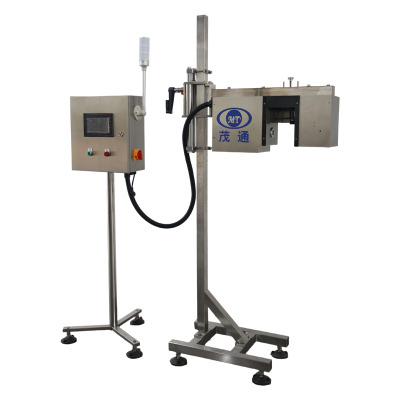
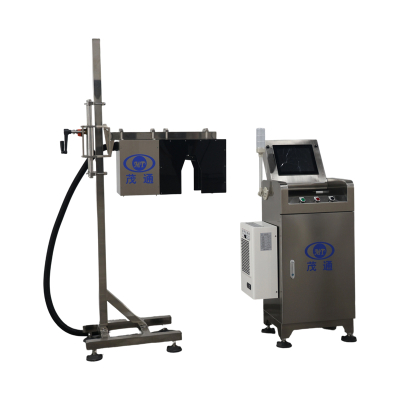
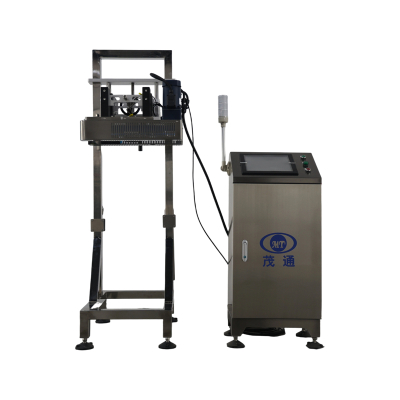
A complete online leak detection system typically comprises the following components:
Detection Unit: Vacuum decay chamber, pressure sensors, vision cameras, etc.
Control Unit: PLC or industrial PC running detection algorithms.
Execution Unit: Robotic arm or rejection mechanism.
Data Management: Real-time database, visualization dashboards, and traceability system.
Intelligent Features
Modern systems also incorporate the following intelligent capabilities:
Adaptive Detection: Features built-in libraries for materials (50+ types), sterilization processes (20+ methods), and compliance standards (FDA, EU 10/2011, GB 4806.1, etc.).
Dynamic Adjustment: Supports the dynamic adjustment of detection thresholds—for instance, "increase sensitivity" or "ignore minor deformation."
Data Interconnection: Automatically converts data into protocols readable by production line PLCs and MES (e.g., OPC UA, MQTT), while synchronously pushing adjustment commands.
Traceability Management: Links detection data to batch information via RFID tags, enabling multi-dimensional querying based on time, production line, and defect type.
IV. Technical Standards and Compliance Requirements
Leak detection for Tetra Pak packaging must comply with various international and domestic standards:
International Standards
ISO 11607-1/2: Requirements for packaging of terminally sterilized medical devices (also applicable to aseptic food packaging).
ASTM F1140: Standard test method for internal pressurization failure resistance of packages.
ASTM F2338-13: Standard test method for non-destructive leak detection in packages using vacuum decay.
USP 1207: United States Pharmacopeia guidelines on packaging integrity testing.
Domestic Standards
GB/T 15171-2025: Test methods for seal performance of flexible packages.
GB 4806.1: General safety requirements for food contact materials and products.
YY/T 0681.18-2020: Test Methods for Packaging of Sterile Medical Devices — Vacuum Decay Method
Data Integrity Requirements
Complies with the data traceability requirements of GMP and FDA 21 CFR Part 11, including:
Multi-level user access management (Administrator, Operator, Auditor)
Audit trail functionality, automatically recording test timestamps, operators, and parameter settings
Tamper-proof data storage, with support for cloud synchronization
V. Practical Application Cases and Results
Application in the Dairy Industry
A dairy group in Inner Mongolia implemented a dual-system solution—combining AI-driven visual inspection with pressure monitoring—to meet the requirements of ISO 22000 certification. Upon inputting specific parameters (e.g., "UHT Milk + Tetra Brik Packaging + Sterility Assurance"), the system captures real-time images of the package seals; by integrating pressure sensor data to detect micro-leaks, it delivers a defect assessment within 10 milliseconds. Following its implementation, the product complaint rate dropped by 85%, and warehousing losses were significantly reduced. Juice Industry Inspection
Inspection of Tetra Pak orange juice seals employs a combination of multiple methods:
Pressure Decay Testing: Rapidly detects seal defects within large-scale production environments.
Visual Inspection: Examines the seal area for visible defects (wrinkles, contamination, etc.).
Tensile Strength Testing: Evaluates the mechanical properties of the sealing material.
Heat Seal Strength Testing: Ensures that heat sealing parameters meet established standards.
Leak Rate Measurement: Quantifies the rate of gas leakage from the packaging under specific conditions.
Comparison of Inspection Effectiveness
| Inspection Method | Detection Sensitivity | Inspection Time | Non-destructive | Applicable Scenario |
| Vacuum Decay Method | > 0.5 μm | 12–15 seconds | Yes | 100% Online Inspection |
| AI Visual Inspection | Visually perceptible defects | 10 milliseconds | Yes | High-speed Production Lines |
| Positive Pressure Method | Micro-pore level | 30–60 seconds | Yes | Laboratory Sampling |
| Bubble Test Method | Macroscopic leaks | 5–10 seconds | No | Preliminary Screening |
| Helium Mass Spectrometry | 10⁻⁶ Pa·m³/s | Several minutes | Yes | High-precision Verification |
VI. Technological Trends and Innovations
1. Intelligent and Adaptive Inspection
According to the 2026 Innovation Report on Quality Inspection in the Packaging Industry, modern intelligent inspection systems—by integrating high-speed line-scan cameras with deep learning algorithms—are capable of performing 100% online inspection of Tetra Pak seal integrity, liquid fill levels, and label placement accuracy. Particularly within the aseptic filling stage, these systems utilize hyperspectral imaging technology to penetrate the packaging material and monitor the sealing status of the filling head in real time.
2. Multi-Sensor Fusion
Future systems will integrate an even broader range of sensor technologies:
Laser Doppler Vibrometry: Infers internal pressure values by analyzing the minute deformations of the packaging under pressure.
Infrared Spectroscopy: Rapidly identifies the chemical composition of packaging materials, thereby preventing material contamination.
X-ray Inspection: Upgraded to dual-energy X-ray systems capable of distinguishing foreign objects of varying densities, keeping the false alarm rate below one part per million.
3. Predictive Maintenance and Process Optimization
Through real-time data feedback, filling process parameters can be optimized to achieve simultaneous improvements in both quality and efficiency. The system monitors production line status (including seal pass rates, sterilization temperature fluctuations, and equipment health), while quality control departments utilize visual dashboards to track anomalous batches, thereby resolving the critical quality control pain point of "inspection results lacking subsequent feedback." 4. Standardization and Modular Design
Equipment is trending toward standardized interfaces and modular designs. For instance, the Provaset T3LPF leak detector supports 300 test programs and program-jump functions, and offers connectivity via various interfaces such as USB, RS232/RS485, and Ethernet. This design facilitates seamless system integration and functional expansion.
VII. Selection and Implementation Recommendations
Factors to Consider When Selecting Equipment
Detection Sensitivity: Select based on the product's risk level; high-risk products require detection capabilities for defects of 0.5 μm or larger.
Detection Speed: Must match the production line speed, typically requiring a detection throughput of over 200 packages per minute.
Degree of Automation: Does the system support automatic rejection, automatic data uploading, and remote monitoring?
Compliance: Does it comply with relevant industry standards and regulatory requirements?
Maintenance Costs: Consider factors such as sensor lifespan, calibration cycles, and spare parts availability.
Conclusion
Online leak detection technology for Tetra Pak packaging has evolved from traditional, destructive sampling methods into today's intelligent, non-destructive, and fully online detection systems. The vacuum decay method—recognized as the industry's "gold standard"—when combined with advanced technologies such as AI-driven visual inspection and multi-sensor fusion, provides liquid food manufacturers with comprehensive quality assurance. As technology continues to advance and costs gradually decrease, online leak detection is set to become a standard feature in Tetra Pak production lines, ensuring that consumers receive safer, higher-quality liquid food products.
Looking ahead, with the deepening integration of IoT, big data, and artificial intelligence technologies, leak detection systems will become even more intelligent and adaptive. They will not only be capable of detecting defects but also of predicting equipment failures and optimizing process parameters, thereby truly realizing a shift from "detection" to "prevention" and constructing a more robust technological defense line for safe food production.