Empty Bottle Vision Inspection Technology: Principles, Applications, and Development Trends
Empty bottle vision inspection is a critical technology in modern industrial automated production. Particularly in industries such as beer, beverages, and pharmaceuticals, the efficient and accurate inspection of empty bottle quality is of paramount importance. With the rapid advancement of machine vision technology, computer vision-based empty bottle inspection systems have replaced traditional manual inspection methods, becoming core equipment for ensuring product quality and enhancing production efficiency.
1. Technological Background and Significance
In the food, beverage, and pharmaceutical industries, the quality of empty bottles directly impacts the safety and sealing integrity of the final product. Traditional manual inspection methods suffer from various drawbacks, including low efficiency, high labor intensity, inconsistent inspection standards, and susceptibility to subjective factors. This is particularly problematic on high-speed production lines, where manual inspection struggles to keep pace with production speeds reaching tens of thousands of bottles per hour.
With its advantages of non-contact operation, real-time processing, high precision, and strong repeatability, machine vision technology offers an ideal solution for automated empty bottle inspection. Through computer vision systems, comprehensive inspection of the bottle mouth, body, and base can be achieved, accurately identifying various defects and ensuring that only qualified empty bottles proceed to the filling stage.
2. System Composition and Working Principles
2.1 Overall System Architecture
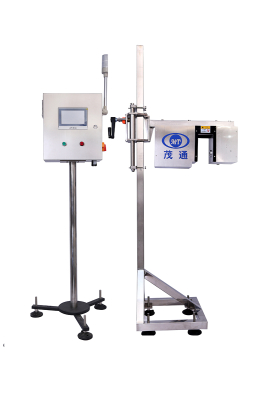
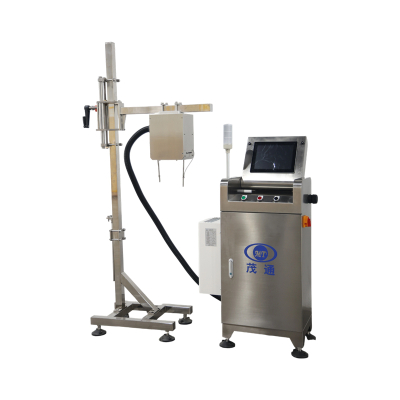
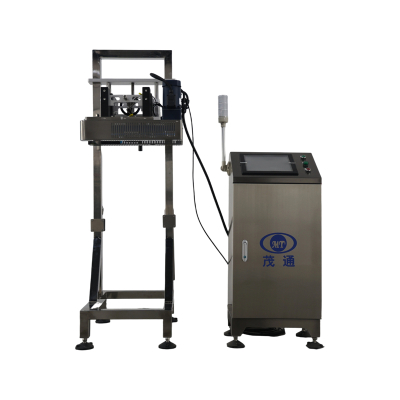
A typical empty bottle vision inspection system primarily consists of the following components:
1. Image Acquisition Equipment: This includes industrial cameras, lenses, light sources, and related components. The system typically employs CCD or CMOS cameras, paired with specially designed optical lenses and lighting systems. The design of the light source is particularly critical, as different inspection areas require distinct illumination methods—for instance, ring light illumination for the bottle mouth, flat-panel light sources for the bottle base, and fluorescent lighting for the bottle body.
2. Image Processing and Analysis Module: This constitutes the core of the system, responsible for processing and analyzing the captured images. It incorporates various algorithms for image preprocessing, feature extraction, defect recognition, and similar tasks.
3. Control System: Typically utilizing a Programmable Logic Controller (PLC) as the core control unit, this system coordinates the operation of the entire setup—including triggering camera captures, regulating conveyor belt speeds, and driving the rejection mechanisms.
4. Actuation Mechanism: Primarily consisting of pneumatic rejection devices, this mechanism removes unqualified empty bottles from the production line based on the inspection results.
5. Human-Machine Interface (HMI): This interface provides operators with functions for parameter configuration, data monitoring, fault diagnosis, and other operational tasks. 2.2 Workflow
During operation, empty bottles pass sequentially through various inspection stations via a conveyor belt. When a photoelectric sensor detects that an empty bottle has reached the imaging position, it triggers the camera to capture an image. The image data is transmitted to an image processing system for analysis to determine whether the empty bottle contains any defects. If a defect is detected, the system records the position information of that bottle; subsequently, when the defective bottle reaches the rejection position, the control system activates a pneumatic mechanism to eject it.
3. Inspection Items and Technical Specifications
3.1 Primary Inspection Items
An empty bottle visual inspection system is required to detect various types of defects, primarily including:
Bottle Mouth Inspection:
• Damage, cracks, or chips on the sealing surface
• Damage to the mouth rim (top surface), outer edge, or inner edge
• Thread defects (optional feature)
• Contamination and foreign objects
Bottle Body Inspection:
• Contaminants on the inner and outer surfaces of the bottle wall (e.g., transparent tape, cigarette ash)
• Abrasions, scratches, and cracks
• Air bubbles, impurities, wrinkles, and adhesions
• Detection of foreign objects in the form of transparent films
Bottle Bottom Inspection:
• Dirt and foreign objects on the bottle bottom (e.g., transparent film from cigarette packaging, cigarette butts)
• Cracks, uneven surfaces, sharp protrusions (spikes), and off-center bottoms
• Structural damage defects
Other Inspections:
• Residual liquid detection (residual water, residual caustic solution)
• Shape and Form Inspection (over-height/under-height bottles, broken-neck bottles, deformed bottles, discolored bottles, inverted bottles, half-bottles)
3.2 Technical Performance Specifications
Modern empty bottle visual inspection systems must meet rigorous technical requirements:
• Inspection Speed: Advanced international standards reach over 72,000 bottles per hour.
• Inspection Accuracy: Comprehensive inspection accuracy exceeds 99.65%, with a false rejection rate of less than 0.18% and a missed detection rate of less than 0.21%.
• Response Time: The average defect determination time is ≤ 8.7 milliseconds.
• Adaptability: Supports rapid switching between multiple bottle types; the model migration time for a new bottle type is completed within 30 minutes.
4. Key Technical Algorithms
4.1 Image Acquisition and Preprocessing Technologies
High-quality image acquisition serves as the foundation for inspection accuracy. The system utilizes a closed image acquisition environment to minimize external interference as much as possible. To address the issue of image blurring (motion blur) caused by high-speed movement, the system employs stroboscopic illumination synchronized with a precisely controlled shutter speed.
For bottle wall inspection, a multi-stage reflection optical imaging device—capable of capturing a complete image in a single pass—has been designed and deployed at both the system's entry and exit points. This configuration enables a comprehensive, 360-degree inspection of the bottle wall with zero blind spots. By employing a design featuring both a polarized light source and a polarized lens, scattered light interference is eliminated, thereby enhancing the contrast of the captured images and facilitating the more effective detection of transparent and semi-transparent foreign objects.
4.2 Positioning and Tracking Algorithms
Accurate positioning of the bottle body is a prerequisite for effective defect detection. Regarding bottle mouth positioning, researchers have proposed a "four-circumference centroid localization" method. This method achieves a positioning accuracy with a centroid deviation of less than 3 pixels and a localization time of under 15 milliseconds. By iteratively shifting the centroid within a small localized range and calibrating its position based on accuracy metrics, an even higher positioning precision—with a centroid deviation of less than 1 pixel—can be achieved.
For bottle body positioning, two distinct algorithms were proposed based on the spatial characteristics of the bottle body images: one based on the centroid of edge points, and another based on the extreme points of vertical grayscale projections. These algorithms achieve a positioning accuracy of approximately 4 pixels, with an average localization time of 1 millisecond.
Bottle bottom positioning utilizes an improved "random circle fitting" algorithm featuring adaptive weight adjustments. This approach effectively mitigates the influence of outlier points on localization results, demonstrating enhanced robustness against defects in the bottle bottom as well as against the presence of significant noise or interference points.
4.3 Defect Detection Algorithms
Bottle Mouth Defect Detection: A region-based detection strategy is employed, wherein the bottle mouth area is "unrolled" into a rectangular image. To address the issue of mutual interference between specular highlights and shadow regions, a specific method was designed to segment the highlight areas of the bottle mouth. This method extracts the highlight regions by detecting the rising and falling edges of the bottle mouth's circumferential projection curve. Subsequently, these highlight regions are subtracted from the original image; pixels are then sampled from the shadow regions immediately adjacent to the original highlights to fill the resulting voids, thereby generating a "highlight-free" reconstructed image of the bottle mouth. Defect detection within the highlight regions is performed using a radial projection method, while the highlight-free regions are analyzed using a hysteresis thresholding segmentation method.
Bottle Body Defect Detection: A region-based detection algorithm is proposed, tailored specifically to the distribution characteristics of pixel grayscale values within the bottle body images. The bottle body image is divided into three distinct regions: the smooth region, the wear-band region, and the LOGO/text region:
• Smooth Region: Employs a defect extraction method based on superpixel clustering, coupled with a defect recognition method utilizing mean pixel features within each superpixel.
• Wear-Band Region: Utilizes a defect detection and recognition algorithm based on horizontal gradient operators.
• LOGO/Text Region: Features a rectangular block extraction method based on a modified Canny edge detection operator, alongside a defect and LOGO/text recognition algorithm based on Convolutional Neural Networks (CNNs).
Bottle Bottom Defect Detection: The bottle bottom image is divided into two parts—the anti-slip zone and the central zone—which are inspected separately. A multi-scale Gabor filter bank is employed to enhance the features of minute dents and bubbles, and a Support Vector Machine (SVM) classifier is introduced to facilitate defect recognition. For defects located within the anti-slip pattern region, an SVM combined with a Radial Basis Function (RBF) kernel is utilized to classify the bottle bottom defect features.
4.4 Application of Deep Learning Technologies
With the advancement of artificial intelligence technologies, the application of deep learning in the visual inspection of empty bottles has become increasingly widespread. A method for detecting surface defects on empty bottles—based on a modified SSD (Single Shot MultiBox Detector) algorithm—incorporates a feature fusion module into the SSD network architecture to provide rich semantic features to the prediction layers. Simultaneously, an attention mechanism is introduced into the network to enhance its feature extraction capabilities. Experimental results demonstrate that this method achieves an accuracy rate of 98.3%, a missed detection rate of 0.74%, a false detection rate of 0.96%, and a mean Average Precision (mAP) of 96.5%—representing an improvement of nearly 5.6 percentage points compared to the original SSD algorithm.
5. Application Scenarios and Case Studies
5.1 Applications in the Beer and Beverage Industry
In beer production, most enterprises utilize recycled bottles for refilling; however, the quality of these recycled bottles varies significantly, making their inspection a challenging task. An empty bottle inspection system must be capable of detecting a wide range of defects, including issues with the bottle mouth sealing surface, screw threads, internal and external surface contaminants on the bottle walls, wear levels, bottle bottom contaminants, and cracks.
Taking the practical application at a specific brewery as an example: the system employs a linear conveyor mechanism. As empty bottles move sequentially through the inspection stations designated for the bottle mouth, bottle body, and bottle bottom, photoelectric sensors are triggered, prompting a multi-imaging system to automatically capture images of each respective inspection zone. The visual inspection system processes the images from each station independently; ultimately, a sorting mechanism—acting upon the combined inspection results from all stations—ejects any defective empty bottles from the production line. 5.2 Applications in the Pharmaceutical Industry
In the pharmaceutical industry, inspection requirements for glass vials are particularly stringent. Unlike standard food packaging, pharmaceutical vials possess unique characteristics; consequently, precise inspection is required regarding their form, dimensional accuracy, and other attributes. Inspection criteria encompass damage and cracks on the bottle mouth, neck, body, and base; defect area measurements; dimensions (inner and outer diameters), ovality, and diameter deviation of the bottle mouth; as well as the presence of foreign objects such as white or black particulates, hair, and colored fibrous strands.
5.3 Case Study: Huicui Vision’s Empty Glass Bottle Base Defect Detection
In a project implemented by Huicui Intelligent for the detection of defects—specifically damage—on the bases of empty glass bottles, a multi-camera vision inspection system was designed. This solution integrates four global shutter cameras with HCvisionQuick, a proprietary image analysis and processing software. By capturing images of the bottle base from four distinct angles, the system comprehensively identifies the full spectrum of potential defects that may occur on the base. A backlighting technique is employed to enhance the contrast between the bottle base and the background, thereby improving detection accuracy. In practical application, the system has achieved a detection accuracy rate exceeding 99%.
6. Technical Challenges and Development Trends
6.1 Key Technical Challenges
1. Challenges Posed by Material Properties: Beer bottles are frequently made of laminated glass; the inherent properties of this material present difficulties for traditional inspection technologies. Factors such as non-uniform glass thickness and the presence of intricate embossed patterns or structural features can adversely affect image acquisition and quality.
2. High-Speed Production Requirements: Modern beer bottling lines can operate at speeds exceeding 36,000 bottles per hour, placing extremely high demands on the processing speed and precision of the inspection system.
3. Inspection of Complex Bottle Shapes: Empty bottles often feature complex geometries, rendering contact-based inspection methods impractical; consequently, non-contact vision-based inspection methods are required.
4. Detection of Transparent Foreign Objects: Identifying transparent foreign objects—such as clear adhesive tape or plastic films—presents a significant challenge, necessitating specialized optical designs and advanced algorithmic processing.
6.2 Development Trends
1. Intelligence and Adaptability: Future empty bottle inspection systems will become increasingly intelligent, capable of automatically adapting to different bottle shapes and varying lighting conditions. These systems will support rapid model migration for new bottle types—completing the process within 30 minutes—thereby significantly enhancing the equipment's flexibility and adaptability.
2. Integration of Deep Learning: Deep learning technologies are poised to play an increasingly pivotal role in defect detection. By leveraging algorithms such as Convolutional Neural Networks (CNNs), these systems can identify complex defects with greater precision and enhance the overall robustness of the inspection process. 3. Multi-Sensor Fusion: In addition to visual inspection, the system will integrate other sensors—such as high-frequency transmitters for detecting residual liquids—to achieve multi-modal data fusion, thereby enhancing the comprehensiveness and accuracy of the inspection process.
4. Cloud-based Collaboration and Remote Maintenance: Cloud-platform-based training and operations & maintenance (O&M) systems are emerging as a key trend; these systems support remote, real-time online O&M, enabling the timely resolution of customer issues on a 24/7 basis.
5. Standardization and Regulation: As the technology matures, empty bottle visual inspection systems will undergo a gradual process of standardization. Domestic entities have already participated in drafting relevant standards, such as *GB/T 39792-2021: General Technical Requirements for Online Visual Inspection Systems for Empty Bottles Used in Food Packaging*.
7. Conclusion
As a vital component of intelligent manufacturing, empty bottle visual inspection technology plays an irreplaceable role in safeguarding product quality, boosting production efficiency, and reducing labor costs. Driven by continuous advancements in machine vision, artificial intelligence, optical imaging, and related fields, empty bottle inspection systems are evolving toward higher precision, faster speeds, and greater adaptability.
Spanning the spectrum from technical principles to practical applications—and evolving from traditional algorithms to deep learning—empty bottle visual inspection has established a comprehensive and mature technical framework. Looking ahead, as Industry 4.0 and intelligent manufacturing initiatives continue to deepen, this technology will find application across an even wider range of industries, providing robust support for the transformation and upgrading of the manufacturing sector.
Through continuous technological innovation and practical application, empty bottle visual inspection has not only resolved real-world production challenges but has also provided invaluable experience for the application of machine vision in other domains. As the level of domestic localization continues to rise and the drive for technological autonomy and self-control gains momentum, China’s technical proficiency and market competitiveness in the field of empty bottle visual inspection are poised for further enhancement.